
 РУССКИЙ
 12:50 17.02.2026 •
The EU has always prided itself on its members all moving forward as one. That era is over, POLITICO stresses.
At a gathering in eastern Belgium of being gripped by a sense of urgency because Europe’s competitive edge is slipping away as many of its ideas get bogged down in indecision and discord.
"We need to act fast," said French President Emmanuel Macron, who appeared to put his recent disagreements with his German counterpart behind him as they both urged the EU to pursue policies that will spark economic growth.
With the bloc buffeted by multiple geopolitical crises, it’s starting to realize that it can’t come to grips with them if it only acts when all 27 member countries agree. From defense to energy to investment, the European Commission, which makes the rules, and national governments, which are supposed to implement them, are finding themselves hamstrung. Meanwhile, businesses talk of being strangled by red tape and high energy costs.
Summit of EU leaders — only 15 kilometers from the Dutch city of Maastricht, where one of the most significant treaties underpinning the bloc was signed in 1992 — occasioned some “strategic brainstorming” on how to “promote our prosperity, create high quality jobs and ensure affordability," European Council President António Costa said.
“Today’s discussion brought a new energy and shared sense of urgency around that objective,” he said.
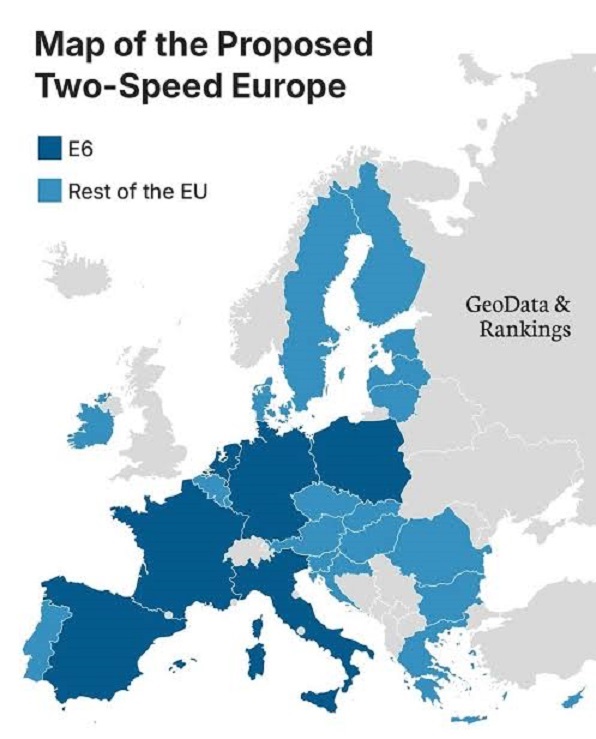
If not all 27 countries agree in some areas, the EU will use what it calls “enhanced cooperation” — smaller groupings of member countries moving faster on policy proposals — which, while it's been championed by some leaders before, has largely been avoided and labeled as divisive.
“Talk of enhanced cooperation could be a bit of a motivating factor to get member states on board,” said a diplomat from a European country, granted anonymity to be able to talk about confidential discussions. The diplomat explained that few capitals will want to risk being left behind on prosperity-driving measures, even if they have concerns about certain aspects of those policies.
'Geopolitical reality'
"Two or three years ago we would probably not have had a discussion similar to the one we have had today,” German Chancellor Friedrich Merz said. “We are confronted by a completely new geopolitical situation and we are willing to stand up to this geopolitical reality. But Europe will be able to hold its own only if we are competitive."
One place where "enhanced cooperation" may be used is for the Savings and Investments Union, the EU’s push for a U.S.-style capital market. The Commission wants an EU equivalent to the Securities and Exchange Commission, but EU-wide supervision needs buy-in from capitals — including Dublin and Luxembourg, where most funds reside, and which have been reluctant to give up their powers.
The roadmap will set measurable targets in areas such as telecoms, capital markets, services and energy. Von der Leyen said she wants all the targets to be achieved by the end of 2027.
At the summit, agreement emerged in four key areas, according to two people briefed on the talks: the need to unlock the savings of Europeans and to use them to invest in key EU businesses; a desire to address high energy costs in some parts of the bloc, including potentially via revisiting old debates on issues such as the Emissions Trading System to bring down prices; a need for the EU to continue striking trade deals with new partners to diversify its dependencies; and greater sympathy for a European preference — aka Macron’s “buy European" pet policy.
Bad blood
Fractures between the EU's big economic players and the rest were on show before the summit began.
A flurry of papers and counter-papers emerged from EU countries ahead of the meeting, with France and Germany on either side of a "buy European" split and other major disagreements on how far to go when it comes to completing the single market.
A pre-summit session saw 19 leaders meet to discuss the issues in play — with some nations, including the leaders of Spain, Ireland, the Baltic states and Slovenia, not invited.
Divisions were also apparent between EU countries and the Commission. Germany and Italy issued a statement saying the EU should "limit itself" in pursuit of new rules, while von der Leyen blamed national rules for many of the problems plaguing industry.
…The European Union is clearly heading toward its own split. ‘Different speeds’ are a symbol of division.
It's already clear that the largest and most powerful EU countries intend to shed the “ballast” of weaker European countries. Note that countries such as Ireland, the Baltic states and Slovenia were not invited to the “giants” discussions.
So, the EU has decided to “Save yourself if you can” and “Let me die tomorrow and you today.”
read more in our Telegram-channel https://t.me/The_International_Affairs

















