
 РУССКИЙ
 11:26 24.02.2026 •
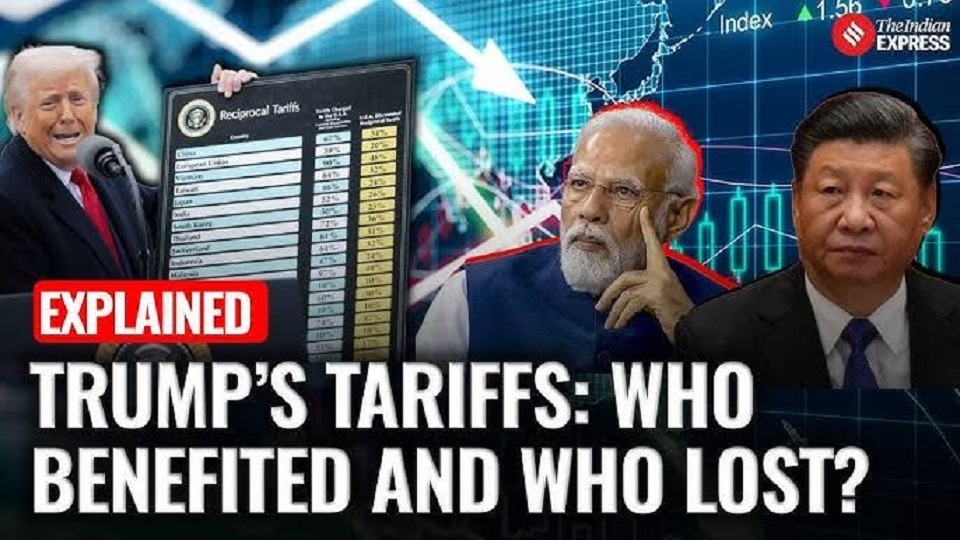
In a swift reversal of fortunes, countries that had been hardest hit by US President Donald Trump’s tariffs have emerged as the biggest winners from the Supreme Court’s decision to strike down his emergency levies, Bloomberg notes.
China, India and Brazil are among those now seeing lower tariff rates for shipments to the US after the court ruled Trump’s use of the International Emergency Economic Powers Act to impose duties was illegal. While Trump subsequently announced plans for a 15% global rate, Bloomberg Economics calculated that would mean an average effective tariff rate of around 12% — the lowest since his “Liberation Day” tariffs were released in April.
For Asia, Morgan Stanley economists say the weighted average tariff rate will fall to 17% from 20%, with average levies on goods from China declining to 24% from 32%. Relief may be temporary as the Trump administration seeks to impose sectoral and economy-specific duties to rebuild its tariff regime.
The new across-the-board levy effectively resets the playing field for America’s trade partners. For the likes of China, which also saw a 10% fentanyl tariff scrapped by the courts, exports now face less punitive rates. Losers include economies including the UK and Australia that had negotiated lower levies of 10% under the old “reciprocal” framework.
Senior US officials are pressing partners including the European Union and Japan to stick to commitments they made in earlier negotiations. They also sought continuity in the one-year truce with China, with Trump planning to soon visit Beijing for a meeting with President Xi Jinping. China, in the midst of a long holiday, has yet to officially comment on the Supreme Court decision.
“We want to make sure that China is complying with its part of the deal,” US Trade Representative Jamieson Greer told Fox News Sunday. “So that means they continue to buy the products they said they would buy.”
Canada and Mexico had also faced fentanyl-related levies, so they win out as those no longer apply. If exemptions under the US-Mexico-Canada (USMCA) trade agreement remain in place, they’ll emerge in a “very favorable position,” BE analysts Nicole Gorton-Caratelli, Chris Kennedy and Maeva Cousin wrote in a note.
The new 15% levy leaves countries with the earlier 10% rate worse off, with Australia and the UK in that position. Meantime, those that previously had what was then a competitive 15% level applied on their exports — such as Japan — have now seen that advantage stripped away.
read more in our Telegram-channel https://t.me/The_International_Affairs

















