
 РУССКИЙ
 10:42 09.08.2026 •
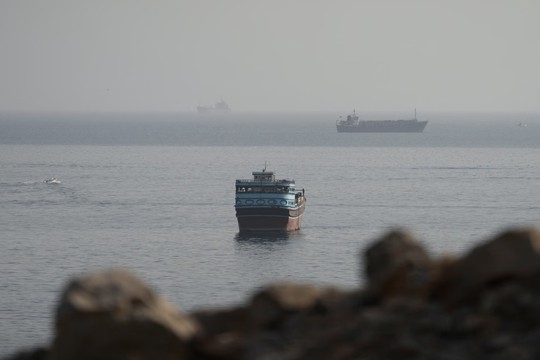
Photo: Reuters
Iran will seek to bar US and Israeli ships from the Strait of Hormuz and require compensation from hostile countries before they’re allowed to sail through it, according to local media reports on a proposed Iran-Oman deal to manage the crucial waterway, Bloomberg writes.
The agreement has become key to expectations for a reopening of Hormuz and a resumption of energy flows that have been throttled since the US and Israel attacked Iran in February.
“That’s clearly not going to go down well in Washington,” said Thomas Warrick, a former State Department official who is now a nonresident senior fellow at the Atlantic Council. “Instead of both sides making concessions, both sides are increasing demands.”
There aren’t many US- or Israeli-flagged commercial ships globally, and few have sailed in and out of the Persian Gulf since the war started. It remains to be seen how broadly Iran might interpret such a ban, as the complex nature of vessel ownership and management means some shipping companies with US or Israeli ownership or investment could be viewed as having links to those countries.
The text of the agreement is now under review in Iran’s parliament, the semi-official Fars news agency said. Fars reported other details including a proposed ban on cargo related to Israel, and a fee structure covering services like insurance and environmental costs.
Both US and Iranian officials have been signaling in recent days that some kind of accord on Hormuz is close.
Many previous claims of an imminent deal have proven unfounded, and it’s not clear if the Iran-Oman proposals will be enough to get traffic flowing again. On Thursday, a key Iranian negotiator mocked the White House for repeatedly making threats and then climbing down, calling it “theater diplomacy on loop.”
Tehran says a full reopening would require the lifting of the American maritime blockade. And the US hasn’t indicated whether it’s ready to go back to the terms it accepted under the last effort to reopen the strait, a June agreement that broke down within weeks. Those included waiving oil sanctions on Iran and unfreezing some of its frozen financial assets.
Fars, citing an informed source at Iran’s Foreign Ministry, said the draft agreement with Oman foresees Iranian management over the entry of vessels into Hormuz, with the exit being overseen jointly by both countries. They envisage transit through a “central corridor,” with traffic via the two other routes that are currently in limited use to cease within a “specified timeframe,” the agency reported.
 Territorial waters extend at most 12 nautical miles from a country’s coast or internal waters
Sources: Joint Maritime Information Center, Persian Gulf Strait Authority, Flanders Marine Institute
read more in our Telegram-channel https://t.me/The_International_Affairs

















