РУССКИЙ
 11:15 30.12.2025 •
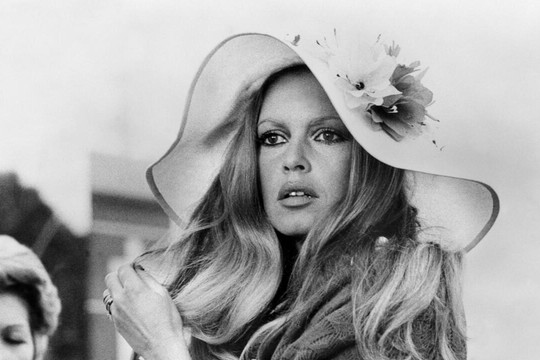
Brigitte Bardot
Photo: France24.com
“And God Created Woman” made her a world-famous sex symbol in the 1950s. She later gave up acting to devote her life to animal welfare, ‘The New York Times’ writes.
Brigitte Bardot, the pouty, tousle-haired French actress who redefined mid-20th-century movie sex symbolism in films beginning with “And God Created Woman,” then gave up acting at 39 to devote her life to the welfare of animals, died on Sunday at her home in southern France. She was 91.
Fondation Brigitte Bardot, which she established for the protection of animals, announced her death.
Brigitte Bardot was born into wealth on Sept. 28, 1934, in Paris, the older of two daughters of Louis and Anne-Marie Bardot. Her father was an industrialist, and she grew up in the city’s affluent 16th arrondissement. She began modeling as a teenager and appeared on the cover of Elle magazine at 15.
Ms. Bardot was 23 when “And God Created Woman,” a box-office flop in France in 1956, opened in the United States the next year and made her an international star. Bosley Crowther, writing in The New York Times, called her “undeniably a creation of superlative craftsmanship” and “a phenomenon you have to see to believe.” Like many critics, he was unimpressed by the film itself.
Ms. Bardot’s film persona was distinctive, compared with other movie sex symbols of the time, not only for her ripe youthfulness but also for her unapologetic carnal appetite. Her director was her husband, Roger Vadim, and although they soon divorced, he continued to shape her public image, directing her in four more movies over the next two decades.
The author Simone de Beauvoir, in a 1959 essay, “Brigitte Bardot and the Lolita Syndrome,” saw Ms. Bardot’s powerful onscreen erotic presence as a feminist challenge to “the tyranny of the patriarchal gaze” represented by the movie camera. The challenge failed, Beauvoir concluded, but it was a “noble failure.”
Few of Ms. Bardot’s movies were serious cinematic undertakings, and she later told a French newspaper that she considered “La Vérité,” Henri-Georges Clouzot’s Oscar-nominated 1960 crime drama, the only good film she ever made.
Nicknamed B.B. (pronounced in French much like the word for baby), she was best known for light comedies like “The Bride Is Much Too Beautiful” (1956), “Babette Goes to War” (1959) and “The Vixen” (1969), but she did work with some of France’s most respected directors.
Early in her career she appeared in René Clair’s “Grandes Manoeuvres” (1955). Jean-Luc Godard directed her in the 1963 film-industry drama “Contempt.” Louis Malle was her director on “A Very Private Affair” (1962), a drama that also starred Marcello Mastroianni, and “Viva Maria!” (1965), a western comedy in which she and Jeanne Moreau played singing strippers who become revolutionaries in early-20th-century Central America. That film earned her the only acting-award nomination of her career, as best foreign actress, from the British Academy of Film and Television Arts.
At the height of her popularity, almost everything about Ms. Bardot was copied — her deliberately messy hairstyle, her heavy eye makeup and her fashion choices, which included tight knit tops; skinny pants; gingham; and flounced skirts showing off bare, sun-tanned legs. In 1969, she became the first celebrity to be used as the model for Marianne, a traditional symbol of the French Republic that adorns town halls across the country.
She helped turn St.-Tropez, once a quiet fishing port in the South of France, into a painfully fashionable resort town after she bought a home there in 1958. Two decades later, when she publicly complained about the deteriorating quality of life in St.-Tropez, the mayor replied, “I ask the question: Who brought vice and lewdness here?”
When Ms. Bardot announced her retirement from films in 1973, she had already begun her work on behalf of animal rights and welfare. But it was only in 1986, a year after she was made a chevalier of France’s Legion of Honor, that she created the Fondation Brigitte Bardot, based in Paris, which has waged battles against wolf hunting, bullfighting, vivisection and the consumption of horse meat. In 1987, she auctioned off her jewelry and other personal belongings to ensure the foundation’s financial base.
Four decades later, the foundation said in a statement on Sunday, it has taken in more than 12,000 animals and worked in 70 countries. It called Ms. Bardot “an exceptional woman who gave everything and sacrificed everything for a world that is more respectful of animals.”
Her last movie appearance was a supporting role in “The Edifying and Joyous Story of Colinot,” a 1973 comedy about a young man’s numerous romantic encounters. (She played an older woman who taught him valuable life lessons.) Her last starring role was in “If Don Juan Were a Woman,” a poorly reviewed 1973 drama directed by Mr. Vadim that was released in the United States in 1976.
Ms. Bardot married four times and had well-publicized long-term romantic relationships with other men, including the actor Jean-Louis Trintignant and the singer and songwriter Serge Gainsbourg. She and Mr. Vadim divorced in 1957.
Ms. Bardot often spoke with bitterness about her movie career and about fame, which she said had stolen her privacy and happiness. In 1996, she summed up her point of view to a reporter for The Guardian.
“With me, life is made up only of the best and the worst, of love and hate,” she said. “Everything that happened to me was excessive.”
read more in our Telegram-channel https://t.me/The_International_Affairs