
 РУССКИЙ
 10:38 13.12.2025 •
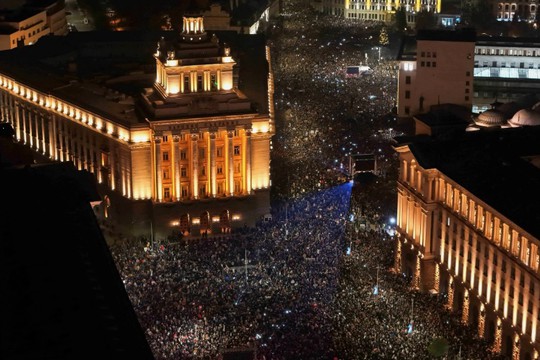
A drone view shows protesters demonstrating outside the parliament during an anti-government rally, in Sofia, Bulgaria, December 10, 2025
Photo: Reuters
Bulgaria’s prime minister resigned on Thursday after less than a year in office, acknowledging “the voice of the people” after mass protests against government corruption in recent weeks, ‘The New York Times’ reports.
The prime minister, Rosen Zhelyazkov, was the sixth to hold the office in five years, done in like many of his predecessors by political and economic instability. His announcement came minutes before lawmakers were scheduled to vote on a no-confidence motion against his government.
Tens of thousands of Bulgarians protested over the past month, not only in Sofia but across the country in a rare show of nationwide solidarity. By most accounts, the demonstrators represented a range of ages but included an unusually large number of young people, a demographic not typically associated with active political engagement in Bulgaria.
The movement against Mr. Zhelyazkov’s coalition government began over a proposed budget for next year that would have increased taxes and social security contributions to finance more public spending in Bulgaria, one of the European Union’s poorest countries.
It was also to be the country’s first budget counted in euros as Bulgaria formally adopts it as its currency on Jan. 1. Christine Lagarde, the president of the European Central Bank, predicted last month that the move could briefly increase inflation.
According to a recent poll, around 70 percent of Bulgarians support the wave of protests.
Bulgarians have been frustrated by enduring government corruption as well as years of democratic dysfunction.
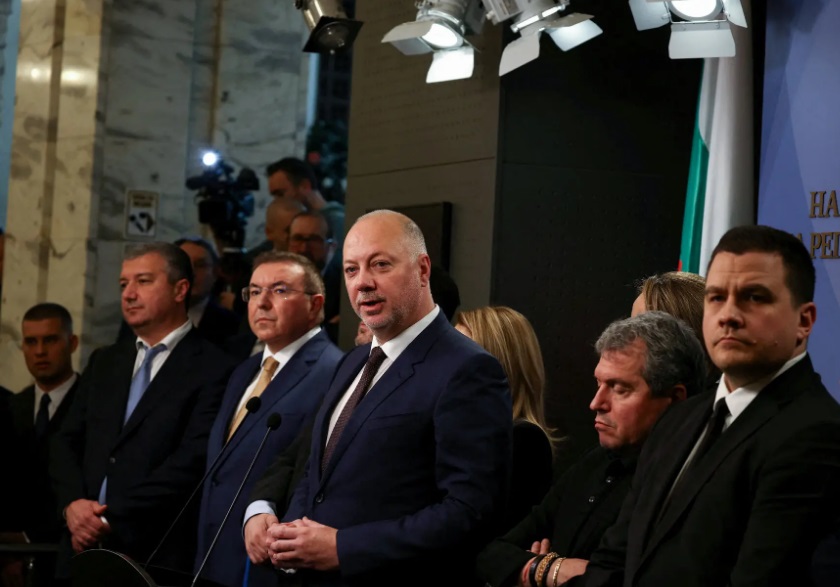 Prime Minister Rosen Zhelyazkov of Bulgaria speaking to reporters on Thursday in Sofia. He was the sixth prime minister in five years.
Photo: Reuters
Protests force out unpopular government
The resignation of Bulgaria's government on Thursday puts an end to an increasingly unpopular coalition but is likely to usher in a period of prolonged political instability on the eve of the Black Sea nation's entry into the euro zone, Reuters notes.
The European Union and NATO member state has held seven national elections in the past four years as consecutive governments failed to keep control of a fractured parliament.
The outgoing government, in power since January, had looked set to oversee the transition to the euro on January 1, but Prime Minister Rosen Zhelyazkov handed in his government's resignation after weeks of street protests against state corruption and a new budget that would have increased taxes.
Even Bulgaria's largely ceremonial head of state, President Rumen Radev, had called for Zhelyazkov to resign.
Still, Bulgaria faces more elections in the coming months if no new government steps up.
The protests began in late November when Zhelyazkov's government, composed of three parties, proposed a draft budget that included an increase in social security contributions and taxes on dividends to finance higher state spending.
Some of that spending was earmarked for police, security services and the judiciary - the very bodies that many Bulgarians have grown to despise over years that have seen Bulgaria ranked as one of the EU's most corrupt countries. The budget was withdrawn, but popular anger has persisted.
They represented some of the biggest anti-government gatherings since the end of communism in 1989 and the broad demographics and politics of the protesters set them apart from other recent demonstrations, political analysts said.
Many of the protesters back Bulgaria's adoption of the euro and want to see it join the European mainstream.
But the demonstrators have also included those who fear that joining the euro will fuel inflation or who oppose Bulgaria's official pro-Western stance on issues such as the Ukraine war, preferring to repair ties with Moscow, Sofia's historic ally.
Some analysts said the protests could lead to real change.
The president will now give the largest party in parliament, GERB, the mandate to form a new government but it is likely to struggle to find wider support in a fragmented parliament containing some nine parties, some of them very small.
If GERB fails, or rejects the mandate, two other parties will be given the opportunity. If they fail or refuse, President Radev will appoint an interim government and call a snap election. This could pitch Bulgaria back into a cycle of repeated polls if no one can form a functioning coalition.
Political uncertainty
The departure of Rosen Zhelyazkov after less than a year running a minority government opens the way for Bulgaria’s eighth election since 2021. Boyko Borissov, a former three-time prime minister whose Gerb party won the last election, will now have the chance to pick a new premier, but already signaled he won’t try again, Bloomberg stresses.
The collapse of another administration in Sofia comes after tens of thousands of people hit the streets across the country in the biggest protests in decades to rail against the establishment, prompted by the government’s plan to increase spending in next year’s budget.
Bulgaria has been a European Union member for almost two decades, recently joined its Schengen customs-free travel zone and on Jan. 1 is due to adopt its single currency. But that progress has masked growing dissatisfaction with the political elite over entrenched corruption and cronyism.
If Borissov fails or refuses to secure a majority for a new cabinet, President Rumen Radev will give parliament’s second-largest faction a chance. But that also looks doomed to fail.
The leaders of an alliance of parties united over their vow to eradicate corruption also said a new election is the fairest outcome. The most likely scenario would then be a new vote in spring.
read more in our Telegram-channel https://t.me/The_International_Affairs

















