РУССКИЙ
 11:32 26.01.2026 •
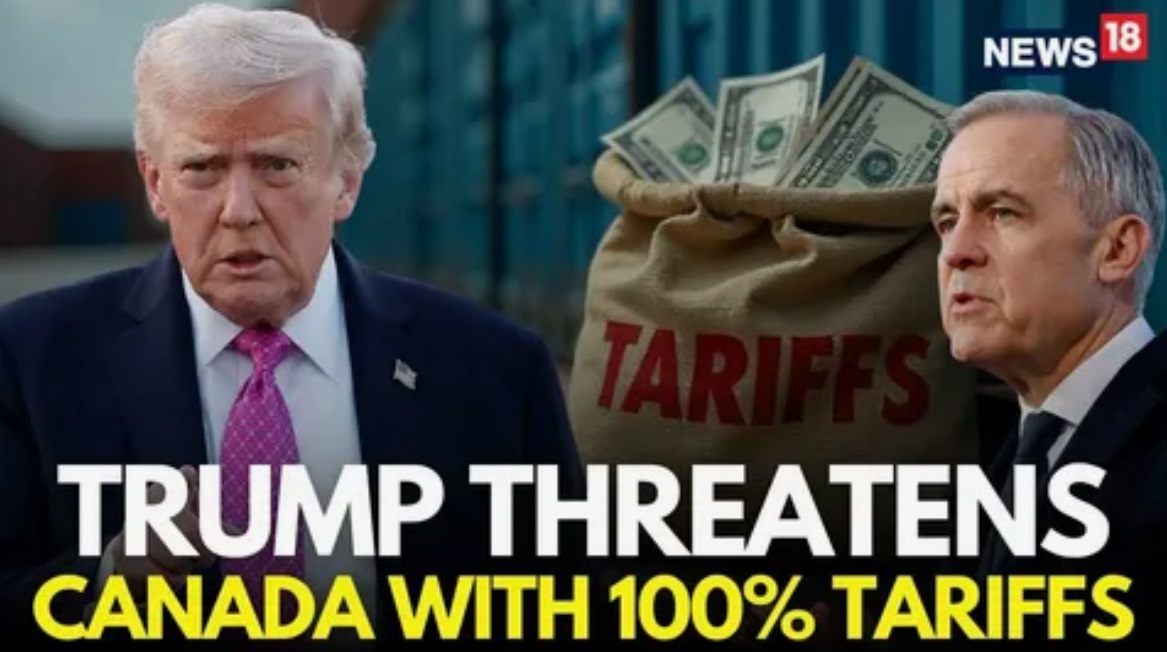
Donald Trump is threatening to impose a 100 per cent tariff on Canada if it makes a trade deal with China, registering opposition to closer ties between Ottawa and Beijing under Prime Minister Mark Carney, ‘The Globe and Mail’ reveals.
In a post on Truth Social, the U.S. President argued a trade agreement between Canada and China would result in Canadian territory being a transit point for shipping Chinese goods into the United States.
“If Canada makes a deal with China, it will immediately be hit with a 100% Tariff against all Canadian goods and products coming into the U.S.A.,” the President wrote.
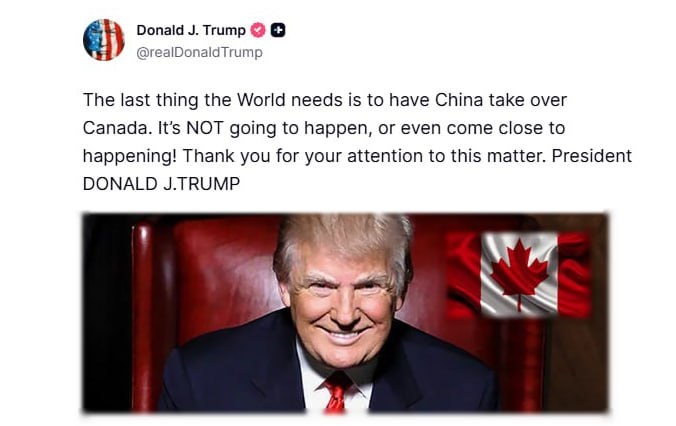
In a second post later Saturday, Mr. Trump said he would save Canada from being conquered by China.
“The last thing the World needs is to have China take over Canada. It’s NOT going to happen, or even come close to happening!” he said.
The Prime Minister’s Office did not immediately respond to a request for comment, but Dominic LeBlanc, minister responsible for Canada-U.S. Trade, said Canada and China are not working on a trade deal.
He said Canada remains committed to the Canada-U.S. relationship.
“As the Prime Minister said this week, Canada and the United States have built a remarkable partnership in our economy and security – and we will remain focused on ensuring the future of that relationship will benefit workers and businesses on both sides of our border,” Mr. LeBlanc said.
The new tariff threat is the latest attack by Mr. Trump on Mr. Carney since the Prime Minister delivered a provocative speech at the World Economic Forum in Davos, Switzerland, that amounted to a veiled attack on the damage the U.S. President has done to the international rules-based order built on international law, norms, treaties and institutions such as the United Nations and World Trade Organization.
Canada and China struck a “strategic partnership” earlier this month to boost ties and allow Chinese investors to play a larger role in Canada’s economy. During a four-day visit to Beijing, Mr. Carney praised China as a more predictable trading partner than the United States and broke with Washington over tariffs on Chinese-made electric vehicles.
“China will eat Canada alive, completely devour it, including the destruction of their businesses, social fabric, and general way of life,” the President predicted in his Saturday social media post.
Canada’s annual exports to China – about 5 per cent of overall exports – pale in comparison what it ships to the United States each year. Traditionally about 75 per cent of Canadian exports go to the U.S.
In his Jan. 21 address at Davos, Mr. Trump described Mr. Carney as ungrateful toward the United States.
“Canada gets a lot of freebies from us, by the way. They should be grateful. But they’re not,” Mr. Trump said. “I watched your Prime Minister yesterday, he wasn’t so grateful. They should be grateful.”
He said Canada only exists because of the United States.
U.S. President Donald Trump takes aim at Prime Minister Mark Carney in a speech at Davos, saying 'Canada lives because of the United States,' a day after Mr. Carney warned the forum that a U.S.-led rules-based international order is over.
The next day, Mr. Trump also retracted an invitation to Mr. Carney for Canada to join his so-called “Board of Peace” project.
The Chinese embassy in Canada, asked for comment on Mr. Trump’s threat, provided a statement saying Beijing is ready to work with Ottawa to advance the “new Strategic Partnership” they struck this month. “The sound and steady growth of China-Canada relations serves the common interests of the two countries and contributes to peace, stability, development and prosperity in the world,” the embassy said in a statement.
Canada inks trade deal with China in break from Trump agenda
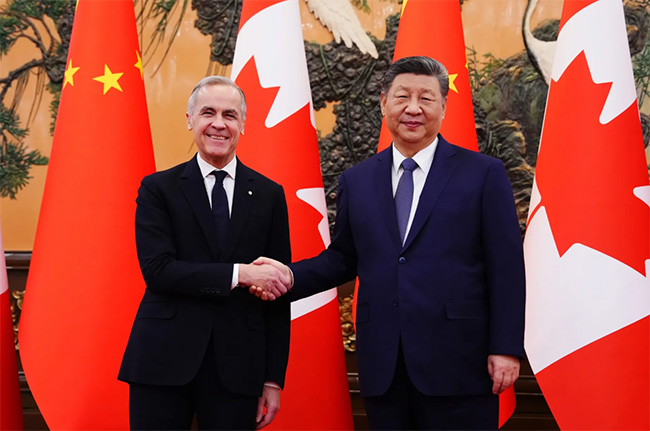 Mark Carney and Xi Jinping in Beijing on Jan. 16.
Photo: The Canadian Press
China and Canada reached a wide-ranging agreement to lower trade barriers and rebuild ties, signaling a pivot in Canadian foreign policy, Bloomberg reports.
Prime Minister Mark Carney said he expects China to cut tariffs on Canadian rapeseed, also known as canola, after meeting Chinese leader Xi Jinping on Friday, in the first visit by a Canadian leader to Beijing in eight years.
In tandem, Canada will allow 49,000 Chinese electric vehicles into its market at a tariff rate of about 6%, removing a 100% surtax. China will also offer visa-free travel to Canadians, Carney said.
The moves marked a sharp reversal from the era of former Prime Minister Justin Trudeau. Under the previous administration, ties between Canada and China all but collapsed following the 2018 extradition spat involving a senior Huawei executive.
China’s subsequent detention of two Canadians and years of retaliatory trade measures turned the relationship into a deep freeze. Now, Carney’s warming to Xi suggests a new strategic direction for a nation long considered Washington’s closest partner.
“If this marks a genuine about-face for Canada and not just another reactionary flip-flop then we should acknowledge it as a possible inflection point,” said Josef Gregory Mahoney, a professor of international relations at Shanghai’s East China Normal University.
The centerpieces of the agreement are tariff concessions. Carney anticipates a drop in canola tariffs from more than 80% to about 15% combined by March 1, citing “a high degree of confidence that that’s going to happen.”
The reduction in electric vehicle tariffs is perhaps the most striking component of the deal. In 2024, Canada matched the Biden administration’s 100% levy to align with US trade policy, but Carney’s move suggests he will chart an independent course.
The number of Chinese EVs being allowed at the lower tariff rate is small — it amounts to less than 3% of the Canadian vehicle market — but the decision still brought a negative reaction within Canada. “China now has a foothold in the Canadian market and will use it to their full advantage at the expense of Canadian workers,” Ontario Premier Doug Ford said.
Carney hailed his strategic partnership with Xi, touting the importance of their ties in the face of a “new world order.” This was a veiled reference to the global instability caused by President Trump’s foreign policy swings and disruptive trade agenda.
“I’m extremely pleased that we are moving ahead with our new strategic partnership,” Carney told Xi on Friday. A day earlier, he told Chinese Premier Li Qiang that their strengthening relationship “sets us up well for the new world order.”
A joint statement released by both governments says that they will expand trade, strengthen investment and deepen cooperation in various fields, including energy, finance, public security and people-to-people exchange.
read more in our Telegram-channel https://t.me/The_International_Affairs