РУССКИЙ
 10:54 03.12.2025 •
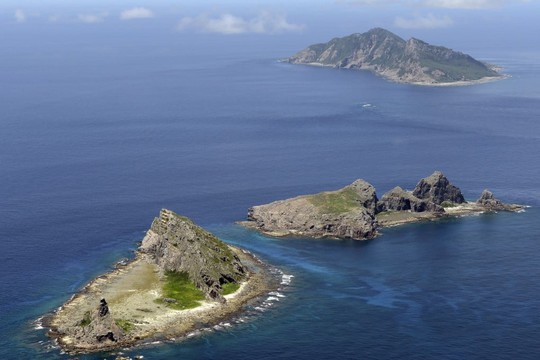
Photo: ‘South China Morning Post’
Chinese and Japanese coastguard vessels have been involved in a stand-off near the disputed Diaoyu Islands in the East China Sea, ‘South China Morning Post’ reports.
The two sides gave conflicting accounts of Tuesday’s incident, with the Chinese coastguard saying it had driven a Japanese fishing boat away from the islands, which are known as the Senkaku Islands in Japan.
Liu Dejun, a spokesman for the coastguard, said the Chinese vessels took “necessary control measures” and issued warnings to the boat.
“The Diaoyu Islands and their affiliated islets are inherent Chinese territory. We urge Japan to immediately cease all infringements and provocative activities in these waters,” Liu said.
He added that the coastguard would continue to patrol around these islands to safeguard China’s territorial sovereignty and maritime rights.
However, the Japanese coastguard said it had intercepted and driven away two Chinese coastguard vessels that approached a fishing boat.
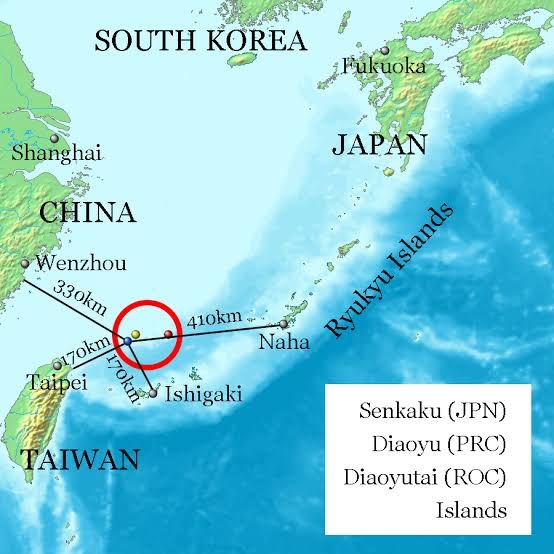 Map.: WiKi
Relations have been strained since Japan’s new Prime Minister Sanae Takaichi suggested last month that her country could intervene militarily in any Chinese attack on Taiwan, ‘Al Arabiya’ notes.
Japan’s coast guard said two Chinese coast guard patrol ships entered Japan’s territorial waters around the Senkaku Islands in the East China Sea in the early hours of Tuesday, and left a few hours later.
The Japanese-administered Senkaku Islands, known as the Diaoyu in China, have been a regular flashpoint between the two nations over the decades.
After the patrol ships sailed toward a Japanese fishing boat, a Japanese coast guard vessel issued a demand that they leave the waters, the Japanese coast guard statement said.
“The activities of Chinese coast guard vessels navigating within Japan’s territorial waters around the Senkaku Islands while asserting their own claims fundamentally violate international law,” it said.
The statement added that the two Chinese vessels, and others, were still in the area.
China Coast Guard spokesman Liu Dejun said that a Japanese fishing vessel “illegally entered China’s territorial waters.”
It followed a similar incident around the islands on November 16, around a week after Takaichi’s comments, Kyodo News reported.
China claims self-ruled Taiwan as part of its territory and has not ruled out using force to take the democratic island.
Aside from reportedly renewing a ban on Japanese seafood imports, China has however so far stopped short of imposing more serious economic measures such as curbing exports of rare earth metals.
Historical grievances deepen mistrust between Asia’s two largest economies
The latest clash comes at a time of heightened diplomatic tension. Japanese Prime Minister Sanae Takaichi told parliament on November 7 that a hypothetical attack by China on Taiwan could prompt a military response from Tokyo, a remark that drew swift criticism from Beijing. Chinese officials accused Japan of “inflaming regional instability,” while Japanese lawmakers defended Takaichi’s comments as a realistic assessment of regional security risks.
Historical grievances have long fueled the sensitivity surrounding the Senkaku/Diaoyu dispute. Tensions over the islands trace back to the late nineteenth century. Following Japan’s victory in the First Sino-Japanese War of 1894-95, the Treaty of Shimonoseki forced China to cede Taiwan and nearby islands to Japan. Although the exact status of the Senkaku/Diaoyu Islands at that time remains contested by historians, the treaty era remains a symbolic turning point for both countries.
More modern flashpoints have repeatedly reignited the feud. In 2010, a collision between a Chinese fishing trawler and Japanese patrol boats near the islands led to a diplomatic freeze and large anti-Japanese protests in China. In 2012, Tokyo’s decision to nationalize several of the islands triggered another surge of unrest, prompting China to ramp up coast-guard patrols in surrounding waters. As one Japanese maritime expert told the media during that period, “Every encounter risks becoming the spark for something much larger.” A Chinese scholar quoted in state-linked commentary at the time argued that Japan’s actions “violated the postwar order and inflamed Chinese public sentiment.”
The current confrontation, though small in scale, reflects the unsettled historical narratives that continue to shape maritime behavior in the East China Sea. Analysts say the risk of escalation remains significant as both nations increasingly link regional security concerns — particularly the future of Taiwan — to their territorial claims. A former Japanese diplomat, speaking in a televised interview this week, cautioned, “These islands are uninhabited, but the emotions surrounding them are not.”
read more in our Telegram-channel https://t.me/The_International_Affairs