РУССКИЙ
 11:22 06.03.2026 •
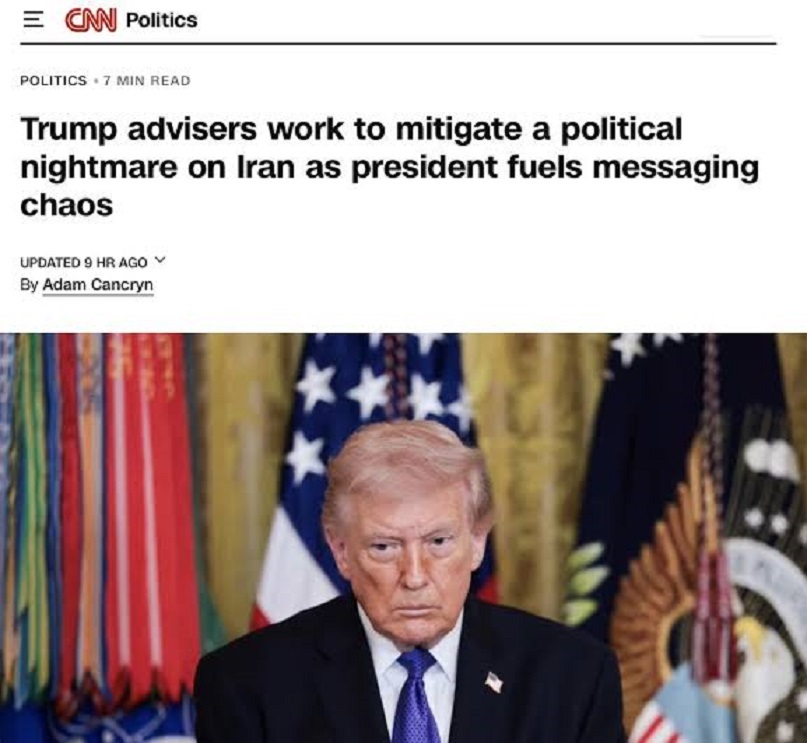
President Donald Trump insists he’s willing to wage war on Iran “forever,” CNN quotes.
But just days into the fight, many of those around him are already itching to get out.
The US assault on Iran has stoked fears among Trump’s aides and advisers about the political consequences of being drawn into a prolonged war with no clear endgame and little buy-in from the public, according to several people familiar with the matter.
The conflict has already cost six American lives, with officials bracing for the toll to climb higher in subsequent days.
The stock market is in turmoil and gas prices are rising, endangering key pillars of Trump’s midterm pitch. And inside the administration, aides are still struggling to explain why the nation went to war — and what exactly comes next.
“It’s a political risk, no ands, ifs or buts,” one Trump adviser said of an attack that the president has forecast could continue for weeks. “Let’s just hope something doesn’t go really wrong. Because if that happens, it’s going to be a problem.”
Political realities of an unpopular war
The war with Iran is broadly unpopular in early polling, with voters wary of another entanglement in the Middle East and unclear on the administration’s objectives.
It has also driven a split among prominent figures in a MAGA movement built in part on Trump’s 2016 vow to “abandon the failed policy of nation building and regime change” — fueling worries that the backlash could eventually spread to Trump’s broader base.
Those troubling dynamics are only likely to worsen as the death toll rises and the risk of a wider regional war remains front and center, allies and advisers have warned, further jeopardizing Trump and Republicans’ already-grim chances of avoiding a wipeout in November’s midterms.
“No one thinks this war is popular,” said Matthew Bartlett, a GOP strategist and former Trump State Department official. “At best, this is a distraction from the priority of the economy. But at worst, this could be political disaster, and it could be a disaster for generations in Iran and for the Republican Party.”
Chaotic messaging
Trump officials in the lead-up to the weekend’s strikes warned the president that striking Iran could generate unpredictable political repercussions, stressing that it was difficult to pinpoint how the offensive would play out over time, people familiar with the matter said.
Trump opted to press ahead anyway. And while he has since personally dismissed the negative public sentiment as inconsequential, those around him have scrambled for days to construct and sell a belated rationale for the attack.
That’s resulted in a range of conflicting explanations from even the most senior administration officials and an extremely muddled communications strategy from the White House. The issue is further plagued by Trump’s own shifting justifications and the lack of any strong sense within the administration for how it plans to ultimately bring the war to an end.
No endgame plan
Trump allies have urged the administration to lay out a more specific plan for eventually extracting the US from the Middle East, amid worries the war is upending a GOP midterm strategy dependent on convincing voters the party is focused on economic issues closer to home.
Among advisers and allies, that scenario has been referred to in hopeful terms as a “Venezuela-style” outcome, mirroring the risky offensive that Trump launched in January to oust the South American country’s leader and seize greater influence over its government. Trump himself has cited Venezuela as the “perfect” example of how he would want to see regime change play out in Iran.
But Iran is far more complicated than Venezuela, with fewer clear outcomes and a wider range of pitfalls. And even under ideal conditions, the political upside is sharply limited.
read more in our Telegram-channel https://t.me/The_International_Affairs