
 РУССКИЙ
 18:48 04.02.2026 •
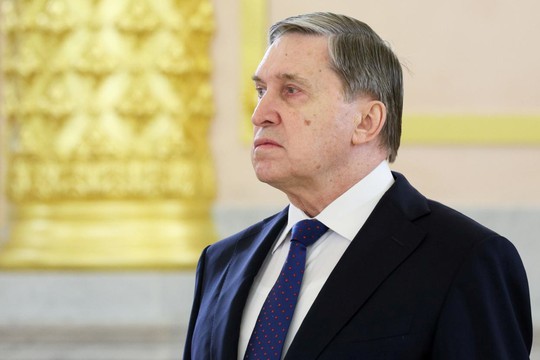
Russian Presidential Aide Yury Ushakov
Photo: TASS
Presidential Aide Yury Ushakov:
Friends, I would like to brief you on the substantive negotiations between President of Russia Vladimir Putin and President of the People’s Republic of China Xi Jinping, held via videoconference.
These negotiations took place today and concluded just over an hour and a half ago. In recent years, such contacts have become a well-established tradition of communication between the heads of state. This marks the sixth such conversation, which traditionally occurs at the beginning of the year, ahead of the Lunar New Year, or, as it is known in China, the Spring Festival.
The discussion lasted one hour and twenty-five minutes. Simultaneous interpretation was provided, of course, and the leaders, in a friendly and trusting manner, summarised the outcomes of the past year and thoroughly discussed plans for the development of Russia-China relations in the current year. Significant attention was also paid to the most pressing international issues, particularly given the extremely tense and volatile situation that has emerged in a number of regions across the world.
In this context, Vladimir Putin and Xi Jinping agreed that it is necessary to maintain permanent bilateral consultation mechanisms across all channels – the security councils, foreign ministries, and defence agencies – to complement their personal communication, that is, the direct dialogue between the leaders. This pertains to the swift alignment and coordination of approaches on current matters, including sensitive ones, to ensure timely responses to emerging challenges and threats.
It was agreed to intensify such professional dialogue. In this vein, incidentally, consultations were held on February 1 in Beijing between Secretary of the Russian Security Council Sergei Shoigu and Director of the Office of the Central Commission for Foreign Affairs of the Communist Party of China Central Committee, Minister of Foreign Affairs of China Wang Yi. The heads of state discussed the information received following these consultations.
Vladimir Putin and Xi Jinping once again noted that the comprehensive partnership and strategic cooperation between our two countries are at an unprecedented level, are based on equality and mutual benefit, are not directed against any third parties, and are not subject to short-term political considerations.
We support each other on key issues affecting our national interests. In the face of external challenges, our countries act, as our Chinese friends put it, back to back, and can rely on one another.
The leaders expressed satisfaction that last year Russia and China fittingly marked the anniversaries of Victory in the Great Patriotic War and in the War of Resistance against Japanese Aggression.
I would like to emphasise that Xi Jinping was the principal guest in Moscow at the Victory Day Parade on May 9, while Vladimir Putin was the principal guest at the commemorative events in Beijing on September 3. Both Russia and China intend to continue upholding historical truth and preserving the memory of the heroism of our fathers and grandfathers in those harsh years.
Overall, in 2025 the leaders of the two countries maintained frequent and productive contacts, and such interactions – personal contacts in particular – will naturally continue, and with no lesser intensity.
I would also note that on July 16, Russia and China will mark an important date: the 25th anniversary of the Treaty of Good-Neighbourliness and Friendly Cooperation between the Russian Federation and the People’s Republic of China. This foundational document for international relations, which remains fully relevant and in tune with the spirit of the times, has been automatically extended for a further five-year period.
During the conversation, President Xi Jinping invited Vladimir Putin to pay an official visit to China in the first half of this year. The invitation was accepted with gratitude, and the dates and details will be agreed separately.
The Chinese leader also invited the President of Russia to take part in the Asia-Pacific Economic Cooperation (APEC) Leaders’ Meeting, to be held in November in the southern Chinese city of Shenzhen. Russia supports the work of China’s APEC chairmanship, and our President will, of course, be ready to attend the meeting in Shenzhen.
Incidentally, there are plans to hold bilateral meetings during other international events, in particular, those held by the SCO and BRICS.
Plans for this year also include numerous contacts at other high levels, including between our governments, parliaments, the Presidential Executive Office and the Secretariat of the Central Committee of the Communist Party of China, security councils, ministries, departments and political parties.
During their conversation, the leaders paid considerable attention to trade and economic cooperation. It was also mentioned that despite a minor decline due to a number of objective and subjective factors, bilateral trade has been considerably above $200 billion for three years in a row. It is common knowledge that China remains our leading foreign trade partner, while Russia holds fifth place among China’s trade partners.
During the conversation, the leaders formulated the task of working to further develop trade and economic ties, in particular, in energy. Russia is the leading supplier of oil and pipeline gas to China.
It is noteworthy that the leaders emphasised the importance of working in innovative spheres, including those associated with artificial intelligence. We supported China’s initiative for creating a World Artificial Intelligence Cooperation Organisation.
Both sides expressed high appreciation for the Chinese idea of a visa-free regime, which Russia supported. They noted with satisfaction that 2026 and 2027 have been declared the Cross Years of Cooperation in Education.
Overall, the humanitarian track of bilateral cooperation is developing very energetically to the benefit of our countries and is promoting rapprochement between them.
Regarding foreign policy issues, the President of Russia and the President of China emphasised the importance of Russian-Chinese cooperation at multilateral platforms, such as the UN, the SCO, BRICS, APEC and G20.
The sides reaffirmed the common course for creating a just multilateral world order based on international law.
Overall, Moscow and Beijing have been working in coordination with each other on the international stage. It was pointed out that the sides’ positions on the overwhelming majority of international issues are similar or fully coincide. Of course, Vladimir Putin and Xi Jinping also exchanged views on their countries’ relations with the United States. Their approaches almost fully coincide, which is evident from their attitude to the US President’s initiative for creating the Board of Peace.
Russia and China stand for equal and mutually beneficial cooperation based on the principles of international law and the UN Charter.
The President noted that the Treaty on Measures for the Further Reduction and Limitation of Strategic Offensive Arms is due to expire tomorrow, February 5. As you know, on September 22, 2025, we suggested extending the key quantitative limits for one year on a voluntary basis. However, there was no official response from the United States. Vladimir Putin emphasised that in this situation, we will act in a balanced and responsible manner based on a careful analysis of the overall security environment. Russia remains open to finding a way to ensure strategic stability through negotiations.
The leaders were informed about the contacts our countries had with the Donald Trump administration and believe that there is a window of opportunity in this regard. In particular, the President of China voiced his support for the ongoing talks in Abu Dhabi within the trilateral working group on security matters. President Vladimir Putin shared his latest assessments of the efforts to reach a peaceful settlement in the Ukraine conflict.
As I have noted, the agenda covered many other international matters too, with a special emphasis on the tense situation surrounding Iran. Vladimir Putin informed his counterparts about the January 30 meeting at the Kremlin with Secretary of Iran’s Supreme National Security Council Ali Larijani.
The leaders also sought to coordinate their approaches regarding the situation with Venezuela and Cuba and spoke in favour of ensuring that our countries maintain cooperation with Caracas and Havana at the current level.
On regional topics, the leaders exchanged views on the situation in the Asia-Pacific. The President of China talked about Beijing’s relations with Tokyo, while President Vladimir Putin once again spoke out in support of China’s principled position regarding Taiwan, reaffirming Russia’s commitment to the One China policy.
Overall, this was a direct and trust-based conversation, which offered the two leaders an opportunity to reaffirm their strategic and principled priorities for working together during the upcoming cycle.
Cooperation between Moscow and Beijing operates as a powerful, constructive and stabilising factor in the world, while the Russia-China nexus effectively enhances global security, and benefits the Global Majority, as well as the people of both Russia and China.
I would like to emphasise on a special note that the conversation between Vladimir Putin and Xi Jinping took place in a genuinely friendly atmosphere. They ended the conversation by wishing each other every success, happiness, and wellbeing in the coming year.
read more in our Telegram-channel https://t.me/The_International_Affairs

















