
 РУССКИЙ
 10:14 07.12.2025 •
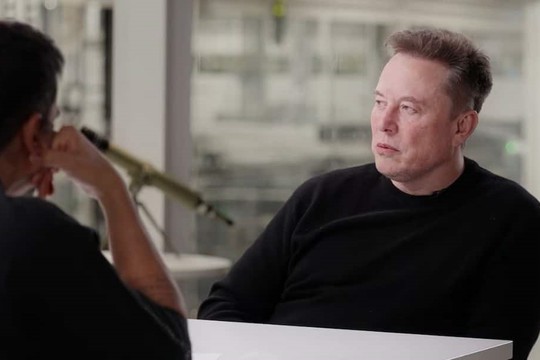
Elon Musk says AI will advance so fast that human jobs will become optional. Work may turn into a hobby, but his prediction about money is even more surprising – he said, money will become irrelevant because humans will no longer need it.
Photo: YouTube
Elon Musk believes that people may not have to work at all in the future. He said that artificial intelligence (AI) and robots will change the world so much that working will become optional. According to him, this change might happen in less than 20 years.
Musk shared these thoughts on Zerodha co-founder Nikhil Kamath’s “People by WTF” podcast. He explained that jobs will turn into hobbies because AI and robotics will handle almost everything people need in life.
Key points generated by AI, verified by newsroom.
During the conversation, Musk said, “Maybe… I say in less than 20 years, working will be optional. Working at all will be optional. Like a hobby, pretty much.” He also mentioned that people might play back this interview after 20 years and judge him, but he still believes his prediction will turn out to be true.
Musk described how powerful AI and robotics will become in the coming years. He explained, “If AI and robotics continue to advance, working will be optional and people will have any goods and services that they want.” He added that in the future, life will function in a simple way: “If you can think of it, you can have it.”
He repeated that this shift may happen in 10-15 years, or 20 years at most. Musk even said that soon AI and robotics will “run out of things to do to make humans happy,” and then AI might start doing things only for AI because all human needs will already be fulfilled.
Musk also pointed out that this is not the first time he has spoken about this type of future. At the US-Saudi Investment Forum on November 19, he said that AI and humanoid robots will actually “eliminate poverty” and “make everyone wealthy.” He also said money will become irrelevant because humans will no longer need it.
In the long term, Musk believes that “you no longer need money as a database for labour allocation.” According to him, if AI and robotics can satisfy every human need, then money will lose its purpose.
He added that in the future, humans will use “power generation as the de facto currency” instead of money.
Musk predicts…
In the next 10 years, you might not have a job, but that might not be bad news, according to Elon Musk, who says millions of robots and smart technology automation will be doing everything for us.
What if someone told you that you don’t ever have to work again? After your head stops spinning, you would probably ask, “But how will I buy clothes, food or pay my bills?” The answer? “Millions of robots will take care of everything for you.” Sound fetched? Last week Elon Musk predicted that optional work will be the future by 2035 or 2045. Not only will AI make work unnecessary, according to the Tesla mogul, it will make money irrelevant, ‘Forbes’ notes.
One of the biggest worries for the 2025 workforce has been landing a job in a crowded market and massive layoffs. Economic uncertainties have led workers to adopt a number of survival tactics from quiet quitting to office frogging to job hugging. But what if you lived in a world where layoff anxiety and feeling stuck in a job you hate were dinosaurs of the past?
Now, thanks to AI, the future of work might actually lie in working less, not more or even not working at all, according to Elon Musk.
This is the same man who referred to ChatGPT as “One of the biggest risks to the future of civilization” in 2023 when he spoke at the World Government Summit in Dubai, United Arab Emirates.
Now, in a total reversal, Musk predicts optional work, comparing it to choosing to play sports or video games or to grow vegetables in your back yard or get them at the supermarket. And he predicts that your days of overworking, feeling stuck in a job you hate or being pressured to take on a side hustle to make ends meet will be over in the next 10 to 20 years. Robots, he predicts, will take all your job woes away, and you will be free to choose to work or not.
Many underestimate the extent to which AI will change our relationship with knowledge work
Ali Gohar, CHRO at Software Finder, who told that Musk’s idea isn’t far-fetched at all. "In 20 years, some high-skill knowledge workers will have the option to stop working thanks to automation and AI-driven software ecosystems," Gohar says. “But millions will very likely still rely on work as a necessity. The biggest divide will almost certainly be drawn by those who can afford not to work.”
Gohar points out that we’re already seeing glimpses of Musk’s prediction in B2B SaaS. “Many roles are becoming redundant as a result of improvements in low-code platforms, AI copilots and hyper-automated back-end systems,” he explains.
Gohar asserts that what many underestimate is the extent to which AI will change our relationship with knowledge work. “Software will offload the dull and repetitive, leaving humans to focus on creativity, strategy and empathy,” he suggests. "For some, that will feel optional. For others, especially those in physical or people-facing roles, technology may transfer the pressure ‘up’ as opposed to ‘off.’”
To create ‘superworkers’
Kaz Hassan, principal of community and insights at Unily, an AI-powered EX platform, thinks Musk is measuring work based on an outdated model and fails to recognize the real value of people in the world of work.
Hassan argues that we need to stop conflating automation of tasks with elimination of human contribution, adding that organizations need to radically redefine how they articulate and reward human work. “That means ditching productivity theater: the endless meetings, the performative busy-work, the metrics that measure activity rather than impact,” he insists.
The performance champions in the next era won’t be the organizations that replace humans with AI, according to Hassan. “They’ll be the ones that create ‘superworkers’, who are confident in their uniquely human value and skilled at using AI agents to amplify their judgment, creativity and strategic impact,” he contends.
read more in our Telegram-channel https://t.me/The_International_Affairs

















