
 РУССКИЙ
 11:56 13.02.2026 •
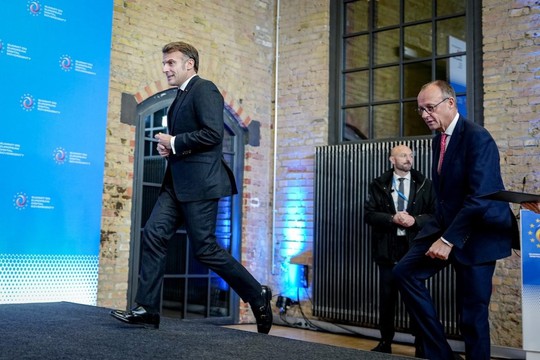
Europe: Politics vs. economy – Macron and Merz are in a hurry as the economy slows...
Photo: Getty Images
Nothing unites Europe like a common threat. But once US President Donald Trump’s Greenland threats subsided, so too did hopes of a step-change in Europe’s competitiveness agenda, ‘Euractiv’ notes.
“Europe is slow, but I think we are at a pivotal moment,” said Belgian Prime Minister Bart De Wever.
Yet despite the steady drumbeat of rhetoric around competitiveness, the political will for meaningful reform remains thin. The bloc’s long-standing institutional and technical obstacles look unlikely to be overcome.
The diagnosis is familiar. Europe generates talent and innovation, but companies and workers gravitate towards deeper capital markets and a more unified environment in the US. The solutions – integrated capital markets, harmonised rules and greater joint spending – are equally well known. They are also politically fraught, requiring governments to relinquish national control.
“We should integrate our markets. We are waging a trade war on ourselves,” De Wever said. The International Monetary Fund estimates that internal barriers within the EU are equivalent to tariffs of up to 44% on goods and 110% on services.
While De Wever has called for a tougher line on the European Commission, the bigger obstacle may lie in national capitals – one reason Draghi has urged Europe to move “from a confederation to a federation.”
Entire sectors remain fragmented, said Niclas Poitiers of the Bruegel think-tank, as companies defend protected domestic markets and governments engage in regulatory arbitrage to attract investment.
Business as usual
The gap between diagnosis and delivery is longstanding.
“Member States shall progressively abolish between themselves all restrictions on the movement of capital,” reads the 1957 Treaty of Rome – a commitment still only partially realised nearly seven decades later.
A brief show of unity emerged ahead of last month’s EU emergency summit prompted by tensions with Washington. But by the time leaders met, the urgency had already faded after Trump backed down on tariffs. Three EU diplomats told Euractiv there is a growing risk the bloc is slipping back into familiar patterns.
That means fresh initiatives, joint declarations and photo opportunities – but little substantive progress.
In recent weeks, Franco-German, Italian-German, E6 and Nordic groupings have all pledged to eliminate regulatory barriers or deepen capital markets. Concrete options, however, are limited and disputed.
‘Buy European’
France continues to advocate a stronger European preference in public procurement – a stance echoed by Industry Commissioner Stéphane Séjourné – but support is uneven.
Germany’s Economy Minister Katherina Reiche warned over the weekend that competitiveness cannot be built through isolation. Northern states argued that “Buy European” provisions would undermine efforts to simplify regulation and risk straining trade relations.
“We’re exactly where we were three years ago,” Poitiers said, warning that such measures could generate unnecessary friction with partners without addressing structural weaknesses.
read more in our Telegram-channel https://t.me/The_International_Affairs

















