
 РУССКИЙ
 11:08 23.03.2026 •
 Pic.: You Tube
Iran’s low-cost strikes expose trillion-dollar flaws. The US and Israel have lost more than two dozen aircraft in the Iran War, alongside many high-profile radar systems, including up to four THAAD radars and Qatar’s AN/FPS-132 Block 5 Upgraded Early Warning Radar (UEWR). Even the USS Gerald R. Ford, the US’s most advanced aircraft carrier, has been knocked out of action, ‘Eurasian Times’ reports.
While the US and Israel have severely degraded Iran’s military and war-waging capabilities, their losses are mounting as well.
However, more than the numbers, it is the high-profile targets that Iran has struck with relatively cheap systems that have delivered a substantial reputational damage to the US’s military-industrial complex.
Three weeks ago, before the start of the war, few would have imagined that Iran, suffering from years of crippling sanctions and a Cold-War era vintage air force, would be able to inflict so much damage.
While Iran has suffered terribly, Tehran has established that it is possible to hit the US’s billion-dollar military systems even with relatively cheap, innovative military solutions.
Mounting losses
Since the war began, the US has lost 16 aircraft, including 12 Reaper strike drones.
The US has frequently used the MQ-9 Reaper drones in West Asia, including in Iran. Each of these drones could cost up to US$56.5 million. This means that the US has already lost Reaper drones worth over US$500 million.
Besides, the US has lost three F-15 Strike Eagle fighter jets in Kuwait on March 2, apparently due to a bizarre friendly fire incident. However, the incident remains under investigation.
Furthermore, the US Air Force lost a KC-135 refueling tanker aircraft over Iraq on March 12. Tragically, all six crew members on board were killed in the incident.
Another KC-135 was damaged in the incident.
In an unprecedented development, Iran hit a stealth F-35 fighter jet over the Iranian airspace on March 19. The US Central Command (CENTCOM) confirmed that an F-35 made an emergency landing and that the pilot is in stable condition; however, it did not specify the cause.
If Iran were indeed able to hit the F-35, then it would become the first country ever to successfully hit the Lockheed Martin stealth fighter jet.
If the USAF F-35 was indeed hit by an Iranian Surface-to-air (SAM) missile, then this could have huge repercussions in the Indo-Pacific theatre, where the F-35 is also used by Singapore, Japan, and South Korea, and is likely to play a prominent role in any contingency over Taiwan.
For China and Russia, the F-35 tracking data held by the IRGC is worth its weight in gold.
Meanwhile, Israel has also lost over one dozen drones in the Iranian airspace. This means that together, Israel and the US have so far lost 28 aircraft.
THAAD, UEWR radars knocked out
One AN/TPY-2 radar was destroyed early in the war in Jordan. Possibly two AN/TPY-2 radars have been hit in the UAE, including one at the Al-Ruwais Industrial City.
Some reports suggest that Iran has also hit one AN/TPY-2 radar at the Prince Sultan Air Base in Saudi Arabia.
Each of these radars could cost US$300-500 million.
Notably, there are only 10 THAAD systems globally. The US operates seven of these; two were sold to the UAE, and one THAAD battery is with Saudi Arabia. Iran might have left four out of these 10 THAAD air defense systems inoperable.
Notably, Qatar has confirmed that the radar was hit and damaged.
The targeting of these high-value radars represents a systematic downgrading of Washington’s layered missile defense architecture in the region.
The IRGC asserted that with the destruction of these high-value air-defense systems, “the missile hand of the Islamic Republic of Iran has been opened for successful target hits.”
Besides, the US’s most advanced and expensive aircraft carrier, the USS Gerald R. Ford, has been knocked out of action, albeit not due to enemy fire.
Was the fire on USS Ford started by tired sailors?
The USS Ford is preparing to leave the Red Sea to undergo repairs at the U.S. Navy base on Crete after a fire last week required several hours of damage control efforts, USNI News reported.
Notably, it took more than 30 hours for sailors to put out the fire aboard the aircraft carrier.
Meanwhile, according to reports in the US media, the US Navy is investigating whether the fire aboard the aircraft carrier might have been deliberately set by tired sailors.
If an intentional sabotage is proven, it will raise serious questions about the morale of the US sailors in the war. Notably, Ford’s deployment at sea has already been extended twice.
The USS Gerald R. Ford has been on a cruise since June last year, when it left its homeport in Norfolk for the Mediterranean.
The cost of war
According to the Center for Strategic and International Studies (CSIS), the cost of war is over US$12 billion (just for expended munitions) in the first six days. The Pentagon gave a figure of US$11.3 billion for the first six days.
This is a cost counter for the US war against Iran:
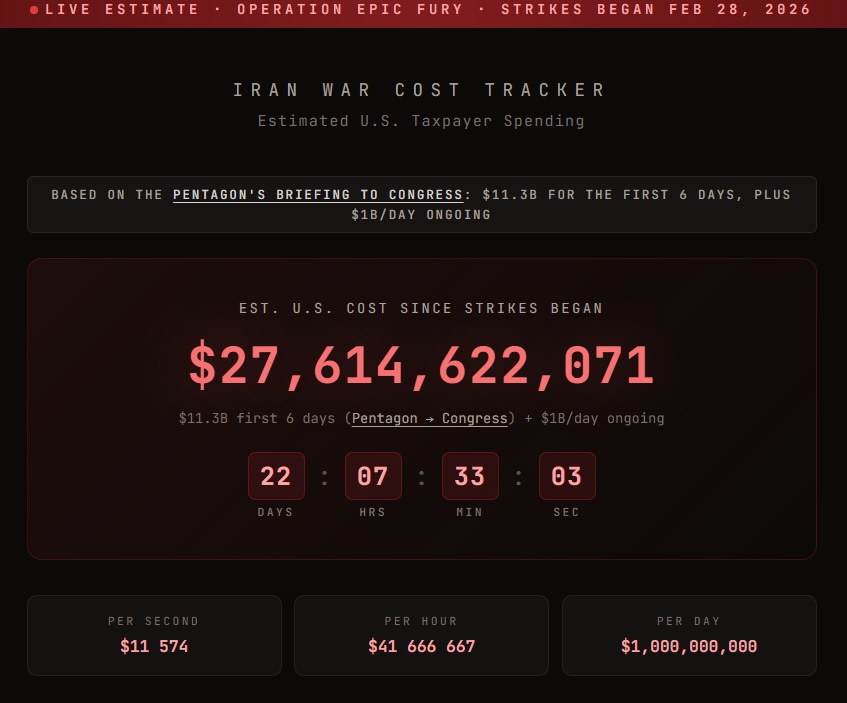
This means that the US is spending nearly US$2 billion per day on the war, just on the munitions. For instance, a single Tomahawk missile costs US$3.5 million; the US has already fired over 300 Tomahawks, costing the US over US$1.2 billion.
Meanwhile, the Pentagon has asked the White House to approve a request to Congress for more than US$200 billion to continue the war against Iran.
In the Iran War, the US is burning munitions worth US$2 billion daily, it is depleting the stocks of its critical munitions, possibly making itself vulnerable in a war-like situation with China and Russia, and also exposing the hitherto unnoticed weaknesses of its frontline weapons systems, such as the MQ-9 Reaper drones, the F-35 fighters, THAAD AD system, and USS Gerald R. Ford.
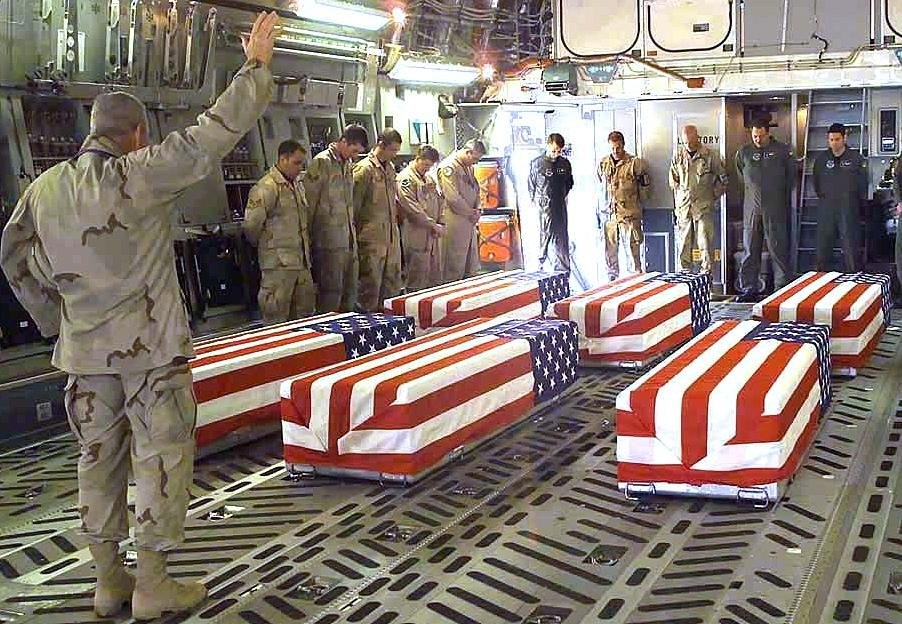 American coffins are leaving Iran
Photo: www.af.mil
read more in our Telegram-channel https://t.me/The_International_Affairs

















