РУССКИЙ
 15:22 11.12.2025 •
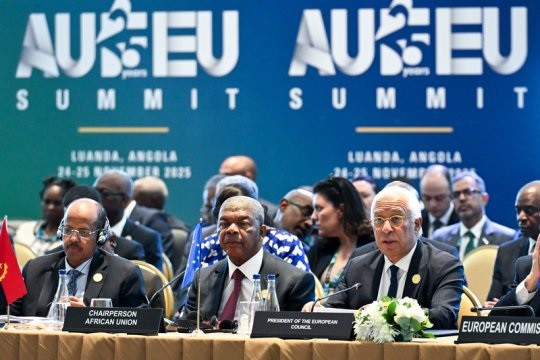
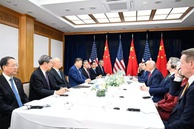
AU-EU summit, Luanda, Angola, 2025
While Europe sees its international standing sagging, both economically and geopolitically, emerging powers are moving in the exact opposite direction. Above all the African countries, which refuse to remain de facto players in global affairs and seek more active participation in shaping the global agenda, strategic autonomy, and, of course, recognition of their status as a partner deserving equal and fair treatment both in the application of international law, the terms of foreign loans, and representation in global institutions of governance, primarily the United Nations.
However, despite these aspirations, the African continent, this "cradle of humanity," remains the centerpiece of clashing geopolitical interests by the world's major powers, with China, the United States, Russia, India, Turkey, and the countries of the Middle East most actively seeking closer cooperation with various countries of the "Dark Continent." Some of them see Africa as a source of valuable, strategically important natural resources; others - as a rapidly growing market for their products; while still others – as partners and allies in international affairs. For European countries, grappling with mounting problems at home and external challenges, primarily the current trade, economic, and political confrontation with the United States, as well as growing threats from China, the African continent could be their last hope for maintaining their global influence, which is impossible without a successful strategic partnership with African countries.
After more than a decade of inactivity, the EU's growing interest in Africa became particularly evident due to a number of factors, including Europe's need for raw materials such as lithium, cobalt, and other minerals essential for the development of "green technologies," Africa's young population and growing market, attractive to the Old World, and also because Europeans need African resources to ensure their energy security. China's active expansion into the continent and Europe's loss of its former influence in the region to the United States, China, and Russia, are forcing Europeans to build closer political and economic ties with Africans, spending enormous resources to cultivate the image of an "equal partner." This is clearly evident in the statements made by European politicians, including European Commission President Ursula von der Leyen, who has recently been going on record saying that "Africa needs Europe, and Europe needs Africa." The need for “shaping a prosperous and sustainable future for Africa and Europe was a major point of discussion at the 7th AU-EU summit held on November 24-25, 2025, and was included in the event’s final declaration.
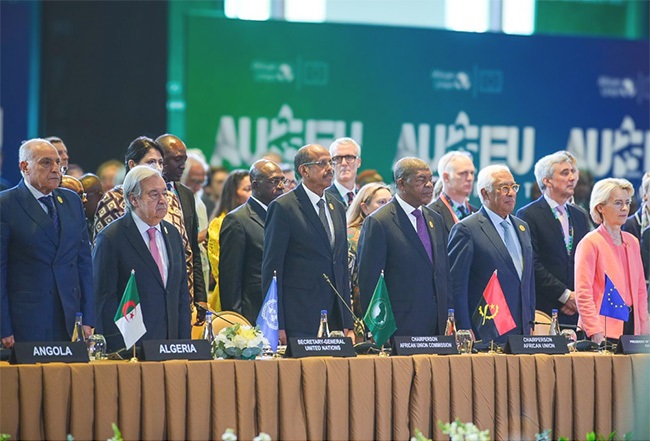 AU-EU summit, Luanda, Angola, 2025
Against a backdrop of growing competition, where other powers have found their niche, Europe is trying to charm Africans with significant financial investments. Thus, the EU launched the "Global Gateway" strategy as an alternative to China’s ambitious "Belt and Road" initiative. During the 2022 AU-EU summit, the EU launched the "Africa-Europe" investment program to invest 150 billion euros in infrastructure projects in African countries. Europeans are actively developing cooperation in partnership with NGOs, which also invests significantly in "civil society development" and "humanitarian projects." For example, European countries provide significant co-financing for major international events in Africa, including the G20 summit held in South Africa in November 2025, which received significant support from European countries.
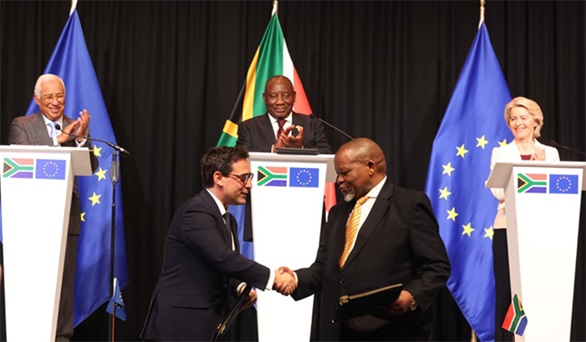 South African and EU leaders meeting in Johannesburg, South Africa, ahead of the 2025 G20 summit
Such significant investments are meant to safeguard European interests on the continent, with annual trade between the EU and Africa now exceeding 230 billion euros. Each year, Europeans allocate at least 60 billion euros to African countries, with about 30 billion coming from the EU itself. This allows the Europeans to maintain their status as Africa’s largest donor, even surpassing the United States, which put on hold most of its support programs for African countries in 2025. Furthermore, Europeans are clearly trying to capitalize on the problems that emerged in relations between the United States and the African countries under President Donald Trump. This is particularly evident in the EU countries’ increased cooperation with South Africa amid the worsening crisis between Washington and Pretoria. In 2025 alone, the Europeans held an EU-South Africa summit, as well as a number of high-level meetings in this format, promising the South Africans significant investments, especially in the development of critical mineral resources that both the US and China are actively competing for.
That being said, the Europeans have not been entirely successful in their effort, though. There is a new wave of anti-colonialist populism now arising in Africa, which is no longer willing to readily agree to opaque cooperation that is just an instrument of neocolonialism disguised in more respectable modern forms. Representatives of the "dark continent" are clearly aware of European double standards. For example, they often wonder why Ukrainian refugees in EU countries are treated better than those of African descent.
No matter how hard they try, Europe and Africa still face serious problems due to a lack of mutual trust, especially when it comes to realizing their foreign policy goals at the global level. If Europeans fail to establish closer cooperation with Africans and gain privileged access to their markets and resources, they will lose their competitive edge and will find no place for themselves among the major powers in the new technological order. This will lead to the gradual erosion of Europe's former greatness, leaving it an economic outsider on the fringes of global politics.
The views of the author are his own and may differ from the position of the Editorial Board.
read more in our Telegram-channel https://t.me/The_International_Affairs