
 РУССКИЙ
 10:03 18.03.2026 •
Pic.: publics
Iran war hits Europe with an energy shock it can’t afford to absorb. An energy shock from the war in the Middle East is set to deliver a punishing blow to Europe’s economy, in a bitter twist for a region that had been hoping to accelerate growth this year after a long stretch of stagnation that angered voters across the continent, ‘Wall Street Journal’ writes.
Today, borrowing costs are surging across the continent, and government debt in the U.K. and France is at or near the highest share of GDP in at least six decades.
“We don’t have any more money”
“We don’t have any more money,” Bank of France Governor François Villeroy de Galhau told broadcaster RTL.
Rising energy costs threaten to accelerate deindustrialization as energy-intensive industries such as chemical makers close factories and shift production to China or the U.S.
Already, the rise in oil and gas prices during the first 10 days of the conflict cost European taxpayers an additional three billion euros, equivalent to about $3.4 billion, in fossil-fuel imports, European Commission President Ursula von der Leyen said Wednesday.
“The first tangible effect we are seeing is on the logistics side: Transport costs have risen,” said Gerhard Freitag, a plant manager for Claas, a manufacturer of agricultural machinery based in western Germany. The company has hedged its energy contracts, meaning that any higher prices will only arrive with a delay, Freitag said.
The bigger concern
The bigger concern, said Claas CEO Jan-Hendrik Mohr, is the increasing pressure on farmers. Rising input costs, from diesel to fertilizer following the conflict with Iran, are hitting already tight margins. “This squeeze on farm profitability could ultimately drive food prices higher,” Mohr said.
In Germany’s east, a spokesman for chemical manufacturer SKW Piesteritz said, “The situation is and remains tense.”
The company is facing sharp price increases for the natural gas that it uses as a raw material to make fertilizer, its primary product. “These price jumps are threatening if the prices for the main raw material cannot be passed on to customers via product prices,” said the spokesman, Markus Bosch.
“Ultimately, we face alarming inflation for the entire economy and society.”
The conflict in Iran is only the latest blow President Trump’s policies have delivered to Europe’s economy. Last year, his tariffs curtailed access to Europe’s biggest export market and caused a rush of imports from China that were bouncing off the U.S. tariff wall.
The continent’s economy is dependent on international trade, in part because it has few natural resources of its own. In the eurozone, the value of external trade is nearly half of the bloc’s annual output, against around 35% for China and 25% for the U.S.
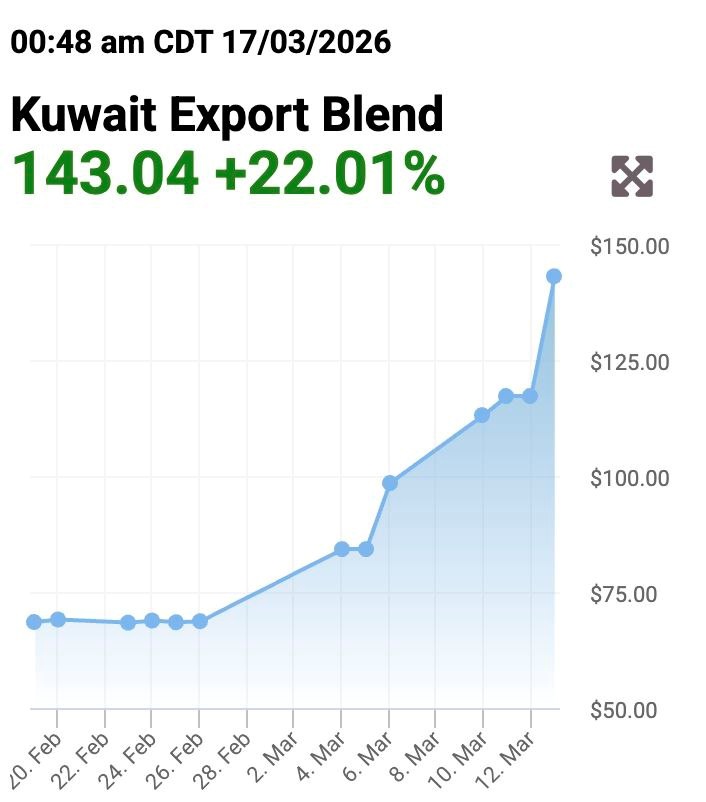
With economic growth running around 1%, the oil price hitting $125 or higher could suffice to tip Europe into recession, said Neil Shearing, chief economist at Capital Economics in London.
A three-month blockade of the Strait of Hormuz with oil prices settling between $120 and $150 a barrel — an adverse scenario — could shave almost half a percentage point off Germany’s GDP next year, Dirk Schumacher, chief economist at German state-owned KfW bank, wrote in a note last week.
German Economy Minister Katherina Reiche proposed forbidding gas stations from changing prices more than once a day(?!)
Price increases at gas stations — a traditional irritant for voters — have varied across Europe, with some of the steepest rises in Germany, where the price of a tank of unleaded gas was about €13 higher last week compared with the week before the war began, according to an ING analysis.
Several support policies announced so far have one thing in common: They don’t require big upfront spending. German Economy Minister Katherina Reiche proposed forbidding gas stations from changing prices more than once a day.
France launched inspections to stop price gouging at the pump, in a sign that politicians are eager to show they are protecting consumers but lack the firepower for bigger measures.
read more in our Telegram-channel https://t.me/The_International_Affairs

















