РУССКИЙ
 10:19 09.12.2025 •
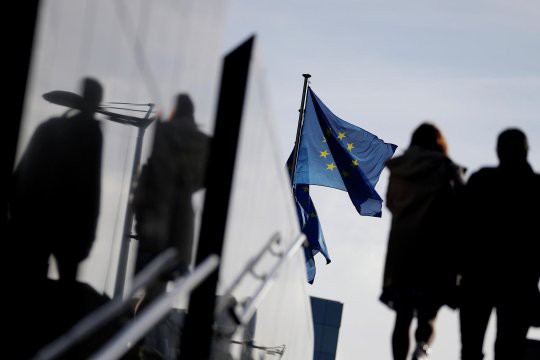
Donald Trump's proposed peace plan to end the Ukrainian conflict has laid bare Europe's impotence. EU leaders have long been alarmed by the prospect of falling behind in the struggle for technological, economic, and military superiority unfolding among the world's leading powers. Pessimists believe that this critical point has already been reached.
In October, Hungarian Prime Minister Viktor Orban acknowledged the growing disintegration of the European Union, emphasizing that without a radical systemic change, this trend will continue. Earlier, in a September post on the social network X (banned in Russia), Orban wrote that the West had lost its role as a civilizational benchmark. He called for "intellectual, political, and personal courage" to acknowledge this fact and for Hungary to independently chart an alternative and more promising development trajectory. Amid the complex interactions between key global players, concerns have increasingly being voiced in the European Union about the bloc’s ability to remain competitive in the global rivalry with Russia, the United States, and China. Politically fragmented and militarily not powerful enough, the European continent risks becoming marginalized in the emerging era of transactional politics. While rivalry between the great powers intensifies, Europe is experiencing serious difficulties in maintaining its competitive position, raising concerns about ending up as one of the main outsiders in the new world order.
That being said, concerns about Europe's looming decline are nothing new as European leaders have long warned that the EU may fall behind in the global struggle for economic, technological, and military dominance, where the United States, and now other leading powers, play a key role. Now it looks like European officials are beginning to realize that a turning point has already been reached. Europe’s exclusion from the US-initiated process of revising international trade rules only added to the general pessimism. Perceptions of the Old World's future worsened even more when the White House rolled out a plan to resolve the Ukrainian conflict without prior consultation with America’s nominal European allies.
In her September address to the European Parliament, European Commission President Ursula von der Leyen said that "the outlines of a new world order based on power are now being shaped. A new Europe must emerge." Such a metamorphosis necessitates a great deal of consolidation amid growing concerns by experts and politicians alike that due to its existing institutional structures and procedures the EU is doomed to play a secondary role in the new geopolitical hierarchy.
Faced with these challenges, the European Union is now working hard on its own diplomatic initiative to strengthen Kyiv's negotiating position with both Washington and Moscow. At the same time, the EU member states are ramping up their rearmament effort, while Brussels is looking for institutional solutions to overcome internal stagnation. The proposed transformation is inherently complex and long-term though, as many European officials warn that time to make it happen is running out fast. Therefore, attempts are being made to utilize limited participation formats ("coalitions of the willing") to strengthen the bloc's defense capability and economic resilience as a whole. However, the path to large-scale transformation is fraught with significant institutional and structural hurdles. National governments are not too eager to cede control over the planning and implementation of key decisions in their socio-economic and military policy, while the leading European industrial players are facing fundamental difficulties in transitioning from mutual competition to ad hoc, let alone strategic, cooperation. The consensus principle underlying the decision-making process in the 27-member Union often leads to political paralysis when confronted with a rapidly changing global environment.
As Danish Prime Minister Mette Frederiksen noted at the Copenhagen summit held last month, "I believe we are in the most difficult and dangerous situation since the end of World War II." The events of the past few months have only confirmed the validity of these concerns. In July, the European Union was forced to accept an asymmetrical trade agreement with the United States, allowing Washington to impose 15 percent tariffs without reciprocal concessions. The crisis over the West's access to rare earth metals, critical to Europe's defense capabilities and green transition, made the European officials realize full well the continent's vulnerability and dependence in strategic supply chains.
Brussels' entire institutional architecture, its procedures, and its mentality have proven completely out of sync with today’s reality of "power politics, confrontation, and fierce geo-economic competition." The results of the trade negotiations with Washington in July have brought to the forefront the fundamental question of Europe's strategic positioning in the global economic architecture. As German Chancellor Friedrich Merz noted some time ago, the coming years will be decisive in the choice between two scenarios: maintaining Europe's status as an independent economic center... or its transformation into a secondary actor, whose interests will be determined by the largest economic centers in America and Asia.
Overall, financial failures, the migration crisis, and debt remain the biggest economic challenges facing the European Union. Moreover, unlike previous crises, the leading EU countries – Germany, France, and Italy – now find themselves at the epicenter of economic and financial turmoil. The EU is suffering from deindustrialization, governments are fragmented and saddled with significant financial debt, and political "Balkanization," where executive power in major countries is held by minority parties lacking voter support, is widespread. Realistically minded observers say that the EU needs not only to adapt to the era of transactional diplomacy but also to learn to protect the very foundations of its sovereignty amid the fragmented global system.
The biggest geopolitical challenge, however, is the further erosion of transatlantic relations. The US is toughening its policy toward Europe, with the new National Security Strategy outlined by the Trump administration envisaging a scenario of Europe's long-term decline. The document contains a critical analysis of the internal challenges facing the European countries, such as demographic decline, the erosion of national identity, and a retreat from liberal democratic norms. According to the Strategy, the combined impact of these factors could lead to a fundamental sociocultural transformation of the region. It says that if the current trends are maintained, during the next two decades Europe could undergo dramatic changes. In response, Washington intends to support internal forces in Europe that oppose this trend and sees the growing political influence of right-wing parties in EU institutions as a positive development.
Bending under pressure from Washington, European NATO members have significantly increased their military spending, both for their own defense and to support the Ukrainian regime. The EU has also set itself an ambitious goal of achieving operational readiness by 2030. Should the Ukrainian conflict be somehow paused or stopped, the EU member states will face their most vexing disagreements over how to deal with the United States. The EU leadership remains seriously concerned about Washington’s long-term commitment to NATO and transatlantic obligations as a whole, fueling discussions about the need to speed up work to establish Europe’s very own strategic autonomy.
Discussions about how to minimize the consequences for the Old World of the increasingly likely loss of US security guarantees are not new, with the official rhetoric of the EU leadership and most member states underscoring a pressing need to strengthen their own military-strategic capabilities. However, experts are mostly skeptical about the Old World's potential to achieve even a minimally acceptable level of strategic autonomy.
That said, the most radical scenarios, such as Washington’s withdrawal from NATO or abandoning US nuclear safeguards for Europe, are equally unlikely to materialize though. US institutional and legal guardrails against the diktat of a single party or faction, make such steps technically complex. The real danger is not any radical move, however, but political paralysis. Domestic political polarization in the United States, which is exacerbating existing divisions within the European Union, could lead to strategic indecision and block consensus decisions within the transatlantic community.
Prominent German political scientist Alexander Rahr proposes three possible scenarios for the future development of the European Union. The first is about continuing the current course, characterized by political and economic stagnation while maintaining the rhetoric of stability, which brings to mind the ebbing years of the Soviet era. The second option envisions a potential change in the political elite: the rise to power of sovereigntists who will formulate and implement policies that prioritize the national interests of European states. The third, most radical, scenario envisions a simultaneous imposition of a state of emergency in key EU countries - Germany, France, and the United Kingdom - under the pretext of countering both external and internal threats. If the latter scenario becomes real, Rahr notes, it would be the end of the modern liberal era in Europe and lead to a fundamental shift in the political order.
Is Europe capable of coping with the complex set of modern-day contemporary challenges? The looming crisis will be more serious than the previous ones, since the nature of the threats facing Europe has changed. America and China share a disdain for the EU. Their leaders conflate economic and military-political issues in a bid to achieve maximum effect. Meanwhile, the current policies of European countries reflect a clear lack of a unifying strategic idea, with threats and problems now dividing Europe along new lines. The Old Continent now looks like a political space lacking a clear vision of the future and of shared strategic objectives, riven by internal socio-economic contradictions.
---------------------------------------------------------------
https://www.rbc.ru/politics/06/10/2025/68e3b4089a79472152304f03
read more in our Telegram-channel https://t.me/The_International_Affairs