РУССКИЙ
 11:05 28.02.2026 •
 Pic.: FA
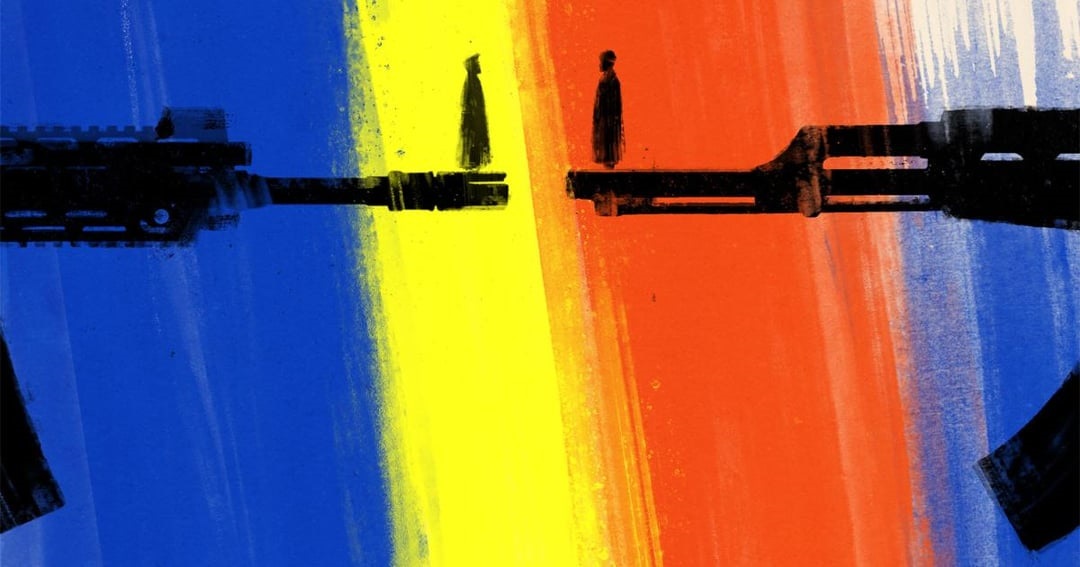
There will, in short, be little communication and much suspicion between NATO and Russia, ‘Foreign Affairs’ notes.
This is hardly a recipe for a new long peace. Quite the opposite: the risk of a direct conflict between Russia and Western states will remain unacceptably high. With prolonged distrust, ongoing military buildups, minimal communication, a gutted security architecture, there will be no shortage of scenarios in which a small spark could lead to a continental conflagration. The odds of war could grow especially high if the transatlantic alliance frays or even collapses.
Even as they struggle to end Europe’s current war, they must begin working to prevent the next one. NATO should accept that there’s no returning to the pre-2022 world and develop new ways to manage its relationship with the Kremlin. Otherwise, the Americans and the Europeans might find themselves in a third global conflict, with the continent once again the central battlefield.
Point of no return
For most of the post-Cold War era, Russia and Western states had working relations. After their confrontation ended, the two sides established a latticework of institutions, diplomatic forums, and exchange programs aimed at fostering mutual understa
nding and preventing conflict. They created the inclusive and consensus-based Organization for Security and Cooperation in Europe, a continent-wide forum for dialogue based on shared norms and institutions. They set up various mechanisms for interaction and even cooperation between NATO and Russia. And they implemented a host of arms control agreements and military confidence-building measures.
This framework was never perfect. But it was broadly successful at preventing a return to a Cold War-style standoff. The economies of the European Union and Russia grew increasingly interdependent: the former received cheap energy and other raw materials, and the latter gained large amounts of foreign direct investment, Western knowledge, and sophisticated consumer products. Millions of people began traveling back and forth between Europe and Russia each year via trains, land crossings, and dozens of daily flights. Russia was part of the EU’s educational standardization, which meant that degrees from its universities were recognized across the continent. Moscow was a party to the Council of Europe — the continent’s human rights, democracy, and rule-of-law organization — and its multitude of conventions.
But when Russian tanks started rumbling toward Kyiv on February 24, 2022, this system fell apart. The NATO-Russia Council was immediately suspended and subsequently abolished. Moscow withdrew from the Council of Europe. The Organization for Security and Cooperation in Europe still technically exists, but it now serves as a forum for Russia and NATO countries to exchange mutual ritualistic condemnations and accusations. EU-Russian trade has nosedived: in 2024, the total trade in goods between the EU and Russia amounted to around $80 billion, compared with around $300 billion only three years before. Aside from recent U.S. engagement on Ukraine, Western officials speak to their Russian counterparts very little, if at all, on any level. Educational exchanges have almost entirely ceased. The land crossings between Russia and its NATO neighbors are all either closed or heavily restricted. The only direct flight between Moscow and countries in Europe, aside from Belarus, is an Air Serbia flight that departs from Belgrade.
A cease-fire in Ukraine could mark the start of an even more dangerous era.
At first, Western allies told themselves that these steps were temporary. But after four years, it is apparent that this shift is permanent. Although some past wars — for example, World War II — have ended in reorderings in which the trends and systems that existed before and during the conflict were upended, the war in Ukraine is unlikely to produce such a moment.
With so many of its people dead and wounded and many more alienated by both domestic propaganda and Western policy and rhetoric, Russia will be angry and resentful toward the United States and Europe after the war in Ukraine is over. Moscow will have every motive to rearm and regenerate its forces. Some of those forces will be stationed in and around Ukraine, but many will be deployed along NATO’s eastern flank in order to tilt the military balance in Russia’s favor.
The old Russia, which at least paid lip service to cooperation, is not coming back. But prewar Europe is also long gone. The allies are in a process of remilitarization. They are massively increasing defense spending. Some of them are contemplating reinstituting mandatory national military service. Others are distributing manuals on what to do in case of an invasion. European countries will also position more troops near the NATO-Russian frontier: since Finland and Sweden joined NATO in 2023 and 2024, respectively, the alliance has been planning several new multinational military formations in the region. Meanwhile, officials have reengineered their countries’ economies away from being dependent on Russia, particularly for energy imports. European policymakers are personally — and justifiably — mortified by Russia’s ongoing aggression and atrocities in a country that borders four members of the EU and NATO. As a result, they have adopted hard lines on Russia and are deeply skeptical about the prospects for any engagement.
For now, it is safe to conclude that the continent’s environment after the war in Ukraine ends will not be dramatically different from the unstable environment of today. NATO allies and Russia will remain largely cordoned off from each other, with no functioning mechanisms for intergovernmental or intersocietal communications. They will struggle to understand each other’s decisions and will assume the other side is hostile in intent.
Break the ice
In the postwar period, deterrence will continue to be the bedrock for any plan to manage Moscow. But deterrence alone will not be enough. Allies will need new formats for dialogue and interaction with Russia to reduce risks and contain tensions. And at the moment, no Western government seems to have a plan for handling an adversarial relationship with Russia after the war.
But there are templates they can follow. During the latter decades of the Cold War, there was more dialogue between Moscow and NATO than there is now, and Western countries could start building institutions like the ones that helped keep the peace during that era. European allies, for instance, might establish communication lines to Russia akin to the nuclear crisis hotline that still connects the White House and the Kremlin.
Russia and NATO countries could also forge risk-reduction mechanisms similar to the 1972 Incidents at Sea Agreement, which established a shared code of conduct to prevent inadvertent clashes between each side’s ships and aircraft. And after the war, European and American policymakers should aim to restore some degree of mutually beneficial connectivity with Russia. Reverting to prewar openness would be unwise and infeasible, but maintaining a near-complete severing of ties creates fertile ground for misunderstandings and misinterpretations that make conflict more likely.
There was once a time when NATO and Russia might have been able to resolve many of their problems through diplomacy. For 30 years, the two sides had a collaborative, if fraught, relationship. They had some shared interests and, it seemed, shared ambitions.
But those days are gone, and they are not coming back. Today, the relationship is shaped almost entirely by hostility and suspicion. It is extremely volatile, and it will stay that way no matter how the war in Ukraine is settled.
That is no small task, and success may ultimately depend on forces beyond the allies’ control. Although NATO states can and must build up their militaries without needing Moscow’s buy-in, establishing new lines of communication to the Kremlin will, of course, require Russian agreement.
But the proposition must be tested before it is dismissed. Powerful adversaries need to talk. Prudent, clear-eyed, and hard-nosed diplomacy has a critical role to play in avoiding interstate conflict. That is especially true when that conflict could be existential, as any shooting war between nuclear powers would be.
read more in our Telegram-channel https://t.me/The_International_Affairs