
 РУССКИЙ
 11:26 12.12.2025 •
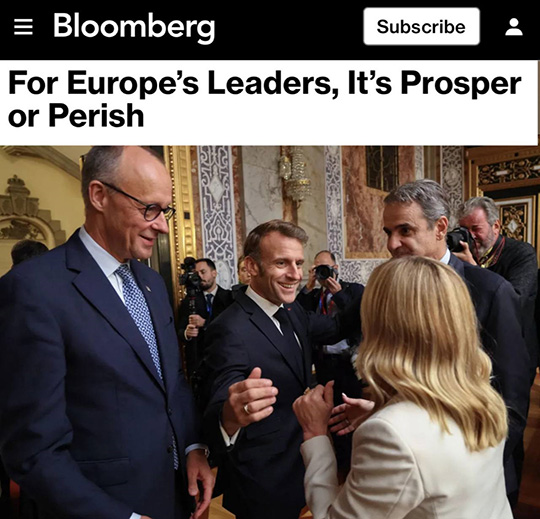
Europeans consistently rank the economy as their No. 1 concern. It’s easy to see why. Since 2020, the typical adult’s income hasn’t kept up with inflation. Energy bills are about 60% higher. Overall output growth has averaged just 1.2%, leaving living standards — as measured by gross domestic product per capita — at the lowest level in more than four decades when compared with the US, Bloomberg notes.
A useful road map for turning things around already exists — in the form of recommendations that Mario Draghi, the respected former head of the European Central Bank, made last year at the behest of the European Commission. The bloc, it says, must radically boost productive investment in areas such as infrastructure, clean energy and startups — by more than €750 billion per year, public and private combined.
Yet pledges of support for the plan haven’t translated into action — to Draghi’s vocal dismay. The EU’s proposed long-term budget, measured as a share of the economy, is barely larger than its predecessor. Joint borrowing is limited to a €150 billion defense fund — a far cry from the deep, liquid EU bond market the continent sorely lacks. A unified capital market remains distant as member states — notably Germany — oppose the cross-border bank mergers and common deposit insurance that would help break down financial borders.
The fundamental problem: National leaders don’t want to cede control. They understandably prefer to set their own rules, favor their own banks, decide how companies can operate and invest on their territory. They worry that the EU will misspend their funds or bail out depositors elsewhere at their expense. Yet they have ample power at the EU level to address reasonable concerns, which mustn’t blind them to the benefits that the union is still best positioned to provide.
At crucial junctures, Europe’s leaders have demonstrated that they can set aside narrow interests and cooperate, often to great effect. They’re now facing yet another crisis, this one political. Right-wing populists, capitalizing on dissatisfaction with ineffective leadership, have already gained a large enough vote share to severely limit mainstream parties’ ability to govern. If Europe’s centrists don’t join forces to demonstrate measurable progress within the next few years — especially on economic matters — there’s a good chance they’ll be swept away.
read more in our Telegram-channel https://t.me/The_International_Affairs

















