РУССКИЙ
 0:01 03.12.2025 •
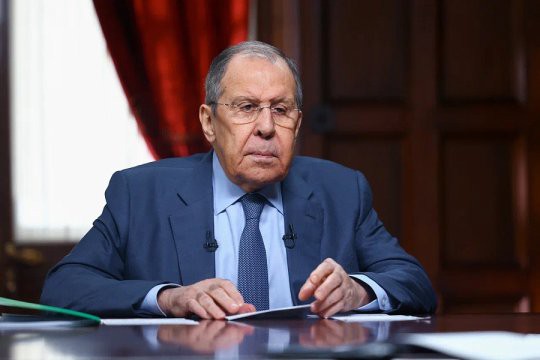
The degradation of the OSCE: The price of serving Western interests
In just a few days, on December 4-5, the OSCE Ministerial Council will gather in Vienna for an annual meeting. Russia has traditionally been active in this consultative mechanism. Considering the 50th anniversary of the signing of the Helsinki Final Act, the Russian delegation will focus on the origins of the current state of affairs at the Vienna platform. I will say right away that the situation is desperate.
The pan-European process was launched at the turn of the 1960s and 1970s to overcome Europe’s division, to alleviate military-political confrontation, and to promote trade and economic cooperation. After the Cold War and bloc confrontation ended, there was a chance to form pan-European architecture of equal and indivisible security. The OSCE could well have become its cornerstone. Upon its establishment in 1994, it brought together former members of the Warsaw Treaty Organisation, NATO members, as well as neutral states. At the top level, the OSCE agreed on a crucial political commitment not to strengthen one’s security at the expense of the security of others. It was solemnly enshrined in the 1990 Paris Charter for a New Europe, the Charter for European Security of 1999, and the Astana Declaration of 2010.
The problem is that the OSCE participating states representing the collective West did not honour this commitment and instead opted for a European security system based on NATO. From the mid-1990s onward, they carried out NATO’s eastward expansion contrary to the assurances once given to the Soviet leadership not to do so. At the same time, supported by the EU bureaucracy in Brussels, NATO turned the OSCE into a mechanism for promoting Western interests in the area east of Vienna to the detriment of pan-European objectives.
NATO and EU members, not Russia, dismantled the OSCE’s politico-military dimension. In particular, they blocked the entry into force of the Agreement on Adaptation of the Treaty on Conventional Armed Forces in Europe. Washington terminated the Open Skies Treaty. The 2011 Vienna Document is the only remaining instrument from the OSCE’s first basket which is complied with by Western countries very selectively, and some of them don’t comply with it at all.
Despite resistance from NATO and the EU, Russia has so far managed to prevent the abolition of the consensus rule in the work of the Forum for Security Cooperation (FSC) which is the OSCE’s main platform for addressing military security issues. However, much is being done to undermine the structured dialogue launched in 2016 within the FSC. Hope that this format would facilitate military-to-military contacts failed to materialise.
Even on a unifying topic such as countering terrorism and drug trafficking, the OSCE was unable to adopt a single ministerial-level document since 2017. Combatting transnational threats, when it is discussed at all, is considered only through the lens of the Ukraine crisis.
The organisation’s critical functions as envisioned by its founders include early warning and dispute resolution. The OSCE has failed to become an honest broker in resolving regional conflicts. For example, in Transnistria, where in 2003 a peace plan already initialled through Russia’s mediation was not signed at the last moment by Moldovan President Vladimir Voronin, who gave in to Western leaders’ pressure.
The OSCE abandoned the principle of impartiality in the Ukraine crisis with Berlin and Paris turning a blind eye to Kiev sabotaging the 2015 Minsk Agreements and the crimes committed by Ukrainian armed formations against civilians in Donbass, starting with the 2014 “anti-terrorist operation” to this day.
This Ukrainisation has affected the economic dimension as well. The OSCE has discarded previous achievements on combatting corruption, advancing the digital economy, and building transport infrastructure. It has reached the point where, contrary to the spirit and letter of Helsinki, unilateral coercive measures are being justified at the Vienna venue. Russian representatives are denied visas to participate in the OSCE Economic and Environmental Forum in Prague.
The situation with the human dimension, i.e. the third basket, which the West used to interfere in the internal affairs of the Soviet Union and modern-day Russia, is not any better. Urgent tasks such as promoting intercultural dialogue, combatting manifestations of neo-Nazism, Islamophobia, and Christianophobia, and protecting the rights of ethnic minorities and believers have been wiped out from the agenda. The OSCE Office for Democratic Institutions and Human Rights, the infamous ODIHR, overlooks its duties and pays no heed to lawless conduct of the neo-Nazi Kiev regime and the ruling circles of the Baltic states and Moldova, which adopt racist laws and subject local Russian population to ruthless discrimination. Instead, ODIHR is pumping out blatantly untruthful reports about Russia’s alleged violations of international humanitarian law during the Ukraine conflict and is doing so unilaterally using extrabudgetary funds that have not been approved by consensus of the participating States.
The OSCE is also looking the other way when it comes to censoring Russian media in the West even though its documents clearly state that each participating state must ensure free access to information.
Using the visa lever, Russian civil society representatives are prevented from attending the OSCE events. Clearly, the organisers fear hearing the truth about what is actually happening in our country. The Polish side, which organised the annual Human Dimension Conference, said they revoked visas for the Russian participants this October one day before the departure date because our NGOs are allegedly helping promote Russia’s interests, including spreading propaganda and disinformation about “aggression against Ukraine.” It’s propaganda and disinformation at their finest, the Polish variety this time.
The attack on the consensus rule - the key OSCE principle that guarantees the rights of all participating states - has been ongoing for years. The Finnish Chairmanship-in-Office has also “excelled” in this unseemly endeavour. Those who undermine consensus should understand that without it, the OSCE will lose its reason for existence.
I’d like to close by reiterating that there is no cause for optimism. There is no light at the end of the tunnel. However, preventing the OSCE’s collapse, at least now, is still possible. To achieve this, all participating states must return to observing the Helsinki principles of equal and mutually respectful dialogue.
read more in our Telegram-channel https://t.me/The_International_Affairs