
 РУССКИЙ
 22:33 18.02.2026 •
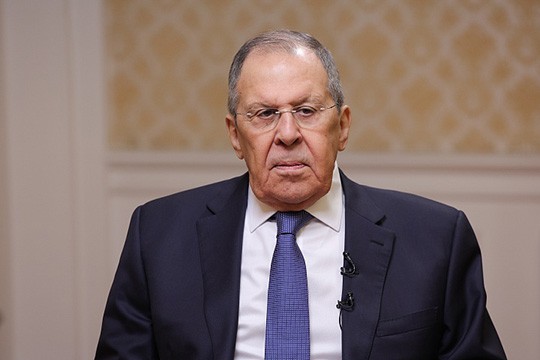
Question: Today marks 100 years of diplomatic relations between Moscow and Riyadh. How would you assess the path we have covered from the current perspective? Can you say that we have entered a new period in the history of our relations?
Sergey Lavrov: Let’s begin with the anniversary. Our country, known as the Soviet Union back then, was the first to recognise the newly established Kingdom of Hejaz and Nejd (including the regions of al-Hasa and Qatif), which was later renamed the Kingdom of Saudi Arabia. The founder of the kingdom, King Abdulaziz Ibn Saud, went down in history by creating a state that continues to bear his name.
The Soviet Union recognised the independence of the newly established kingdom based on the principle of self-determination, which we respected back then and continue to respect now. The establishment of the Kingdom of Saudi Arabia is a fine example of the application of this approach, when people themselves choose their way of life, the form and the state they want to live in, and their religion and the traditions of their forefathers.
Later, there were different periods in our relations, with their ups and downs. But over the past 20 years, trust-based, frank and mutually beneficial ties have developed between King Salman bin Abdulaziz Al Saud, the Custodian of the Two Holy Mosques, and Crown Prince and Prime Minister Mohammed bin Salman Al Saud, and President of Russia Vladimir Putin.
Our country regards Saudi Arabia as its strategic partner in the region. We believe that this view is shared by our Saudi colleagues. We are developing our relations through dialogue at the highest level. Your Crown Prince and our President have recently had a telephone conversation. during which they discussed the fundamental aspects of our partnership in the economic, humanitarian and political spheres. They have coordinated the further development of our contacts, primarily in the immediate future.
Many events have taken place. A regular, 9th meeting of the Intergovernmental Commission on Trade, Economic, Scientific and Technical Cooperation was held in December 2025. We are working together within OPEC+. This year, we will mark the 10th anniversary of the Declaration of Cooperation signed between OPEC and 11 non-OPEC producers. It is a vital structure that is playing and will certainly continue to play a responsible role on the global energy markets.
Several days ago, in February 2026, Riyadh hosted a meeting of the INNOPROM. Saudi Arabia International Forum and exhibition of industrial achievements, which was also held in Russia. This year, it was held very successfully in Saudi Arabia.
On behalf of the Muslims of Russia, I would like to express our gratitude for the special attention you are giving our pilgrims. You have approved a large quota for us, 25,000, and this quota is almost fully used. This is an evidence of our solidarity for the preservation of the traditional values of the major world religions.
We are developing humanitarian, cultural, educational and sports ties. In September 2025, Moscow held the relaunched Intervision music contest, in which a Saudi singer took part and was very warmly received by our public. A decision was made during an exchange of messages between President Vladimir Putin and Crown Prince Mohammed bin Salman Al Saud to hold the next Intervision contest in Saudi Arabia in 2026. Our representatives have already met. We understand which Saudi officials will be responsible for this event.
A few days ago, I had a conversation with my friend, Foreign Minister Faisal bin Farhan Al Saud. One of the issues we discussed concerned the preparation of that contest, which, just like many other things we do, reflects the striving of Russia and Saudi Arabia to promote traditional values. The contest in Moscow was attended by representatives from nearly 30 countries, whose songs reflected the cultural traditions of their nations. I know that Crown Prince and Prime Minister Mohammed bin Salman Al Saud, is paying great attention to the cultural aspects of your society, which is undergoing a cultural renaissance.
We are very pleased with our cooperation. We believe that it has a positive future.
Question: If the relations with Saudi Arabia can be called an example of a balanced partnership, what is Russia’s current place in the Arab world in general?
Sergey Lavrov: We enjoy solid relationships with all Arab countries and their organisations. These include the League of Arab States (LAS), with which we have held about half a dozen ministerial meetings. We also plan to hold the Russia-LAS summit. We also maintain a close relationship with the Gulf Cooperation Council (GCC), which has been maintained by annual events at the level of foreign ministers. We adhere to this schedule.
Saudi Arabia is the leader of the Arab world, a country of two holiest sites in Islam, and the author of the Arab Peace Initiative to settle the most complicated and enduring crisis, the Palestinian issue.
This is the format of our relations with the Arab world. It is not simply a procedure. Any meeting at the level of ministers, deputy ministers, experts and special envoys is a helpful tool promoting a trusted exchange of assessments and developing coordinated approaches to both regional and global issues that are discussed by the UN, where we also cooperate closely. We value this interaction.
Question: American military presence near Iran is growing. The Trump administration is seeking an agreement with Tehran. What does Russia think about it? What could be the consequences of a strike on Iran for the region and for Russia?
Sergey Lavrov: The consequences would be adverse. Strikes on Iran have already occurred in the past, targeting the nuclear facilities supervised by the IAEA. As far as we can tell, there were real risks of a nuclear incident. The situation is more or less stable right now, judging from the data of our Iranian colleagues. However, the strikes on nuclear facilities forced the Iranians to think about the physical protection of nuclear materials, which, I repeat, are under the IAEA’s control and cannot be “touched.”
Regrettably, Israel and the United States still went ahead with the strikes, creating physical risks and undermining the authority of the IAEA and the Treaty on the Non-Proliferation of Nuclear Weapons, which, as Iran has noted repeatedly, is mandatory for Iran. The IAEA has exerted unprecedented control, especially in the past years, after the signing of the JCPOA. Iran was never found violating the Non-Proliferation Treaty or its agreement on guarantees with the IAEA. All risks and political tensions emerged after the United States withdrew from the JCPOA in 2018, three years into its term.
In their typical manner, instead of insisting on restoring this crucial document in its integrity, Europeans blamed Iran for everything – and they continue blaming it to this day. Consequently, Iranian officials refuse to speak with them and prefer a direct dialogue with the United States. Despite the fact that all the restrictions imposed on Iran under the JCPOA expired in November 2025, Europeans are using underhand means to turn the case around and claim that the sanctions imposed on Iran before the JCPOA have been reinstated. While doing so, they are leaving aside the fact that it was the United States that terminated the programme nine years ago. We are concerned about the UN Secretariat’s attempts to play along.
We maintain close contacts with Iran representatives. Senior advisor to the Supreme Leader of the Islamic Republic of Iran Ali Larijani and Foreign Minister of Iran Abbas Araghchi are remaining in touch with us. We have no reasons to doubt that Iran genuinely wishes to resolve this problem on the basis of respecting the Non-Proliferation Treaty.
Within the framework of the Iran-US talks that were resumed in Geneva, with the mediation of the Sultanate of Oman, one issue has been raised incorrectly: namely, that Iran must denounce its right to uranium enrichment for any purpose – either completely or drastically downsize its missile programme and stop influencing any political powers in the region.
We maintain close contacts with Iran representatives. Senior advisor to the Supreme Leader of the Islamic Republic of Iran Ali Larijani and Foreign Minister of Iran Abbas Araghchi are remaining in touch with us. We have no reasons to doubt that Iran genuinely wishes to resolve this problem on the basis of respecting the Non-Proliferation Treaty.
Within the framework of the Iran-US talks that were resumed in Geneva, mediated by the Sultanate of Oman, one issue has been raised incorrectly: namely, that Iran must give us its rights to uranium enrichment for any purpose, either completely or drastically downsizing its missile programme and ceasing to influence any political forces in the region.
The first of these demands is contrary to the NPT. Iran has the right to enrich uranium for peaceful purposes. It has always done so under the strict supervision of the IAEA. The Agency has never stated that enriched uranium has been diverted for military purposes. When the United States tore up the JCPOA, Iran declared it was no longer bound by its restrictions and began enriching uranium to higher levels. This is, of course, a legitimate cause for discussion, as no one wants to see the sudden proliferation of nuclear weapons. The Islamic Republic’s response is that it is prepared to reduce enrichment to the levels necessary for peaceful nuclear energy generation, non-energy purposes, and medical applications. This level, universally recognised as safe, is 3–6 percent.
Iran is ready to guarantee a return to purely fuel and energy needs under IAEA oversight. The Agency must demonstrate its commitment to the principles by which its Secretariat operates. However, following the strikes on Iranian nuclear facilities during the Twelve-Day War in June 2025, the IAEA has not stated its position, despite the fact that these facilities were under its safeguards.
This does nothing to enhance the Agency’s credibility, which is regrettable. We place great value on the work of the Secretariat, and we would not want to see the Agency, at this critical juncture, deviate from its principles or attempt to politicise its activities in any way.
I am convinced that if the normal work of IAEA inspectors, as mandated by its founding documents, is restored, the Iranian side will certainly cooperate with them.
We cannot ignore the fact that Israeli Prime Minister Benjamin Netanyahu is actively pushing for radical measures against Iran, seeking to undermine its legitimate rights under the NPT and other international treaties and conventions.
I am closely monitoring the reactions to events in the region – particularly those of the Arab countries and the Gulf monarchies. No one wants further escalation. Everyone understands that this is playing with fire. Such provocations could undermine the positive trend we have seen in recent years, as the Gulf Cooperation Council states have been improving their relations with the Islamic Republic of Iran. A key milestone here was the normalisation of relations between Saudi Arabia and Iran.
The signals that Arab countries are sending to Washington are clear: they are urging restraint and calling for agreements that, on the one hand, do not infringe upon Iran’s legitimate rights, and, on the other, provide guarantees, including through verification activities, that Iran’s uranium enrichment programmes remain exclusively peaceful.
Question: How would you characterise relations with Syria at present, particularly following two visits by President of Syria Ahmed al-Sharaa to Moscow? At this stage, how do you perceive the nature of Russia’s presence in Syria against the backdrop of Damascus and Moscow’s shared commitment to fostering relations founded upon mutual respect and mutual benefit?
Sergey Lavrov: Mutual respect and mutual benefit – these are the principles that have underpinned our relations with the Syrian Arab Republic from the very beginning, since its establishment.
We hold these relations in high regard. We share a rich legacy from Soviet times, when numerous industrial facilities were constructed and educational initiatives were implemented. The Syrian people remember this. Whenever we visit or host Syrian counterparts in the Russian Federation, we observe that these sentiments are genuine – they emanate from the people. We reciprocate in every possible way.
When the events of December 2024 unfolded, the Syrian state – much like several of its neighbours, including Iraq, Yemen, and Libya – faced the threat of disintegration. All of this stems from the so-called Arab Spring of 2011, which brought no good whatsoever to the region, least of all to the Syrian Arab Republic.
We firmly believe that a multi-ethnic, multi-confessional state such as Syria must restore its unity, territorial integrity, and sovereignty as swiftly as possible. In this endeavour, we will continue to – and indeed already do – assist Damascus and its new leadership.
Transitional President of Syria Ahmed al-Sharaa visited Russia in October 2025 and again in January 2026 – accompanied by Minister of Foreign Affairs and Expatriates Asaad Shibani. I met with my counterpart four times in 2025. One encounter took place in Türkiye on the sidelines of the 4th Antalya Diplomatic Forum, another occurred on the margins of the 80th session of the UN General Assembly, while on two further occasions, he led an interdepartmental delegation to Moscow. Discussions were substantive. Late in 2025, another session of the Permanent Russian-Syrian Commission on Trade, Economic, and Scientific-Technical Cooperation was convened.
All of this demonstrates both sides’ commitment to normalising relations following the dramatic upheavals in Syria, and reflects our Syrian colleagues’ recognition of Russia’s stabilising role – ensuring that Syria does not remain subject to the influence of one or two external factors.
They perceive our presence, including at the two facilities in Khmeimim and Tartus, as a stabilising force – one that counterbalances the influence of other players. We observe, for instance, how Israel asserts its claim to a near-controlling role in southern Syria, forging ties with the Druze. The Druze, as has historically been the case throughout much of the Syrian Arab Republic’s existence, harbour their own grievances against the central government.
Reports suggest that the Americans are withdrawing from the northeast. This may well be prudent, provided their departure is managed in a way that does not generate new threats. As is often the case with the Americans, their exits tend to be abrupt. Camps housing members of the terrorist organisation ISIS were left unattended for a period. By some estimates, seven – if not ten – thousand individuals detained for involvement in terrorist activity have since dispersed – whether into Iraq or elsewhere. This will inevitably spawn further instability in the region.
In collaboration with our partners – including those within the UN Security Council who take a vested interest in the Middle East – we will strive to assist the Syrian state in stabilising the situation. On this, we share a common understanding.
As for our military facilities, discussions are ongoing. Let me reiterate: the Syrians are keen for our presence to endure. These sites, while no longer purely military in function as they were prior to December 2025, remain well-suited for repurposing as humanitarian hubs.
Syria serves as a convenient transit point. We stand ready to channel our humanitarian aid – including that destined for Africa – through these facilities. We would welcome other states likewise availing themselves of these operational platforms to direct humanitarian and other civilian freight toward the African continent.
I am confident – and this was reaffirmed during the most recent visit of President of Syria Ahmed al-Sharaa to Russia, as well as his talks with President Vladimir Putin – that we possess a robust roadmap for the foreseeable future. We will vigorously pursue its implementation, in the interests of both the Syrian people and regional stability.
Question: Regarding the relations with Israel and the developments in the Gaza Strip, what is your assessment of the agreements to which Moscow is a party? What does the future hold, in your opinion? What about the Board of Peace? Has Russia received a specific answer to the proposal to contribute $1 billion to this board?
Sergey Lavrov: Russia has long-standing ties with Israel, where a huge Soviet and Russian diaspora lives. People can speak the Russian language virtually anywhere across the country, and this has been the case since the Soviet era.
Regarding Israel’s establishment, the USSR was the first country to recognise Israel. President Vladimir Putin has emphasised many times since taking office at the Kremlin that when it comes to the Middle East Peace Process, we invariably speak out in favour of not only fulfilling the legitimate aspirations of the Palestinians, but also satisfying Israel’s interests in ensuring its own security, considering that it is surrounded by Arab countries.
However, in this connection I also cannot forget the conversations I had with so many Israeli colleagues of mine as part of our attempts to promote approaches as set forth by the UN Security Council, within the now-extinct Quartet on the Middle East, which used to include first the USSR and then Russia, as well as the United States, the EU and the UN. We tried persuading Israel to adopt a constructive approach on the issue of creating a Palestinian state.
By the way, when the UN General Assembly decided to split Palestine in 1948 and to establish the state of Israel, this constituted a decision to create two states, Palestine and Israel. This resolution provided for establishing both states, which meant that the existence of one of them implied the existence of the other. At the time, the Arabs, the Palestinians, did not understand that this provision met their interests. As you know, they decided not to abide by this resolution. Combat action broke out, and resumed several times. There was the Yom Kippur War, the Six-Day War, and many other confrontations.
Prime Minister of Israel Benjamin Netanyahu has now openly said that there will be no Palestinian state. I do not think that this would improve Israel’s security, while this state has a legitimate right to ensure it, and we would like Israel and the region in general to live in peace and security.
As I have already discussed with my Israeli partners, the absence of a Palestinian state will continue fuelling extremism. We instantly condemned the October 7, 2023, terror attack. Israel responded to the attack by launching a large-scale war effort. The Israeli officials and IDF commanders openly responded to calls coming from the international community to respect international humanitarian law and refrain from using force against civilians, by saying that there were no civilians there, as if everyone there were terrorists, starting at the age of three.
The statements are absolutely inadequate and unacceptable. But here is the point I wanted to make. The occupation has been going on for 80 years, with settlements built over this 80-year-period. There was a withdrawal from Gaza under then Prime Minister Ariel Sharon, followed by a Gaza blockade. You know all this. Three or four generations of Arab children came and went over this 80-year period. When they go to school, I mean those who have this opportunity, their teachers talk about Palestine’s history and explain how it all happened. They probably omit the fact that the Palestinians made a mistake by refusing to create their own state in 1948. The past 20 years shape the way children see the world, and they saw that the rights of the Palestinian people have been ignored despite all the resolutions.
When I raise this point with the Israelis, I get a very strange response. They argue that this cannot justify extremism. Probably not. Extremism knows no justification, but addressing the root causes is an imperative, just like in any other crisis, including in Ukraine. We have said this many times. It is our firm belief that there will be no stability or calm there without a Palestinian state.
The question is how you create it and what will stay there. The Board of Peace was announced in autumn 2025. The United States submitted the corresponding draft to the UN Security Council. Together with our Chinese colleagues, we introduced our amendments. Their primary goal consisted of making sure that the way this Board of Peace operates, its goals and programme are based on the existing consensus-based UN resolutions.
But the authors refused to accept these amendments and spoke out in favour of acting in a more assertive manner. The Palestinians themselves and all Arab countries asked Russia and China not to block this resolution. This is why Moscow and Beijing abstained.
We welcomed the fact that the first stage of US President Donald Trump’s plan included a ceasefire, the release of hostages, and the exchange of bodies. These measures have been carried out. Overall, military activity has decreased sharply, although ceasefire violations persist.
Statistics on this matter have been disseminated by representatives of the United Nations. There is sufficient evidence that violence continues, albeit in isolated cases.
The second stage has been announced. It is important to understand how the Board of Peace, established under President Trump’s chairmanship, will manage the executive structures created within its framework. These structures are composed of foreign participants, many of whom are known for their past activities. However, such assessments are subjective. It is important that we judge by specific actions.
Of critical importance is the representation of Palestinians in this process, above all of the Palestinian National Authority, which has not been involved thus far. An executive committee of technocrats has been formed. How will responsibilities be assigned? How exactly will the disarmament of Hamas be carried out, and who is negotiating this with them? How will compliance be monitored? Reports suggest that Israel intends to destroy all tunnels, an undertaking of considerable scale.
There are some indications that members of Hamas may be prepared to seek compromise. As far as I understand, Israel maintains that Hamas should cease to exist as either a military or political entity. Hamas, much like Hezbollah in Lebanon, is nevertheless part of political life. One may disagree with such views, but there are many countries where figures holding radical positions occupy leadership roles.
Of course, the manner in which the reconstruction of the Gaza Strip will proceed is of critical importance. Proposals have been made to transform it into some kind of a “Middle Eastern Riviera,” or a casino or resort zone. Plans have also been discussed to resettle Palestinians in Somalia, Indonesia, Iraq, Egypt, or Jordan. Such matters require extreme caution. Our information suggests that the overwhelming majority of Palestinians wish to remain where they were born, where their ancestors lived and are buried. Yet this requires rebuilding Gaza, which has been devastated. Resettlement elsewhere may be unavoidable given present conditions, but guarantees must be in place to ensure that Palestinians will return, housing will be reconstructed, and the infrastructure and essential services restored promptly.
We are ready to contribute to these efforts. As you know, President Vladimir Putin said publicly during Mahmoud Abbas’s January visit that Russia was prepared to allocate $1 billion from funds frozen by the United States during the Joe Biden administration for the reconstruction of Palestine, particularly Gaza.
I understand that President Trump responded positively when informed of this initiative, saying it was a good idea. However, since then, US authorities have not formally confirmed their president’s assessment. We have submitted an official note requesting that this be treated as consent and instruction to allocate $1 billion of our funds toward projects in Gaza. Naturally, we have requested transparency regarding specific projects. We do not want our funds to be allocated for anything other than the basic needs of the civilian population: housing, clinics, schools, and related necessities.
It has now been announced that a meeting of the Board of Peace will take place in Washington on February 19, and that countries have pledged $5 billion in contributions. One hopes that Russia’s pledged billion forms part of that total.
To conclude on Palestine, we should not overlook the fact that the situation in the West Bank is becoming increasingly tense and volatile as a result of Israeli actions, including the recent issuance of directives regulating land acquisition and urban development procedures. Until recently, such matters were coordinated with the Palestinian National Authority. Now, however, unilateral decisions are being taken, and analysis of their likely consequences suggests that little may remain of the territories currently administered by the Palestinian National Authority.
Media reports have already circulated suggesting that there are plans to leave Palestinians with two municipalities in the West Bank, while the remaining areas would be occupied by Jewish settlements which, in accordance with recent decisions, would effectively sever the West Bank from East Jerusalem.
We raise these issues in our dialogue with our Israeli colleagues, including during face-to-face meetings. We present our assessments and seek to explain that such an approach will not guarantee Israel’s long-term security, and that negotiated solutions are required. At present, however, the prevailing line reflects a preference for resolving all issues by force. Yes, this is being pursued with the support of the United States, but it seems to me that the Americans also understand the need for compromise-based arrangements. We will support such efforts.
We have acted as mediators in efforts to promote Palestinian reconciliation, hosting representatives of all Palestinian factions in Moscow. A consensus final statement was adopted in support of ensuring Palestinian unity on the platform of the Palestine Liberation Organisation.
The People’s Republic of China likewise invited the parties for the same purpose. At that time, however, unity could not be achieved. Yet it is more necessary than ever for the Palestinians to speak with one voice, supported by their Arab partners.
If our services are required to help build bridges between Palestinians, Arab states and Israel – and I am aware that the United States and the Gulf countries are actively engaged in this – we will, of course, take part in these efforts.
Question: Dialogue with Ukraine is undoubtedly possible, particularly in light of the resumption of negotiations in Geneva this week. From Russia’s perspective, what is the main obstacle to resolving the conflict?
Sergey Lavrov: The main obstacle is the regime that established itself in Kiev in 2014 following a coup d’état. It seized power and tore up the agreements reached in February 2014 with the mediation of France, Germany and Poland. Instead of starting preparations for elections (everyone had agreed, and the EU offered its guarantees), they occupied government buildings the following morning and launched a hunt for then President Viktor Yanukovych, so as to kill him. After that, the residents of Crimea and Donbass, who refused to accept the coup, were declared terrorists, and military force was used against them.
The effort to stop this nearly succeeded. Minsk agreements were concluded, promoted by Germany and France on behalf of the European Union, and unanimously endorsed by the UN Security Council. Later, however, the former German Chancellor, Angela Merkel, and former French President François Hollande admitted that they had not intended to implement these agreements and had merely sought to buy time.
Now that the latest Munich Security Conference has concluded, virtually all European leaders – with the exception of the prime ministers of Hungary and Slovakia – have stated that Ukraine must “win,” that it remains the “main guarantor of the European Union’s security,” and that if “Russia conquers Ukraine, it will then move on to Poland, the Baltic states, and other countries.”
We are aware of specific plans, first, to maintain the Ukrainian armed forces at a level deemed necessary for continued military operations and, second, to integrate Ukraine’s military structures into those of the European Union. We are also aware of intensified training of military personnel and other related measures.
Europe hysterically demands that Russia start talks and that all sides agree that Europe must be part of these talks. What can we talk about with Europeans who openly say that Ukraine is upholding European values? It’s like telling a judge of an international court that they know that the EU is a Nazi organisation. Nobody in Europe will lift a finger to force Kiev to abolish the laws that ban the Russian language in all spheres and the canonical Orthodox Church.
No country in the world has such laws. Hebrew is not banned in Arab countries and Palestine. Arabic is used in Israel. But Ukraine is allowed to have such a ban. Europe has revealed its Nazi essence, which we thought was destroyed with the Hitler’s defeat in the Second World War. It has turned out to be extremely tenacious. I don’t see what role Europe could play.
Europe has had several opportunities to play a constructive role. The February 2014 agreements, which Kiev simply ignored. The February 2015 Minsk agreements, which France and Germany pledged to guarantee but later admitted that they never intended to honour them. The April 2022 agreements reached after we had launched our special military operation. Acting at the Ukrainians’ request, we launched talks in Belarus and later moved them to Istanbul. The Ukrainians proposed the principles of a settlement in Istanbul in early April 2022. We accepted them and initialled the document. But as all sides have admitted, the then Prime Minister of Britain Boris Johnson prohibited Kiev from signing the agreement. It stipulated security guarantees by the five permanent members of the UN Security Council (including Russia and China), as well as by Germany and Türkiye. It also said that this group of security guarantors will operate on the basis of consensus, and that all decisions will only be taken unanimously.
The priority of a settlement in Ukraine, which Europe is currently considering and promoting, boils down to the security guarantees for Ukraine that are formulated precisely against Russia. In other words, Europe wants to guarantee Ukraine’s security as long as the Kiev regime remains an enemy of the Russian Federation and wages a war against us, a war which the EU wants to continue. Different statements have been made in Munich but their essence is the same – Russia is an enemy, and Ukraine must finish off Russia. Alexander Stubb, the current president of Finland, once a neutral state but now one of the main Nazi leaders, has said that Ukraine is doing everything correctly and must continue fighting to finish off Russia. The president of Finland has said this. What can we say about this politician?
I don’t think there is any need to comment on what Zelensky did in Munich. Those who read or listen to his statements will see that this person does not want peace. He has openly said this.
We will discuss the understandings reached in Alaska during our talks with the Americans in Geneva. They are based on the recognition of the root causes of the conflict and the need to remove them. No NATO membership for Ukraine, and no attempts to overturn the decision of the people in Donbass, who chose to reunite with Russia amid their total discrimination in Ukraine, when the Kiev regime adopted laws aimed at eradicating everything Russian and canonical Orthodoxy.
These requirements have been recognised, and I hope they will continue to be recognised based on the understandings reached in Alaska.
What does Vladimir Zelensky declare? He asserts that he will not relinquish Donbass and will never acknowledge what Russia has “seized” de jure. He insists we must halt at the line of contact, yet everything Russia has “taken” they will regard as theirs and will endeavour to reclaim these territories. And what of the people residing in these areas whom you have labelled terrorists? His predecessor, Petr Poroshenko, during his presidency, stated that in Ukraine, children would attend bright kindergartens and beautiful schools, while in Donbass, children would rot in basements. They were referred to as “subhumans.”
Vladimir Zelensky himself, in 2021 – well before the special military operation – was questioned by a Western journalist regarding his views on the inhabitants of Donbass. He responded that there are people, and then there are “specimens.” In another interview, he remarked that if you live in Ukraine and feel an affinity with Russian culture, then for the sake of your children and grandchildren’s future, you should clear off to Russia. More recently, in a post-Munich interview, he was even more blunt, asserting that Europe and the United States were mistaken not to expel all individuals of Russian origin from their territories. He even uttered a four-letter word on air, unabashedly. Perhaps he was under considerable pressure that morning. Against this backdrop, Europeans in the Munich hotel hall rose to their feet, applauding his diatribes…
President Vladimir Putin has repeatedly affirmed that one day, perhaps, we will converse with Europe again. But this will occur once they regain their senses. And we will see what they bring to the negotiating table.
French President Emmanuel Macron stated that he had resolved to engage with Russia. He dispatched his envoy here, requesting confidentiality – but, as ever, the French later disclosed it themselves. Nothing ground-breaking was articulated by this envoy. The same points reiterated in public discourse. German Chancellor Friedrich Merz remarked that they would eventually reach an accord with Russia, though for now, it allegedly “does not want talks.” A man makes such statements, seemingly oblivious to the fact that Russia’s actions speak plainly. We have convened repeatedly with the Americans. We met with Ukrainian representatives in Istanbul in May, June, and July 2025. We proposed enhancing the negotiation platform, elevating the level of negotiators, and establishing three working groups on military, political, and humanitarian aspects. The Ukrainians initially remained silent, then in November 2025 declared they would no longer engage with Russia in Istanbul. And what then? Meanwhile, Europeans indoctrinate their electorates that it is Russia derailing the talks.
Europe has degenerated. Yet there remain voices of reason. Those who wish to engage with us – by all means. We have received in Moscow both Hungarian Prime Minister Viktor Orbán and Slovak Prime Minister Robert Fico. These are sensible, pragmatic leaders who prioritise their nations’ interests.
The rest – those fuelling anti-Russia hysteria, those attempting to brand Hungary and Slovakia as accomplices of the “Putin regime” – are motivated not by their peoples’ welfare but by political ambition. They seem nostalgic for the era when their forebears steered Europe towards Nazism, whether within Hitler’s apparatus or in countries where Adolf Hitler conscripted nearly all for the assault on the Soviet Union. This hatred has resurfaced. Hatred, and – how to put it – this bitter resentment that they did not prevail then, but now they will. They say as much themselves.
This is why we greatly value the stance taken by the Trump administration and personally by the President of the United States. We are closely observing Europe’s attempts to dissuade the current Washington administration from its principled stance, as discussed and agreed in Anchorage, Alaska. We remain fully committed to those understandings. I have no doubt we will reaffirm this during the next round of talks in Geneva.
Question: I was just about to ask you about the current nature of the relations with the United States under President Trump, despite the sanctions.
Sergey Lavrov: They are pragmatic. US President Donald Trump said something that may seem elementary for a normal person. And Secretary of State Marco Rubio confirmed the same point, as did Vice President JD Vance. The point is, disagreements always happen, with some parties more and other parties less. With somebody, disagreements will be very serious. This does not mean the parties are supposed to stop communicating with one another. We do communicate. We understand that we should use common sense. We recognise the national interests of the United States. Exactly one year ago, when I met with Marco Rubio in Riyadh, they told us that the United States follows its national interests. But they also recognise Russia’s national interests. Where these interests overlap, we should reap benefits and implement projects. Where these interests diverge, we must not let it degrade into confrontation, especially a heated confrontation. We fully agree with that.
US President Donald Trump has repeatedly stated that that is not his war but Joe Biden’s. He is trying to end it as soon as possible. It is a well-known fact. But this war has already made it to the forefront of global problems. Therefore, first it needs to be put out of the way, and then we can work on mutually beneficial projects.
But you are right: a couple of weeks after Alaska, out of the blue, for the first time since Biden’s presidency, the Donald Trump administration announced US sanctions on Lukoil and Rosneft. Then the Americans announced they were demanding that India stops buying Russian oil. Then Venezuela happened. In the latest development, OFAC (the Office of Foreign Assets Control of the US Treasury) issued a resolution permitting the Venezuelan oil industry to resume operation but prohibiting the involvement of Russia, China, Iran and the DPRK. I mean, while the Americans sincerely told us that, once the Ukraine issue has been settled, we can begin mutually beneficial cooperation, for now, they have been trying to force us out of global energy markets.
Aside from the talks on military and political issues ongoing in Geneva in an expanded format, we have agreed with our American colleagues to establish a bilateral economic working group. We will discuss all these issues within this working group. We want to understand how the Donald Trump administration understands mutual benefits.
Question: To conclude, a short question and a short answer. How would Russia like to be seen by the international community in ten years’ time?
Sergey Lavrov: Healthy, prosperous, and independent. Russia is a civilisation. It is not as ancient as some others – the Chinese, Indian, or Ottoman civilisations, for instance. We are roughly the same age as the Arab world. Perhaps that is an additional factor for mutual sympathy.
Of course, we will remain independent. I have no doubt that our glorious, and at the same time bloody, history – the history of our victories – will be preserved in the genetic code of our people. I hope that this genetic code will be oriented towards achieving success in peaceful competition. We are not seeking war; we do not want war. But if our European neighbours, instead of acknowledging their mistakes and recognising that we will have to coexist, if instead of that understanding they prepare for war against us, as they have declared, then President Putin has spoken on this topic more than once. He has reiterated that we are conducting a special military operation in Ukraine, but if they want war, it will be a very different kind of war, with very different means.
However, I hope that the current political class dominating European capitals – particularly Brussels, where unelected bureaucrats like EU High Representative for Foreign Affairs and Security Policy Kaja Kallas and NATO Secretary General Mark Rutte (who, incidentally, you could swap around and nothing would change) hold sway – will withdraw from the race. And when that happens, other forces will prevail – ones genuinely concerned with national interests and their citizens’ wellbeing. With such forces, we will certainly have much to discuss and negotiate.
Question: When do you sleep?
Sergey Lavrov: At night.
Question: How much of your life is taken up by flights and negotiations? As a journalist, I have been following your statements for at least the last 22 years.
Sergey Lavrov: I sleep at night, including on planes. I have developed this reflex, if you will. Many people struggle to sleep when flying across time zones, especially when there are many. But I somehow manage to sleep according to the time of the country I am in. So, thanks to my parents, I haven’t had any major health complaints so far.
Question: Has there been a funny moment in your diplomatic career that you could share with us?
Sergey Lavrov: I’m afraid I can’t share that.
Question: Which Arab city that you have visited has left an unforgettable impression on you?
Sergey Lavrov: All Arab cities have their own charm. I like Riyadh, which is developing very quickly under the Crown Prince and, I would say, is becoming more open, clearly pursuing the goal of making Saudi Arabia attractive culturally, athletically, architecturally, and as a tourist destination. I also like Abu Dhabi; I like Doha, and I am very fond of Muscat. I do not wish to offend anyone, but these are truly thriving countries. Yes, this prosperity is thanks to natural resources (which remained undiscovered for a long time), but those resources are genuinely being used for the benefit of the people and for the development of international cooperation. This is a very noble goal, and we will certainly continue our friendship and our visits to one another.
We have a visa-free regime with many countries. The flow of tourists from Saudi Arabia and the UAE to Russia is growing, just as the flow from Russia to the Gulf countries is increasing.
Question: What is your opinion of Arabic cuisine?
Sergey Lavrov: Every cuisine has its own distinct character. I am, in fact, an omnivore. I enjoy any national cuisine. Arabic cuisine is one of them. I am particularly fond of the way they prepare the rice and meat dishes.
Question: And finally, what worries you most?
Sergey Lavrov: There isn’t one single thing. I don’t have time to worry. We have a great deal of work, so it’s better not to worry and instead to focus on formulating recommendations for our leadership that can help us achieve the goals set by President Putin.
read more in our Telegram-channel https://t.me/The_International_Affairs

















