
 РУССКИЙ
 21:39 15.12.2025 •
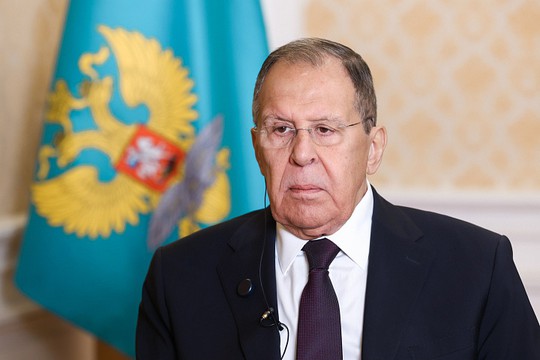
Question (retranslated from Farsi): The international community is facing hard times. United States’ threats to Venezuela, the war in Ukraine, the threats by the Zionist regime and its crimes in Gaza, Europe embarking in an arms race – all that makes people’s lives harder.
With your experience at the international arena, do you think the world is moving towards increasing chaos or a new world order is emerging for the future? Crucially, how does Russia see its role as the UN Security Council permanent member?
Sergey Lavrov: You have mentioned some processes in various parts of the globe. However, I would point out the only and probably the major threat which is the actions of the European Union, or, to be more precise, of the elite that usurped power in Brussels trying to subjugate national governments and making them ignore the interests of their peoples, give up the results of elections and referenda held in the European countries, and submit to the usurping position of “collective Brussel” and its bureaucracy that is totally unelected and made up through compromises between legitimately elected national governments.
Throughout history, Europe has repeatedly been a source of all evil and spawn of deepest crises, including slavery, Crusader campaigns when any resistance was weeded out with a sword, and also colonialism. And obviously, the two world wars that were launched in Europe due to delusive ambitions entertained by European leaders.
Regrettably, Europe is now trying again to dictate to everyone its terms and wishes which seem to be connected with the Ukraine crisis. Europe is using it to assert itself, to throw sand in the wheels and scheme against the United States and all those who seek a just settlement.
The saddest and the most hazardous thing is that the theory and practices of Nazism are being resurrected in Europe, primarily in Brussels but also in Berlin, London, Paris, not to mention the Baltic States. Blatant Nazi-like approaches, blatant ignoring of what the Nazi regime is committing in Ukraine, which is a copy of Adolf Hitler’s actions and those of Napoleon before him. However, there was no Nazism under Napoleon whereas Hitler, just like Napoleon, drafted practically entire Europe and pushed it, under the Nazi banners, against the Soviet Union.
At present Europe – and Biden’s administration until recently – is trying to do exactly the same – to bring together all European countries, pump Ukraine with money and weapons and give it a Nazi flag. The latter was unnecessary since the regime that came to power through a state coup in 2014 grabbed the Nazi flag itself. And now Europe is waging a war with us once again with Ukrainians under a Nazi flag, using European money, instructors and all Western intelligence and reconnaissance data while Europe is pumping Ukraine with increasingly more modern weapons.
This is a revival of militarism. German Chancellor Friedrich Merz announces that Germany has set the goal of becoming the “major military power” in Europe. He forgot that the last time his country was the major military power in Europe, it was under the Nazi slogans and the slogans of conquering all other nations surrounding Hitler’s Germany, turning Slavs and Jews either into slaves or a disposable material to be destroyed by burning in the concentration camps.
Finland also used to be Hitler’s closest ally including during the heinous siege of Leningrad organised by the Nazis. Finns also took an active part in it as well as a number of other countries. Therefore, when all of them, many figures in Germany and other countries, begin recalling their grandfathers and other family members who served at the SS and were active members of the Nazi party, it cannot but cause concern.
I don’t want to create an impression that all the world’s woes are born on the European continent. It is a dangerous mix of European ambitions and a realisation that those ambitions have failed in Ukraine because Russia is standing up to its legitimate interests, those of security and the interests of the people who were declared “non-human,” “species,” who were banned to speak their mother tongue and had it banned altogether, as well as the canonical Ukrainian Orthodox Church – unthinkable - by the junta that came to power due to the 2014 coup. Whatever relations Israel may be having with Muslim countries, none of them bans religion. It is a well-known fact, whereas Ukrainian Nazis are allowed to do that.
A lot has been said of late about the new US National Security Strategy. One of its major purposes is to make Europe know its place and to prevent it from imposing its liberal ways that it has been proud of and cooperated with the US democratic administrations in promoting them for decades for decades; make it mind its own business and not try to engage the United States in its fairly rogue games intended to promote the liberal way that suits its elite to the political life of all other countries. This is a direct interference in internal affairs, including prohibition of the election results as it was in Romania and later in Moldova and some other countries, where election rigging is absolutely evident.
The US strategy of national security tells Europe: “Mind your own business and do not hope that the United States will constantly support your schemes. We have more important issues, primarily in Latin America and the Asia-Pacific region.”
Clearly, the United States wants to set up its policy for opposing China that gained strength and each year demonstrates increasingly higher indicators of economic development, financial power and political clout.
The United States does not want to play second fiddle. As you know, we are not against competition, however, it should be fair. When someone is trying to suppress rivals by 100- or even 500-percent tariffs, it is not the globalisation, which the United States called us to after WWII. When sanctions are imposed after overtly declaring that the reason is the political position of this or that country or this or that person, this is even more than inequality, this is a disrespect for human rights. This is diktat.
When such sanctions involve a ban on the activities of major world companies, like it was the case of our private company Lukoil and Rosneft State Corporation, if we sort things out, then I cannot see in it anything but the desire to suppress competitors by dirty methods. It means that the West, including the United States, do not always has enough power to maintain its domination, and thus they have to resort to dirty, anti-democratic and anti-market methods.
I would like to finish answering your question by saying that all this begins to dominate in relation to conflicts like the one in the Middle East, establishment a Palestinian state and the Iranian nuclear programme.
Everything that is happening on a global scale – this competition, this confrontation of the “great powers” as they believe they should be called – is accompanied by an attempt to drive these problems somewhere to the back stage, including the oldest unsettled conflict (I mean the Palestinian issue) and the issues concerning the Iranian nuclear programme.
The last year’s developments around the Iranian nuclear programme, the absolutely outrageous illegitimate actions by Europeans, the attempts to put the blame on the Islamic Republic of Iran for the collapse of the Joint Comprehensive Plan of Action (JCPOA) - although Iran never allowed itself to violate this document until the United States declared in 2018 that it was no longer bound by this UN Security Council’s decision - reaffirms that the entire world order is being subject to most severe tests.
In the case of Iran, the UN Security Council Resolution 2231 was thrown by the United States into the dustbin. And then the West, Europeans above all, started accusing Iran of its failure to adhere to the JCPOA. Still, I will stress it again, Iran’s adherence to the JCPOA is so obvious that the West was forced to invent some tricky schemes. I think it was a shame of the world diplomacy when they deceptively pushed through the decision on reinstating the sanctions against the Islamic Republic of Iran. True and honest diplomats do not behave like this. Swindlers and thieves do.
Actually, Europeans have theft running in their blood, which we can see from the example of “frozen” Russian assets. By the way, Iranian assets are also partially frozen like Venezuelan assets and assets of many other countries. Such an urge to steal must be genetic in many of our Western “colleagues.”
Although now they started quarrelling whether it is OK to steal Russian money. Some sane voices can be heard from there, but Brussels is attempting to hush them. It is not by chance that many media outlets in Russia and abroad call President of the European Commission Ursula von der Leyen none other than “Fuhrer Ursula.”
The second outrageous example is Palestine. Not only was the UN Security Council resolution violated in this case, but also a great number of resolutions of both the Security Council and the UN General Assembly, which demand creation of a Palestinian state as a cornerstone for resolving the entire situation in the Middle East, as a condition for Arab and Muslim countries to normalise their relations with Israel. A well-known plan is the Arab Peace Initiative, which Saudi Arabia has been promoting since 2002, and which became a pan-Islamic initiative because it was approved by the Organisation of Islamic Cooperation, and not just anywhere, but at the Tehran summit – a pan-Islamic position to give the Palestinians what they are legally entitled to and which was promised to them many times. Following that, normalisation of relations with Israel will begin. But Israeli Prime Minister Benjamin Netanyahu and his military cabinet have repeatedly stated that there will be no Palestinian state. We have now received Donald Trump’s peace plan. Both sides, Israel and Hamas– are talking about its terms being violated. Therefore, further implementation of this peace plan is questionable. We were on the side of those who welcomed Donald Trump’s initiative, as it made it possible to end a crucial humanitarian stage of this crisis, return the bodies and free the remaining hostages, prisoners of war, and imprisoned Hamas members. But it is hard for me to imagine what is coming next.
I am sorry that I got so deep into the events, but you provoked me with your global touch on the issues.
It is disturbing that there are no rules. In the West, they say that there should be “rules on which the world order is based,” meaning that what is beneficial to them shall be called rules. Now there are not even such “rules” that the West would manipulate on a case-by-case basis (when it is necessary to recognize Kosovo, then this is the right of nations to self-determination, and when people in Crimea and other parts of Ukraine voted in a referendum after the coup, this is not self-determination, but a violation of territorial integrity). They mean that they will treat global events of great historical significance the way they want.
But it is not only international law that has been undermined. I have already given examples. The Iranian nuclear program was “crushed” despite the fact that the UN Security Council adopted a decision while the UN Charter states that everyone is obliged to comply with its decisions. The same logic applies to Palestine: there are a lot of decisions, but Israel says it does not want to implement them and there will be no state. The United States, although publicly disapproving of this position, is moving in the same direction in practical terms.
When Iran was attacked by Israel followed by the United States, we condemned (1, 2, 3) those actions as having absolutely nothing to do with international legality. The key is that so far no one has offered any clear evidence that Iran has violated something, neither the IAEA, nor the Israelis, nor the Americans.
We are ready to support the efforts that the Islamic Republic of Iran is currently making to overcome this crisis, including in its relations with the IAEA and with the West in general.
We understand your position. President of Russia Vladimir Putin has repeatedly told Iranian President Masoud Pezeshkian and his representatives that we will accept the position that the leadership of the Islamic Republic of Iran chooses for itself in the interests of the Iranian people.
Question: Thank you so much for such a detailed comment on international issues. Given the conditions facing the international community, where do Iranian-Russian relations stand in Russia’s foreign policy?
Sergey Lavrov: This is one of priorities in terms of our bilateral ties. The Treaty on Comprehensive Strategic Partnership between the Russian Federation and the Islamic Republic of Iran signed by presidents Vladimir Putin and Masoud Pezeshkian during your leader’s visit to Russia earlier this year went into force in October. The treaty determines the principles of our mutual solidarity, support in the matters of principle in the development of international relations, and some additional steps required for developing bilateral cooperation, building up economic, investment and trade relations as well as for infrastructure projects.
The Intergovernmental Commission on Trade and Economic Cooperation plays the decisive role in this respect. It is headed by Iranian Minister of Petroleum Mohsen Paknejad and our Minister of Energy Sergey Tsivilyov. This is a reliable and efficient entity. It will deal with working out specific steps on implementing relevant trade, economic and investment aspects of the Treaty on Comprehensive Strategic Partnership.
Speaking about the economy, relations between Iran and the EAEU open additional opportunities. In 2023, Iran signed a Free Trade Agreement with the Eurasian Economic Union and has observer status in that organisation. This is a rare case that a non-EAEU member enjoys such a status. The Free Trade Agreement offers Iran and EAEU members more opportunities to increase their trade.
We and Iran have large plans regarding the development of our common geoeconomic space in the context of the trends existing in Eurasia, where integration becomes more and more active and, I would say, more and more competitive. Not only Eurasian countries in the relevant parts of our common huge continent, but also extraregional players, which are not Caspian or Central Asian states, or South Caucasus nations, and above all, our Western “friends” permanently seek to penetrate the local developments, subjugate them to their unilateral interests and dictate the countries in the relevant regions decisions which primarily suit the West.
Definitely, this is a continuation of a colonial and neocolonial policy that boiled down to the West’s desire to always live at the expense of others. We can see the same in the Caspian region where the West is planning and trying to split the group of the five Caspian states and impose decisions which will not get a consensus of the Caspian countries.
Anyway, a Convention on the Legal Status of the Caspian Sea was signed at the latest Caspian nations’ summit in 2018. The convention clearly states that all the issues concerning the use of resources in the Caspian region, environment protection and the use of security structures shall only be decided by the five coastal Caspian states. This is a paramount principle.
By the way, all the countries of the Caspian states have ratified that convention. Only the Islamic Republic of Iran is the last in line. Given fast and turbulent developments in the world and around this part of Eurasia, it is important to eventually perpetuate the principle of non-Caspian states’ non-interference in the region’s affairs. This is why we anxiously looking forward to the convention’s ratification by Teheran.
Moreover, Teheran initiated holding the next summit of the Caspian states in Tehran in August 2026. Hopefully, the convention will have been fully applicable in terms of international law and in practice by that time.
One of the projects implemented jointly with Iran is the International North-South Transport Corridor. It comprises three routes: Western, Eastern and Transcaspian. We are working hand in glove with our Iranian friends in all the three areas, including the expedient construction of the Astara–Rasht railway section which will provide a seamless (as we say) and uninterrupted transit from the Baltic Sea to the Persian Gulf.
So, our bilateral plans are serious enough as are our plans of cooperation in the world arena. I mean in BRICS, the SCO and the EAEU that I have already mentioned. Of course, this includes the United Nations and the Organisation of Islamic Cooperation, with which we closely interact.
International platforms and sites are actively used by our countries jointly with other advocates of fair approaches to international affairs based on international law. In this respect, it is characteristic that both Iran and Russia are members of the Group of Friends in Defence of the Charter of the United Nations.
Question (retranslated from Farsi): You mentioned the Iran-Russia Comprehensive Partnership Treaty and told us about some of its details. Considering the potential this document has, the economic exchanges were expected to greatly exceed what we have today. Unfortunately, the trade turnover currently is about $5 billion. In your opinion, what can be done to increase trade and promote cooperation?
Sergey Lavrov: Indeed, our potential is immeasurably bigger compared to the current trade turnover. Nevertheless, I must remind you that apart from trade (goods in exchange for goods or services), we are also engaged in investment cooperation. In addition to the North–South corridor, there is also such a flagship project as the Bushehr NPP – its construction is ongoing. New blocks have been planned and some are already in operation. This adds an important dimension to our cooperation.
How can we expand trade and economic ties in general? We must do everything possible to stimulate our economic operators (both yours and ours) and create good conditions for them. As for government agencies, it is important for them to fulfil their obligations in a timely manner. Because when significant debt accumulates for the Bushehr nuclear power plant for various reasons (I will not talk about the reasons now, just state it as a fact), the construction cannot move on because it needs funding.
Regarding the North–South corridor, we are looking forward for the Iranian authorities to complete the purchases of land, which will allow us to move into an active phase and complete the construction of this section of the railway about 160 kilometres long.
There are fundamental factors at play, but I do not see any problems because of them. I am referring to the commitment by our presidents and governments to the comprehensive development of relations, removing any artificial obstacles standing in the way for promoting these ties. But there are practical ones – when specific structures, ministries, companies and corporations must fulfil their obligations in a strict and scrupulous manner.
I believe that we have very good prospects.
Question (retranslated from Farsi): The Iran-Russia Comprehensive Strategic Partnership Treaty contains provisions on military and defence cooperation. Do you think this cooperation can pave the way for a new security order in the Eurasian region and help counter external threats?
Sergey Lavrov: Of course, I believe that any kind of cooperation which strengthens defence capabilities and combat readiness of the participants in the respective processes, makes a significant and important contribution to strengthening peace and creating a situation where any aggressor will be reluctant to try to pursue its aggressive plans.
In this regard, there have been many initiatives in the past, including declaring the Middle East and North Africa a nuclear-weapon-free zone. We know that our Western colleagues have not been eager to support this process. There is a promising format that will help strengthen security in the region – I am referring to the relations between the Islamic Republic of Iran and the Gulf Cooperation Council (GCC), your six Persian Gulf neighbours.
We are also very hopeful that the normalisation of relations between you and these Arab monarchies, especially with Saudi Arabia, will help promote various formats for strengthening security.
Russia has been calling for convening a conference to devise a security concept for the Gulf region for several decades now. This conference could bring together the Gulf countries, as well as your neighbouring states and your Arab colleagues, too. I believe that this initiative is becoming increasingly relevant, especially considering the attempts to discriminate against Iran in the context of the Iranian nuclear programme. There is an effort to deny Iran its legitimate rights.
We believe that the fact that your Arab neighbours do not support attempts to increase pressure on the Islamic Republic has a lot of importance. Military technical cooperation constitutes one of the fundamental and core pillars when it comes to strengthening security and moving in this direction. Unfortunately, all security arrangements dealing with respecting specific levels in terms of weapons and arsenals tend to be adopted only once parties understand that conflicts cannot be resolved by military means. This principle underpins nuclear containment and has come to be known as mutual nuclear containment.
We are open to cooperation. There is the Collective Security Treaty Organisation, and we want to work with the Islamic Republic of Iran and with other neighbouring countries, including within this organisation’s framework.
In fact, we have come forward many times by offering our European and American neighbours to agree on security principles for Europe many years before the West staged a government coup in Ukraine. These efforts date back to 2008, followed by the initiatives of 2009 and 2021 when we told the West that encouraging Ukraine to confront the Russian Federation and pumping it full of weapons was setting it on a dangerous path. We suggested agreeing on security principles, and presented a draft treaty for guaranteeing that NATO would not seek further expansion. But the West ignored all this in its arrogance. So here we are.
Today, there are reasonable people, including in the United States and certain countries of Europe, as well as in the structures in which both our countries take part, such as the SCO – there are people who have been speaking out in favour of reviving the arms limitation and control frameworks, including transparency measures. Iran and Russia have been proactive in backing this approach.
Question (retranslated from Farsi): You have pointed to the fact that the West has been treating the Iranian nuclear programme in a discriminatory manner. Russia does deserve credit for its position on this matter, and the people of Iran are grateful for this positive attitude.
Today, some people in Iran believe that since certain facilities belonging to the Iranian nuclear programme suffered from bombing attacks, while the IAEA refrained from taking any serious measures in this regard, there is no reason for Iran to remain within the NPT framework and comply with the Agency’s protocols. What do you think about this?
Sergey Lavrov: Our respective presidents, Vladimir Putin and Masoud Pezeshkian, had a detailed conversation on this topic. We also had contacts on other levels, including with my colleagues, Foreign Minister of Iran Abbas Araghchi, as well as the Advisor to the Supreme Leader of Iran Ali Larijani. There were detailed discussions on all these matters. Russia is firm in its commitment to ensuring the Islamic Republic of Iran its unconditional right to the peaceful use of nuclear energy, just as any other country. As a signatory of the Non-Proliferation Treaty (NPT) and considering that it has been complying with its provisions in good faith, Iran has every right to do this.
When the Joint Comprehensive Plan of Action on settling the situation with the Iranian nuclear programme was adopted and approved, it resulted from a consensus. This was a decision by the UN Security Council. Iran undertook to ensure transparency and enable the IAEA to access its nuclear sites and programmes. This went beyond the obligations of an NPT state party. Still, Iran assumed these additional obligations. At the time the IAEA recognised this development by saying that it made a substantial contribution to strengthening trust by ensuring better transparency for Western countries considering their suspicions. This addressed all these suspicions, or so we thought.
But three years after the UN Security Council approved this plan, the United States said that it will not comply with it – just like that. We were quite saddened by this turn of events. Russia tried working with the Europeans to persuade Washington to reaffirm its commitment to the plan. But the Europeans opted for shifting the burden on the Islamic Republic of Iran by engaging the snapback mechanism. It does exist within the JCPOA framework, but it was done directly, by Iran’s Foreign Minister and the Secretary of State of the United States.
At least, Russia and China did not participate in devising this mechanism. It is an unprecedented development in international affairs as it allows any member of the group related to Iran’s nuclear programme to pretend that Iran fails to comply and submit a resolution that nobody will be able to counter. This automatically engages the snapback mechanism.
When we learned in 2015 that American and Iranian negotiators found this would-be solution, we asked our Iranian friends if they were sure that it was the right solution. We were told that Iran was not going to violate anything. We shared this conviction and believed that this provision did not carry any risks.
Our Iranian colleagues did not take into account the fact that Americans themselves could refuse to perform their obligations, which they did. It is not a mistake because nobody ever doubted that Iran would not violate the deal. But the trouble came out of the blue.
I know that that there were numerous comments in Iran’s society. These comments can still be heard, including those of them which accuse the Russian Federation of overlooking something or failing to act. These are futile attempts.
I am aware that there are politicians in any country. One can hear a wide array of opinions in Iran’s media space and political affairs. On a serious note, neither current nor former politicians have any reason to complain that Russia failed to support the Islamic Republic of Iran at various stages of the negotiations.
And my last remark is about whether Iran should remain within the Non-Proliferation Treaty. We firmly believe that it should. This topic must not be exploited in the public opinion as a way to criticise the latest developments.
I understand that IAEA released a report that was far from neutral and objective. It contained subtle ambiguities. Mr Rafael Grossi explained that it was within his mandate. Recall how enthusiastic the Europeans – the French, Germans and British – were about that report. It became the groundwork for introducing an anti-Iran resolution. Ultimately, it was the IAEA reports which served as a pretext for using the snapback mechanism.
The Russian Federation, including President Vladimir Putin, discussed the current situation with our Iranian friends at various levels. We have had, and still have our own ideas. We shared with our Iranian friends our opinion on how to deal with this situation, how to restore relations with the IAEA and with Western countries and on what terms, if they are interested in this. But the final decision remains, of course, with the leadership of the Islamic Republic of Iran.
Question (retranslated from Farsi): Currently, the United States, Israel and the West have teamed up to exert maximum pressure on Iran. What are Russia’s approaches to counter this maximum pressure policy against Iran?
Sergey Lavrov: We are working with the Islamic Republic of Iran. We have channels for communicating with the US administration. Europe does not want to communicate with us. They are all with delusions of grandeur. It is their choice. We do not have much to talk about with European leaders of this kind. But we are presenting our approaches to the Americans on how to normalise the current situation around the Islamic Republic of Iran.
We are ready to provide assistance. I will not go into details. There are specific things there that both our Iranian friends and the Americans are aware of, and they are interested in having US President Donald Trump resolve this conflict.
I recently spoke with our colleague, the Minister of Foreign Affairs of Egypt. He was worried that Iran had stopped treating the agreement between Iran and the IAEA as concluded in Cairo a couple of months ago as a binding document. I explained to him that this was due to the fact that the IAEA, after the Cairo agreement, released a report and the European Troika used it to cheat and manipulate through illegal, unlawful decisions to reinstate sanctions.
I fully understand that in this situation the Islamic Republic of Iran cannot start dealing with the IAEA just like that as if nothing happened. When Mr Rafael Grossi insists on accessing the bombed facilities… In the beginning of this interview, you said that the Agency did not condemn the bombings despite the fact that the agency had a mandate to monitor the bombed sites – these were the sites in question. This omission was a blatant violation of all the rules and norms. This is why IAEA’s actions did not exactly please anyone in Iran, to say the least, which is more than understandable. This is a question for Mr Rafael Grossi and his team since it deals with ensuring full compliance with the principle of impartiality and refraining from making any political steps in any situation by siding with one of the parties.
Let me mention the Zaporozhskaya NPP where IAEA observers have been present for a year now, if not longer. Every time Ukraine bombs land within this NPP site, the IAEA observers timidly say that they do not know where these drones and shells came from. This is also wrong.
We will do everything to encourage Iran’s cooperation with the IAEA, but it must be honest and based on the principles which work for the Islamic Republic of Iran.
Question (retranslated from Farsi): You have highlighted certain positive aspects of our bilateral relations – other countries could rely on these models and use them. However, the Western media have been trying to create an impression that Russia cannot be trusted in critical situations. This has been going on for a long time. What would be your response?
Sergey Lavrov: I do not see any reason to counter these pointless claims. Can they provide any examples to convince everyone that Russia cannot be trusted? I have not heard any examples of this kind. If they are referring to what they call Russia’s unprovoked invasion of Ukraine – if this is the example, this shows the level of diplomats who make arguments of this kind.
The West has been turning a blind eye to anything related to real facts. We have been raising this issue within the UN and the OSCE over and over again. I already had a dozen meetings with ambassadors who are accredited in Moscow. We share evidence-backed facts and our vision of the Ukraine crisis. The West was warned from the very beginning. Had Europe wanted to proactively contribute to the Ukraine settlement, it had a plethora of opportunities for doing this. But it ignored all of them.
When the government coup was staged in 2014, Europe had a status of a guarantor in a deal between the president and the opposition. This agreement provided for holding an early election. But Europe decided not to act on its guarantees. The government coup took place. Europe decided to live with it and stuck with the US administration in a subordinate role. Then there were the Minsk agreements with Germany and France boasting that they were the mediators who brokered peace between Ukraine and Russia. The UN Security Council approved these agreements. After that, the French, the Germans and the Ukrainians who signed them in 2015 – the then President of Ukraine, Petr Poroshenko, said that all they wanted was to win time. No one wanted to fulfil these agreements.
In April 2022, with the special military operation already underway, the Ukrainians were the ones who came forward with a proposal to achieve a peace settlement, and we agreed. There were signatures under this document. It was initialled. However, the Europeans, as represented by the UK, while also backed by Brussels and the rest, said that Ukraine had to fight it out.
When and if you interview those who profess accusations against us, ask them about the facts. Where are the facts to confirm that Russia failed to abide by its commitments? Those who are trying to shift the blame, as the saying goes. These people are lying. We must call things as they are.
Question (retranslated from Farsi): US President Donald Trump is now trying to improve relations between the United States and Russia. Some Western commentators believe that once Russia and the United States bring their relations back to normal, Russia would leave Iran to its devices. What would be your response to these allegations?
Sergey Lavrov: I have already told you that they are lying. Let them cite at least one example when we betrayed another country, our old friend and ally, for the sake of improving relations with another country, no matter how big or powerful.
Unfortunately, there was such a betrayal in the history of our country, but then it was called the Soviet Union. When the USSR was living its last years, it did betray other countries, including the German Democratic Republic which was given to the Federal Republic of Germany for a takeover. The German authorities, as conquerors, took all the lands of the former GDR under their control, while getting rid of all the political figures. No future was offered to them. It was a takeover, not a merger.
The fact that East Germans now perceive what is happening in a completely different way is quite significant. This was a mistake and betrayal on the part of the Soviet Union, when almost half a million troops were withdrawn without any compensation, and the opportunity to maintain their presence in the eastern part of united Germany was ignored. We remember everything. The authorities of what was then West Germany made a grave mistake when after taking over of the eastern part they treated their compatriots as second-class people.
If you get questions of this kind, then ask for an example of when and whom we betrayed. We were told that we had betrayed Syria. We did not betray anyone. Events have now taken place there which we consider to be an internal matter of the SAR. We have smooth, stable relationship with the new authorities. Let them give an example when, as they think, Russia abandoned someone.
Question (retranslated from Farsi): You mentioned Syria. Bashar al-Assad was one of the allies of Iran and Russia. What do you think happened during his last days in power as head of state and led to the fall of his rule? At the same time, Abu Mohammed al Julani said that he had cooperated with Russia. What did he mean?
Sergey Lavrov: He did not coordinate any approaches. We had a close relationship with Bashar al-Assad. We came to the aid of his government in 2015 when Damascus was already practically surrounded and could have succumbed to opposition attacks.
We established our military presence there – an air force base and a naval base. We actively worked to destroy terrorist hotbeds. We cooperated with other countries within the international community, primarily with the Islamic Republic of Iran and the Republic of Türkiye. The process was quite positive. We also remember the Congress of the Syrian National Dialogue (Sochi, January 30, 2018).
The agreements that we reached with the Iranians and our Turkish friends consistently failed to deliver progress. Not everything depended on Bashar al-Assad’s government to make them work. I do not want to draw historical conclusions now, but many opportunities have been lost on the fundamental issue of national reconciliation and inviting all political and ethnic and religious forces to dialogue.
When the situation in Syria changed a year ago, we did not have any combat units there. There were two bases, an air force base and a naval base. The speed with which the opposition, led by Ahmed al Sharaa, invaded territories came as a surprise. There was practically no resistance.
We are currently in contact with the new authorities. Ahmed al Sharaa paid a visit to Russia. I have met with the new Minister of Foreign Affairs of the SAR three times. Russia’s inter-agency delegations visited the Syrian Arab Republic, including to discuss the prospects of the earlier agreements on trade and economic matters.
During all these contacts, we consistently emphasise the fundamental importance of preserving the unity of the Syrian state. This requires a nationwide dialogue, including Alawites, Sunnis, and the Druze people – all ethnic and religious groups.
There is also a Kurdish problem. Over the past 15 years, it remained in the spotlight. Many people try to play it out for their own selfish interests.
The Americans keep the territory in the northeast under the control of the Syrian Democratic Forces and have been promoting separatist sentiments there in every possible way (since the last administration). This process goes on. We believe that this is another time bomb. The main thing is to start a national dialogue, which was lacking in Syria, including throughout the entire period of Bashar al-Assad’s rule.
Question (retranslated from Farsi): As you know, the United States and Israel are nuclear powers and they have both threatened Iran. What must Iran do, in your opinion, to contain and localise these threats?
Sergey Lavrov: We condemned ungrounded actions targeting the nuclear sites of the Islamic Republic of Iran, just as we condemned the political killings of the Iranian political and military leaders when they happened. We had detailed discussions with our Iranian colleagues on these matters.
I will have a meeting with Foreign Minister of the Islamic Republic of Iran Abbas Araghchi shortly. We will continue this conversation. The Iranians know our approach. They know that we are ready to help find a way out of this crisis and bring relations with the IAEA and the United States back to normal. Some mechanisms in diplomacy are usually kept private. We also use mechanisms of this kind. Our Iranian friends know what we think about it. It is up to the authorities in Tehran to decide whether to resume dialogue with the United States (we know that Iran is interested in this), as well the IAEA – we know that Iran would like to do this. And we stand ready to support any actions which meet the interests of the people of Iran, as long as the country’s leadership views them as advisable.
Question (retranslated from Farsi): Europeans tend to use restoring peace and security as a pretext for overthrowing governments in various countries. You have raised this issue in the beginning of our conversation. During the 12-day war, when Israel attacked Iran, German Chancellor Friedrich Merz said that this was the way for Israel to do the dirty work for the Europeans. What do you think about Friedrich Merz’s statement?
Sergey Lavrov: I would not like to talk too much about what we think about the European Union’s role in regional and international affairs. Friedrich Merz has made many blatantly racist and Nazi statements. The DNA that runs in his family is still there. This is about contempt, arrogance and I can go as far as call this an attitude of a person pretending to represent a superior race – you can find all these manifestations in the phrase that you have quoted, as well as many other statements on Germany’s future. These ideas are clearly revanchist and reflect a misanthropic vision.
Question (retranslated from Farsi): President of the United States Donald Trump presented his peace plan for Ukraine. What do you think about it? What are Russia’s red lines regarding this initiative?
Sergey Lavrov: There is an ongoing negotiating process. Our position is clear. We must address the root causes of the conflict, which consist of threats faced by the Russian Federation. They result from NATO’s eastward expansion towards our borders and efforts to draw Ukraine into the alliance, while also refusing to discuss our proposals on enacting collective and reciprocal security measures. Another threat consists of cancelling everything Russian in territories which used to be inhabited by Russians for many centuries and which had a Russian culture and history but happened to become part of Ukraine.
Those who came to power following the government coup in 2014 designated these people an being inhuman and proclaimed their intention to cancel the status of the Russian language. They sent fighters to attack the Supreme Council of Crimea and vowed to eradicate everything Russian. When Vladimir Zelensky became President, he advised everyone living in Ukraine but identifying themselves with the Russian culture to move to Russia. All this has been piling up for almost a decade, but when we warned everyone that these root causes would have explosive consequences, no one listened.
Today, we must address these root causes. The fact that the United States understood this is a positive development. They made it clear that Ukraine cannot join NATO and that the territories where Russians have been living for centuries must become Russian, and that the Russian language, culture and the rights of the canonical Ukrainian Orthodox Church must be restored.
Europe is like a failed doctor who struggles to diagnose his patients and opts for randomly prescribing pills or mixtures to ease the symptoms, if only for a brief moment. These Europeans doctors have been unwilling to come up with a diagnosis.
The United States is trying to get to the bottom of this issue. The latest contacts with the Americans did inspire some hope that they developed a deeper understanding of our position. They are beginning to understand what needs to be done to achieve a reliable and lasting resolution for this conflict instead of having yet another truce in order to once again pump Ukraine full of weapons. This is work in progress. We are waiting for the United States to share its feedback regarding their contacts with the Ukrainians.
Question (retranslated from Farsi): If there is another war against Iran, will Russia stand with Iran or not?
Sergey Lavrov: As I have already said, Russia and Iran signed a Comprehensive Strategic Partnership Treaty. We will always support Iran and promote its legitimate rights.
In recent months, the Islamist Republic has made it clear that it is not seeking war or new conflicts. On the contrary, it is interested in resolving all issues by respecting sovereign and legitimate rights. We fully support this position.
read more in our Telegram-channel https://t.me/The_International_Affairs

















