РУССКИЙ
 10:15 09.02.2026 •
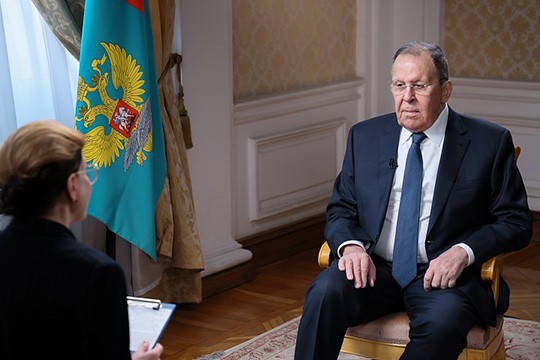
Question: Mr Lavrov, on February 10, Russia marks Diplomatic Worker’s Day, a professional holiday for the personnel of the Russian Ministry of Foreign Affairs and its missions abroad. You probably celebrate this day at work as usual. How do you find this holiday? How important is it personally for you and your colleagues? What do you consider the most important outcomes of the Ministry’s work?
Sergey Lavrov: It is perhaps not for us to judge the results. We have the President to whom we report, as established by the Constitution; he defines our foreign policy, including the approval of the Foreign Policy Concept. The most recent one, adopted in March 2023, reflects the profound changes taking place across the globe. Those are long-term, fundamental transformations that will shape the bulk of our practical work.
It is equally important that we develop action plans tailored for each partner country covering trade and economic cooperation, investment, scientific collaboration, and coordinated activity on the international stage, including at the United Nations and other organisations, based on agreements reached between presidents and prime ministers. Particular attention is devoted to the CIS, the EAEU, the CSTO, and the post-Soviet space at large. This day-to-day work relies on long-term planning and delivers tangible mutual benefits to both Russia and its partners.
The global arena is undergoing a transformation that began some time ago with the objective transition toward a multipolar world order. This is neither the bipolarity of the Soviet-American era with the Warsaw Pact and the North Atlantic Treaty Organisation, nor the unipolarity that emerged after the Soviet Union’s collapse. Instead, it is multipolarity that is shaping the trajectory of global development. For many years, the United States functioned as the engine of the global economy and the regulator of international finance, using the role of the dollar to reinforce its dominant position. It is now, objectively, losing economic significance and influence within the global system. Meanwhile, countries such as the People’s Republic of China, India, and Brazil are rising. Significant developments are also taking place across Africa, where nations are increasingly seeking to develop domestic industry rather than simply export natural resources – an effort that the Soviet Union once supported.
Multiple centres of rapid economic growth, power, and financial and political influence have thus emerged. The world is being reshaped through competition. The West is reluctant to relinquish its formerly dominant positions. Moreover, with the arrival of the Trump administration, this struggle to constrain competitors has become particularly obvious and explicit. Indeed, the Trump administration openly asserts its ambition to dominate in the energy sector and harness their competitors.
Blatantly unfair methods are being used against us: the operations of Russian oil companies such as Lukoil and Rosneft are being banned, and there are attempts to dictate and restrict Russia’s trade, investment cooperation, and military-technical ties with our major strategic partners, including India as well as other BRICS states.
A struggle is underway to preserve the old world order, one built around the dominance of the dollar and the rules formulated and enforced by the West through the International Monetary Fund, the World Bank, and the World Trade Organisation. When the new centres of growth, operating under these very rules, began to demonstrate far more substantial economic results and significantly higher growth rates – as is evident across the BRICS countries – the West started seeking ways to block this transition. This cannot succeed, because it is an objective, irreversible process. For several years now, the BRICS countries’ growth rates and GDP volumes have, in terms of purchasing power parity, substantially exceeded the combined GDP of the G7.
These global economic processes – both the objective emergence of new development centres as well as the subjective efforts by established powers, which are losing their influence, to hinder this natural evolution – form the foundation of our work, which involves not solely global analytical forecasting but also practical bilateral cooperation with each individual country. All of these geopolitical confrontations, along with the attempts to derail the objective course of history, inevitably affect bilateral relations. I am not going to mention them all; those include sanctions, the so-called “shadow fleet” invented by the West, attempts to detain vessels by military force in the open sea in blatant violation of the UN Convention on the Law of the Sea, and much more. Tariffs imposed for purchasing oil or gas from certain suppliers have now become commonplace.
So, what lies at the heart of our work? There is a song that actually serves as the anthem of Russia’s Ministry of Civil Defence, Emergencies, and Disaster Relief, but it is just as applicable to our Ministry – and basically any state institution in our country: “Our concern is simple, our concern is this: that our homeland might live, and there are no other worries.”
However, in today’s circumstances, this particular goal – “that our homeland may live” – is a challenging one; it encompasses the reliable safeguarding of our security, particularly in a situation where certain figures in Europe, masquerading as politicians, are threatening to “unleash a war” against Russia. Safeguarding security likewise demands sustained action to ensure that the Nazi state established on our borders in Ukraine – and supported by the West as a vehicle for renewed confrontation – cannot continue to exist in its present form.
Nazi foundations must be eliminated. We will ensure, and I have no doubt about it, our own security interests, by preventing the deployment on Ukrainian territory of any weapons threatening us, and, second, by guaranteeing reliable and full protection for the rights of Russian and Russian-speaking people, who have been living in Crimea, Donbass and Novorossiya for centuries, and whom the Kiev regime that came to power after a coup declared subhuman “species” and “terrorists” and unleashed a civil war against.
This is a most vital task of ensuring “that our homeland may live,” to say nothing of the economy and social matters, which are under the permanent control of President of Russia Vladimir Putin and which are handled by the Government.
In our case, one of the main tasks of the Ministry and our foreign policy is to create and ensure maximally favourable external conditions for the country’s internal development (in economic, social and industrial terms), and for the growth of the citizens’ well-being.
It is clear that, given the global war unleashed against us and the feverish attempts of the West to “punish” all our partners by demanding that they stop trading with us and cooperating in the military-technical sphere, it is significantly harder to do our job and to provide maximally favourable conditions for internal development than it was, say, 10 or 15 years ago. But this does not make the tasks less relevant.
We are doing everything to cope adequately with the tasks entrusted to us by President Putin. It is for Russians to judge.
I know that Russian citizens are actively interested in the Ministry’s work. We welcome this, but it imposes great additional obligations. Hopefully, as we prepare for and celebrate Diplomatic Worker’s Day on February 10, we will be able to tell you more about our activities, and most importantly, to answer the questions sent to the Ministry from our citizens, which we always try to answer as fully as possible, keeping in touch with our people. It is important for us.
It is important to understand how they feel about the external problems that Russia is facing. It often gives us good guidance. Public opinion polls and the suggestions sent to us provide useful hints for choosing our practical foreign policy steps.
Question: In 2025, the Republic of Indonesia joined BRICS. You have already mentioned India and China. Do I understand it correctly that you are now paying still more attention to international cooperation within BRICS? What development prospects can you see in your work?
Sergey Lavrov: No doubt.
Everything that I have said in answer to the first question means that when the West is losing its hegemony but keeps on clinging to the institutions set up to secure that hegemony, which by default can no longer reflect the real situation and the fair nature of interactions at the international level, the establishment of new entities to facilitate international economic, investment, trade, and transport links is inevitable.
We are not advocating for the IMF, the World Bank and the WTO to cease their existence. For many years since the establishment of BRICS, we have been seeking a reform of these institutions so that the member states (and these were and still are the fastest growing world economies and trading powers) receive votes and rights in all those Bretton Woods institutions commensurate with their real weight in the world economy, trade and logistics.
The West is trying to oppose it categorically. President Putin has said on many occasions that we are not the ones refusing to use the dollar. The United States under President Joe Biden did everything to make the dollar a weapon against those who are deemed objectionable.
I would note that, for all the statements from President Donald Trump’s administration to the effect that the war in Ukraine started by President Biden should be ended, that we should come to terms and remove it from the agenda, and that supposedly then we would see bright and clear prospects of Russian-US mutually beneficial investment and other interaction, the administration has not challenged all the laws adopted by Joe Biden to “punish” Russia after the start of the special military operation.
In April 2025, they extended Executive Order 14024, on the emergency regime, the core of which is the “punishment” of Russia and sanctions against our country, including the freezing of Russia’s gold and currency reserves. That document mentions “harmful foreign activities of the Government of the Russian Federation.” Examples include efforts to undermine the conduct of elections in the United States (something that US President Donald Trump speaks against daily, categorically rejecting all this) and the violation of international law and human rights. You can find anything there!
This is all pure “Bidenism,” which President Trump and his team reject. Nevertheless, they have easily pushed through the law and sanctions against Russia, which continue to be in effect. They have imposed sanctions against Lukoil and Rosneft. And they did it in the autumn, a couple of weeks after a good meeting between President Putin and President Trump in Anchorage.
They tell us that the Ukraine problem should be resolved. In Anchorage, we accepted the US proposal. If we regard it “as men,” it means that they proposed it and we agreed, so the problem must be resolved. President Putin has said on many occasions that it is not important for Russia what Ukraine and Europe are going to say; we can clearly see the primitive Russophobia of most regimes in the European Union, with rare exceptions. The US position was important to us. By accepting their proposal, we seem to have completed the task of resolving the Ukrainian issue and moving on to a full-scale, broad-based and mutually beneficial cooperation.
So far, the reality is quite the opposite: new sanctions are imposed, a ‘war’ against tankers in the open sea is being waged in violation of the UN Convention on the Law of the Sea. They are trying to ban India and our other partners from buying cheap, affordable Russian energy resources (Europe has long been banned) and are forcing them to buy US LNG at exorbitant prices. This means that the Americans have set themselves the task of achieving economic domination.
Furthermore, while they ostensibly made a proposal regarding Ukraine and we were ready to accept it (now they are not), we do not see any bright future in the economic sphere either. The Americans want to take control of all the routes for providing the world’s leading countries and all continents with energy resources. On the European continent, they are eyeing the Nord Streams, which were blown up three years ago, the Ukrainian gas transportation system and the TurkStream.
This illustrates that the US objective – to dominate the world economy – is being realised using a fairly large number of coercive measures that are incompatible with fair competition. Tariffs, sanctions, direct prohibitions, forbidding some from engaging with others – we have to take all of this into account.
While remaining open, just like India, China, Indonesia and Brazil, to cooperation with all countries, including a major power such as the United States, we are in a situation where the Americans themselves are creating artificial obstacles along the way. We are forced to look for additional secure ways to develop our financial, economic, integration, logistics and other projects with the BRICS countries.
Russia chaired this association in 2024. At that time, a summit was held in Kazan, and a number of our initiatives were put into action: alternative payment platforms, payment mechanisms in national currencies, the creation of reinsurance opportunities for trade within BRICS and between the association and its partners, the creation of a grain exchange, and a new investment platform.
All this is not to spite anyone, especially the United States. This is due to the fact that the United States seeks to bring all processes in the areas I mentioned under its strict control and demands unilateral concessions. Without giving up contacts with them, to the extent that they are willing to engage on a mutually beneficial basis, we are interested, together with our BRICS partners, in creating an architecture that will not be subject to the illegal actions of one or another player from the Western flank.
Question: The BRICS principles include equality, openness and mutually beneficial cooperation, which is similar to the principles of the Eurasian Economic Union. It is an integration association. Do you think the Greater Eurasian Partnership project will also facilitate international cooperation as much as the SCO and ASEAN?
Sergey Lavrov: I firmly believe the Greater Eurasian Partnership was bound to appear on the agenda. Many years ago, at the 2015 Russia – ASEAN Summit, Russian President Vladimir Putin suggested this term which is based on an objective trend of Eurasia becoming the biggest, richest and fastest-growing continent, especially its Pacific part. It is the most heavily-populated continent which, importantly, has seen several great civilisations emerge and continue to exist – the Chinese, Indian, Arab, Persian and Russian civilisations.
We can hardly find as many historical processes in the history of Africa or Latin America as there were in Eurasia. Africa and Latin America also have a rich and old history, yet it is the Eurasian continent that has such a variety of cultures and civilisations. Eurasia has a number of subregional structures – the EAEU, the CIS, ASEAN as well as the South Asian Association for Regional Cooperation (SAARC), the Gulf Cooperation Council, and many others. There are many subregional organisations in Africa and Latin America, too, but they also have continent-wide umbrella structures such as the African Union and the Community of Latin American and Caribbean States.
Eurasia does not have a similar common “canopy” for everyone. This is largely due to the fact that since the times of colonialism, Europeans were mainly preoccupied with making their own countries more comfortable whereas other territories, including in Eurasia, were used as colonies, be it India, China or any other territory. They were focused on improving the western part of the continent presuming that they are the masters of its remaining part as well.
This led to the emergence of concepts that reflect Euro-Atlantic approaches to ensuring security after World War II – NATO and the European Union, which currently has become an appendix of the North Atlantic alliance, and the Organisation for Security and Co-operation in Europe (OSCE) which is also based on the Euro-Atlantic logic since North America (the US and Canada) are among its active members. All these organisations are nearing their end – both NATO with its unredeemed promises of not expanding eastward, given to the Soviet Union at the time, and the European Union that has completely destroyed the established infrastructure of cooperation with our country, to say nothing about the OSCE which has totally yielded to the West’s unilateral actions and forgotten the foundational principle of consensus of all its members.
It is for a reason that our initiative on building a common Eurasian security architecture, set forward by President Putin in 2024, is gaining momentum. It is increasingly attracting interest. Essentially, this idea of providing security for all nations on the continent rests on the material foundation, a basis which is the Greater Eurasian Partnership. The stronger the ties between regional and subregional organisations, the sturdier the foundation for building a common security model.
The Greater Eurasian Partnership process is unfolding. It began through the relations between the EAEU, the SCO and ASEAN. In this context, they also factored in the Belt and Road initiative by the People’s Republic of China. Heads of the executive bodies of these organisations hold regular meetings, exchange information on their current plans and the ones in the making. That allows for taking decisions on a more efficient execution of certain projects, also at a lower cost, by collaborating rather than duplicating. Cooperation is ongoing also within the International North-South Transport Corridor and the projects connecting South Asia with the Russian Far East, as well as projects of joint use of the Northern Sea Route. So, these processes continue.
Understandably, the Eurasian partnership involves countries and continents. BRICS is a global association that attracts attention across the continents. It unites not only Eurasian nations but also many Latin American and African countries. This development will continue. BRICS is a framework, an “umbrella” for the integration process on particular continents.
Over the longer term, this association may very well become a platform for harmonising development plans in the economy and infrastructure in Eurasia, Africa and Latin America. The fact that the Eurasian powerhouses like China, India, Russia, and now also Indonesia are in BRICS certainly makes the association potentially efficient and helpful with the establishment of the Greater Eurasian Partnership.
Question: India has assumed the BRICS chairmanship. The country has already revealed its priorities – Building for Resilience, Innovation, Cooperation, and Sustainability. How do these priorities resonate with your vision of international cooperation development? What is the role of the global information space? Each of us consumes a lot of information every day. And, looking ahead, what outcomes of India’s chairmanship do you personally anticipate?
Sergey Lavrov: Every BRICS chairmanship shows an established continuity. I have already mentioned the initiatives launched during our chairmanship in 2024 related to alternative platforms and tools for servicing the global economy. The initiatives are still being discussed and elaborated as it happened in 2025 when Brazil held the chairmanship. The same is happening now when India has assumed the position.
India pays special attention to fighting terrorism, a problem that, regrettably, remains highly relevant. We see acts of terror in Afghanistan and around it, on the territories between India and Pakistan, India and Afghanistan, Pakistan and Afghanistan. There are plenty of such places – the Middle East, including its Asian part. That is the reason this priority matters to us, too. Especially since we, along with India, are actively promoting the initiative at the UN to adopt the Comprehensive Convention on International Terrorism. So far, consensus has not been reached. But it is a different story.
India is also interested in and has included in its chairmanship programme food and energy security issues. It will be interesting to consider energy security in view of the Trump administration’s actions in global energy. It is also bound to absolutely practical capabilities and outcomes. India puts special emphasis on information and communication technologies security. We actively support it.
In February, India will host a summit on artificial intelligence. Russia is among the invited parties. Our country has been actively engaged in working out the summit agenda that bears importance considering that standards of international cooperation in AI and AI application standards by each state are so far just in the making. This is a fairly grave diplomatic struggle which also has a direct practical dimension because these standards will regulate (we hope this will be the case) the conduct that security issues depend on.
You know that some actors are taking extensive action to introduce AI in the military domain. Every country has the right to see how it will unfold. But even now we see some countries’ attempts to subdue others and create a structure under their rule and subjugate everything other countries are doing, can do and have the right to do with AI in the military domain. Clearly, nations such as BRICS countries will not agree to such restrictions on their sovereignty. Nevertheless, transparency in this area is also crucial.
India’s chairmanship has a relevant and modern programme that reflects today’s objectives and targets tomorrow. We will be supporting it more actively.
read more in our Telegram-channel https://t.me/The_International_Affairs