
 РУССКИЙ
 14:00 11.12.2025 •
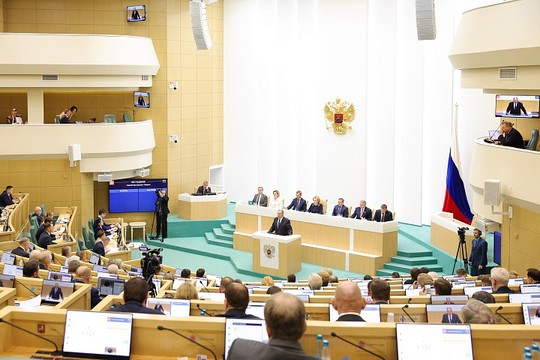
Photo: MFA
Foreign Minister Sergey Lavrov’s remarks and answers to questions during Government Hour at the Federation Council of the Federal Assembly.
Moscow, December 10, 2025
Ms Matviyenko,
Senators of the Russian Federation,
I am genuinely pleased to have this opportunity to speak at the Government Hour, to exchange opinions, to share the Foreign Ministry’s plans, and to learn more about the parliamentary diplomacy plans.
Our Ministry appreciates comradely interaction with the Federation Council. Your suggestions and initiatives to improve our work in the international arena are always welcome. The extensive professional experience of the senators, who are well aware of the needs of the people in the regions they represent, makes these suggestions and initiatives particularly valuable.
I am confident that direct communication is extremely important. Creating the most favourable and secure external environment for the country’s internal development, raising the standard and quality of life of the Russian citizens is our diplomacy’s top priority as set out in the Foreign Policy Concept approved by President Vladimir Putin in March 2023.
The international developments have largely corroborated the assessments and forecasts that President Putin has repeatedly provided over many years, starting with the 2007 Munich Conference. The principal conclusion even then was that the world was on an irreversible track to become multipolar and that it was pointless to try to stop this objective historical process. As you are aware, we have been saying this for a long time now. More and more participants in international relations are joining us in this view.
Some Western elites, who used to view multipolarity as a threat and a challenge to their privileged position, have also begun to recognise this.
Everyone heard President Trump accuse his predecessor Joe Biden of undermining confidence in the US dollar and pushing, as he put it, BRICS countries to search for alternative payment platforms. This process, which the current US President accurately noted, is now accelerating and not only within BRICS. Of course, Joe Biden is not the only person responsible for that, nor are the sanctions, which the sitting US President is not in no hurry to lift and is adding more of them. President Putin recently spoke about this as well.
The process of insuring against the diktat of those who print dollars and euros and provide other Western “services” in the global economy is picking up pace, because it reflects the legitimate interests of the World Majority. These are legitimate and long-term interests rooted in unwillingness to report to anyone or to focus only on a single centre of power and decision-making. This trend will get stronger moving forward.
We appreciate President Trump’s push for establishing dialogue and overcoming the Ukraine conflict using political and diplomatic means. The discussion of the US proposals continued on December 2 during US President’s special envoy Steve Witkoff’s visit to Moscow. The sides agreed to continue this work. Most importantly, there is a fundamental understanding that durable settlement cannot be achieved without eliminating the underlying causes of the crisis. These causes are well known, and President Putin has mentioned them on many occasions.
Despite the importance of coming to terms with reality, London, the senior officials in the European Commission in Brussels, and the majority of NATO and EU member states stick to their openly destructive position on the issue of Ukraine. Having invested their entire political capital in the war against Russia using the hands and bodies of Ukrainian citizens, they continue, in hopeless political blindness, to entertain the illusion of “defeating” our country.
As President Putin made it abundantly clear, we do not plan to go to war against Europe. We don’t even think about doing that. However, we are prepared to deal with and will respond to any hostile action, including the deployment of European military contingents in Ukraine, or the expropriation of Russian assets.
Russian diplomacy clearly understands what’s at stake and works to support the efforts undertaken by President Putin to reliably ensure Russia’s security on its western borders, to protect honour and dignity of our citizens and compatriots, including their right to their native language and Orthodox faith under any circumstances, and to do so, preferably, by political means, but, if need be, by military and military-technical means as well. Every day, we pay tribute to the heroism of those who defend our truth on the battlefields of the special military operation.
The evolution of the situation in Ukraine and, more broadly, on the western front is of paramount importance for the entire spectrum of our relations with foreign states and for Russia’s position on the international stage. We continue – and this is absolutely non-negotiable – to pursue an independent, sovereign foreign policy. This course entails the defence of our national interests while simultaneously demonstrating readiness to strengthen multifaceted, constructive ties with all those willing to engage with us on an equal and respectful footing, grounded in universally recognised norms of international law.
This approach is also pursued by other states of the Global Majority. A telling example is that of our good friend, India, which maintains relations with all key players and, like us, considers the advancement of domestic development objectives the primary goal of its foreign policy. The alignment of our strategic assessments and objectives was reaffirmed during President Vladimir Putin’s visit to New Delhi and his talks with Prime Minister Narendra Modi in the Indian capital last week.
Among our priorities is the deepening of strategic partnership and alliance relations with countries of the near abroad and the CIS across various formats. Integration efforts within the framework of the Union State of Russia and Belarus continue unabated. A significant pillar in this regard is the shared defence space being established under the Treaty on Security Guarantees, which entered into force in March this year. During the joint session of the Collegiums of the Russian and Belarusian Foreign Ministries held in Moscow on November 25, we agreed to further consolidate foreign policy coordination and outlined concrete steps in this direction.
Our ties with our Central Asian friends are progressing fruitfully. In October this year, the second Russia–Central Asia Summit took place in Dushanbe. During the state visit to Russia by President of Kazakhstan Kassym-Jomart Tokayev in November this year, a declaration was signed to elevate Russian-Kazakh relations to the level of comprehensive strategic partnership and alliance. Furthermore, following President Vladimir Putin’s state visit to Kyrgyzstan in late November, a decision was adopted to deepen Russian-Kyrgyz relations of alliance and strategic partnership.
Multifaceted cooperation within the EAEU and the CIS is advancing. The new CIS Plus format, the launch of which was agreed upon at the October CIS Summit in Dushanbe, holds considerable promise. In 2026, Russia will assume the chairmanship of the CSTO. We are committed to close collaboration with our allies to bolster the potential and international standing of this organisation – a reliable mechanism for maintaining regional stability.
Speaking of Greater Eurasia, I would like to highlight the particular significance of the Russian-Chinese comprehensive partnership and strategic interaction. The high-level trust-based dialogue – what our Chinese friends refer to as “leader-to-leader diplomacy” – is of inestimable value. In May, Chinese President Xi Jinping visited Moscow to participate in the Victory Day celebrations. In September, President Vladimir Putin paid a visit to China, attending a parade commemorating the anniversary of the end of the Second World War.
The joint commemoration of the 80th anniversary of Victory over German Nazism and Japanese militarism is deeply symbolic: it was our nations that played the decisive role in these momentous events of the last century.
Today, the diplomatic tandem of Moscow and Beijing serves as a pivotal factor in global strategic stability and the resilience of the emerging multipolar world. I am confident that our citizens will appreciate the opportunities afforded by the reciprocal visa-free travel regime between Russia and China for tourism and business purposes.
We are developing a comprehensive strategic partnership with Pyongyang, based on the relevant Treaty signed by our leaders in the summer of 2024. We sincerely appreciate our Korean allies for their fraternal assistance in liberating the Kursk Region from Ukrainian militants. We see broad prospects for the advancement of bilateral relations across various fields, as well as for joint actions within the framework of the United Nations.
Significant new opportunities are opening up following the entry into force of the Comprehensive Strategic Partnership Treaty with Iran. Furthermore, our relations with Türkiye and with Arab nations across the Middle East and North Africa are advancing steadily.
Our diplomatic focus is now directed toward the comprehensive development of the Eurasian continent. We continue to advance President Vladimir Putin’s flagship initiatives aimed at establishing a Greater Eurasian Partnership as the cornerstone for a common space of security and cooperation. Together with our Belarusian allies, we are championing the development of a Eurasian Charter of Diversity and Multipolarity for the 21st Century. It is our vision that all interested states across our shared continent will eventually accede to it.
We are actively collaborating with our African partners to implement the agreements reached at the Russia-Africa Summits in 2019 and 2023. Key agenda items include convening the second ministerial conference of the Russia-Africa Partnership Forum and preparing for the third Russia-Africa summit in 2026.
Strengthening ties with the nations of Latin America and the Caribbean remains an intrinsically valuable dimension of our foreign policy. Brazil, our strategic partner both in the region and globally, is successfully chairing BRICS. The Strategic Partnership and Cooperation Treaty with Venezuela entered into force this past November. Meanwhile, the Sandinista leadership’s decision to recognise the Donetsk and Lugansk people’s republics, as well as the Zaporozhye and Kherson regions, as integral parts of the Russian Federation reaffirmed our strategic partnership with Nicaragua.
We are also intensifying our efforts within multilateral diplomacy. Together with like-minded partners – including through the Group of Friends in Defence of the Charter of the United Nations, established in New York – we are working to ensure the goals and principles enshrined in this foundational legal document are observed not selectively, as the West often does, but in their entirety and interdependent integrity.
I noted the role of BRICS, an association whose global authority is growing unmistakably. BRICS has truly evolved into a pivotal centre for decision-making of worldwide significance, itself embodying the cultural and civilisational diversity of the modern world. It is gratifying that the Brazilian Chairmanship has continued to advance numerous initiatives launched during the Russian-chaired summit in Kazan in the autumn of 2024. These include work on a cross-border payments platform, settlement, depository, and reinsurance infrastructure, a new investment platform, and a BRICS grain exchange.
The Shanghai Cooperation Organisation (SCO) operates on principles that align with those of BRICS. It stands as a pillar of the emerging multipolar world and an integral element of the Eurasian architecture of equal and indivisible security and cooperation, which we are actively developing. The decisions adopted at the September summit in Tianjin, China, provided powerful momentum for the SCO’s further growth.
This year marks the 80th anniversary of the Great Victory. We have spared no effort to ensure this historic event was commemorated with the solemnity and respect it deserves. The commemorations in May of this year were organised to the highest standard. We are redoubling our work to counter attempts to revise the outcomes of World War II, which are codified in the UN Charter and the rulings of the Nuremberg Trials. The majority of the international community stands with us in this endeavour, as evidenced by the consistent results of the annual vote on the Russia-sponsored UN General Assembly resolution on combating the glorification of Nazism.
We will persist in drawing the attention of the broad international community to the destructive stance of Berlin, Rome, and Tokyo – the former Axis powers – which have, for several years, voted against the draft resolution on the inadmissibility of glorifying Nazism.
Moreover, Germany is actively supplying the neo-Nazi Kiev regime with lethal weaponry. The Chancellor of the Federal Republic of Germany, Friedrich Merz, continually declares plans to once again transform the Bundeswehr into “the strongest army in Europe.” Perhaps German politicians, who have forgotten the dark chapters of their own history, ought to reflect on this. Yet dissent, which is evident and growing in Germany, is being systematically stifled. The same applies to Finland, whose collaboration with the Nazis during the Second World War – including active participation in the siege of Leningrad – is common historical knowledge. Today, it appears that decades of neighbourly relations and constructive cooperation with our country have failed to cure the Finnish elites of their (frankly) visceral Russophobia, which they continue to display.
We will intensify efforts to secure recognition of the crimes committed by the German Nazi invaders and their collaborationist accomplices against citizens of the Soviet Union during the Great Patriotic War as genocide of the peoples of the USSR.
The Great Victory spurred the process of decolonisation, enabling the peoples of the Global South and East to attain independence and statehood. Our country’s decisive role in supporting national liberation movements is acknowledged worldwide.
In just a few days, on December 14, we will mark the 65th anniversary of the adoption – at the initiative of the Soviet Union – of the historic Declaration on the Granting of Independence to Colonial Countries and Peoples. We have taken the necessary measures, mobilising our like-minded partners, and expect that December 14 will soon be proclaimed by the United Nations as the International Day of Struggle Against Colonialism. This will lend further systematic momentum to advancing the anti-colonial and anti-neocolonial agenda, which is highly pertinent today.
The Russian Foreign Ministry closely cooperates with the United Russia political party, which initiated and plays a leading role in the For the Freedom of Nations! international movement. It regularly hosts the Forum of Supporters of the Struggle Against Modern Practices of Neocolonialism.
Countering legal aggression in the West is a key priority. At our initiative and with the support of the Group of Friends in Defence of the UN Charter, December 4 was proclaimed by the General Assembly as the International Day of Struggle Against Unilateral Coercive Measures. Our efforts to establish financial, logistical, and transport infrastructure institutions beyond Western control objectively contribute to this aim.
Amidst global turbulence, we strive to foster synergy among all members of the international community in combating common cross-border challenges and threats.
In October of this year, the UN Convention Against Cybercrime – the first universal international treaty to counter the criminal use of information and communications technologies – was signed in Hanoi, developed at our country’s initiative.
Ensuring the rights of Russian citizens abroad and countering all forms of discrimination against them remain under constant oversight. We continue working to consolidate the multinational, multi-faith Russian World, safeguarding the standing of the Russian language and our country’s cultural and historical heritage. Particular attention is devoted to implementing the Presidential Executive Order on providing humanitarian support to people who share traditional Russian spiritual and moral values. Invaluable assistance in this endeavour is provided by representatives of traditional Russian faiths and regional authorities.
We harness the potential of cultural diplomacy. This autumn, Russia successfully hosted the first international song contest, Intervision, designed to promote the world’s cultural and civilisational diversity and instil in youth the traditions of preceding generations. We are engaging with foreign partners to make this contest an annual event.
Important tasks include promoting cooperation between regions and municipalities. Presentations of Russian regions hosted at the Foreign Ministry are widely popular with foreign ambassadors and have proven their effectiveness. The joint work with regional heads at the Council of the Heads of the Constituent Entities of the Russian Federation under the Foreign Ministry if of note as well. We also hold region-to-region forums primarily with our CIS partners and other neighbours.
Colleagues,
The foreign policy approved by President Putin is a strategic and long-term course of action designed to implement ambitious state objectives and to advance a constructive agenda. It is utterly important that at this pivotal moment in global development, our efforts receive the unequivocal support of the country’s leading political forces and the understanding of our people. This makes our actions sustainable and enhances Russia’s international standing.
In conclusion, I would once again like to reiterate our interest in and commitment to aligning our efforts with lawmakers in order to strengthen the international position of the Russian Federation as a leading civilisation state of Greater Eurasia which is a centre of influence in the emerging multipolar world.
Thank you.
Question: How do you see the future dynamics of Russia’s relations with Europe and the United States? Is it realistic to expect improvements in the negotiating process and the lifting of sanctions in the foreseeable future?
Sergey Lavrov: President Vladimir Putin addresses this issue regularly and in great detail. The situation is evolving, and new facts are emerging, yet overall the trend has so far remained unchanged.
The West is not united, and recent events have shown this once again. In one of his interviews, President Trump offered a principled assessment of Europe artificially holding back the Ukraine settlement-related agreements that could have been reached and which would have eliminated the root causes that are the main obstacle on this path.
Europe is hobbling this process and is trying in every possible way to goad the Ukrainian “leader” and members of his regime into continuing to fight to the last Ukrainian. The problem is they are running out of money. This ideological fervour is being affected by financial considerations, because they have no remaining sources left to fund this war other than to steal from Russia and seize our gold and foreign currency reserves in violation of every conceivable norm of international and commercial law.
This is happening despite a growing number of countries, including several EU member states and opposition parties in EU and NATO countries, recognising the pointless and dead-end nature of this policy. Yet Europe’s desire to inflict a strategic defeat on Russia blinds it. They cannot imagine such an outcome. Some politicians have even admitted in interviews and exchanges with members of the press that they cannot conceive of a situation in which they would have to swallow the defeat of their client, and acknowledge, and come to terms with the fact that Russia would achieve its legitimate and just objectives.
Clearly, these are their problems for them to deal with, but, as the saying goes, these are the problems of their own making, which they continue to aggravate as they cling to a course of action that leads nowhere.
Against this backdrop, the United States and, above all, President Trump, is growing increasingly restless. He is the only Western leader who, immediately after taking office in January, began to show an understanding of the causes that made the war in Ukraine unavoidable and that underlie the hostile actions against the Russian Federation that the West and President Trump’s predecessor Joe Biden and his European accomplices had been pursuing for many years. This entire situation is coming to a head.
Having analysed the circumstances, President Trump agreed that the underlying causes identified by Russia must indeed be eliminated. They include the unacceptability of drawing Ukraine into NATO and freeing the people whose rights were trampled after the 2014 coup from the authority of the Ukrainian regime. These matters are being widely discussed.
I cannot but note that President Trump is the only Western leader who, in this situation, demonstrates concern for human rights. The proposals brought to Moscow by US President’s Special Envoy Steve Witkoff which were discussed in detail with President Vladimir Putin explicitly state that Ukraine (whatever part of it remains) must ensure the rights of ethnic minorities and religious freedoms in accordance with its international obligations.
The amendments to this US document remain classified for now, but one cannot keep human rights issues secret. The proposals from the American side that I mentioned earlier, which concerned Ukraine fulfilling all its international commitments on human and religious rights in their European interpretation have been rewritten. What we saw earlier now sounds quite different and calls on Ukraine to comply with the EU regulations on ethnic minority rights and religious freedoms. The difference is clear.
This obsession with infallibility and conviction that everything Europeans do stands head and shoulders above the traditions, norms, and laws of the rest of the world is among the reasons why President Trump and his associates increasingly speak about a profound crisis within the EU and the fact that it is heading in a direction that is clearly at odds with the realities of a multipolar world.
Question: The shaping of a more equitable world order continues today, with the voices of developing nations – from Asia, Africa, and Latin America – growing ever louder, while West-centric global politics gradually recedes into the past. Previous shifts in the system of international relations were accompanied by major, even global, conflicts. In your view, can the outcome of the current confrontation with the West and its acute manifestation in the Ukrainian crisis lead to the formation of a new system of international relations, or is this impossible without more profound global upheavals?
Sergey Lavrov: I believe the process of forming a multipolar world is an objective one – the course of history, a consequence of economic development and solutions to social challenges.
Shortly after the Second World War, particularly post-Cold War, the West promoted the ideals of globalisation, convincing everyone (in the spirit of Francis Fukuyama’s “end of history”) that the world was now “united,” that only the liberal world order and liberal values would prevail, with no competition to this way of life and thinking. These tools of globalisation were aggressively and persistently imposed under the slogan that they were not Western standards but universal benefits.
I recall how, twenty or thirty years ago, officials from Washington declared that the dollar was not American property but a global good that “greased the wheels” of the world economy, enabling it to function most efficiently.
In my opening remarks, I mentioned how US President Donald Trump, during his election campaign, sharply criticised the actions of Joe Biden and his administration in weaponising the dollar as an instrument of sanctions – to punish the disobedient and achieve political and ideological goals.
When Donald Trump became president for the second time, in his official speeches, he strongly criticised BRICS, primarily for challenging dollar dominance. President of Russia Vladimir Putin responded by clarifying: We did not discard the dollar – we were cut off from it, as its status as the global reserve currency was abused and turned into a political weapon. Hence, we are compelled to seek alternative payment platforms, and we will do so.
Moreover, this selfish and aggressive US policy, observed since the tenure of former US President Joe Biden regarding the dollar, has given pause not only to us but also to nations subjected to American and European illegal sanctions. Increasingly, nations are questioning what might displease those who control global financial markets tomorrow. No one knows.
The trend is toward preparing alternative payment platforms. This is already a sustained development, including within BRICS and the SCO. But let me reiterate: President Vladimir Putin emphasised that it was not we who abandoned the dollar; rather, the West, chiefly the United States, weaponised it. The multipolar world is taking shape. This example illustrates how the process is unfolding economically and financially.
The second point I would underscore is decolonisation and the fight against neo-colonialism – or colonialism as a modus operandi in international affairs aimed at living at others’ expense. When Africa gained independence, and decolonisation was declared in 1960, more and more African and other nations achieved sovereignty. Initially, this was a political phenomenon, met with celebration. But it soon became clear that political independence did not automatically entail economic or financial independence. Numerous examples exist where UN member states, though independent, remain shackled economically and financially by the rules of international division of labour imposed by globalists.
At the second Russia-Africa Summit in St Petersburg, 2023, Ugandan President Yoweri Kaguta Museveni elaborated on this. One example he cited was the global coffee market, valued at approximately $450 billion annually. Africa – the primary producer of beans – retained only $40 billion of that sum. The rest – added value, roasting, packaging, and other preparations – accrued to the West, chiefly Europe. This starkly illustrates how political independence does not guarantee economic independence.
Today, engaging with African partners, we sense their growing determination to secure economic justice. This is not about liberation – disentangling from today’s interdependent economy is difficult – but about economic fairness… It is Africa’s second awakening in asserting its rightful economic interests globally. Such examples abound.
With the resurgence of President Luiz Inácio Lula da Silva in Brazil, the Community of Latin American and Caribbean States has embarked upon discussions concerning self-protection against the potential “whims” of those who wield the levers of the contemporary international monetary and financial system. These processes are gathering momentum.
The discrediting of the fundamental principles of globalisation remains fresh in the collective memory – both audibly and visibly so. Principles such as fair competition, the inviolability of property, the presumption of innocence, and much more were summarily disregarded when it became necessary to punish the Russian Federation – following years of warnings and the neglect of our legitimate interests, which left us with no alternative but to initiate the special military operation.
The brand of globalisation championed by the West, led by Washington, particularly after the Cold War, is now fading into oblivion. Instead of globalisation, we are witnessing the fragmentation of the global economy. An increasing number of countries recognise that reliance on regional mechanisms is more dependable. In this context, our emphasis in the latest iteration of the foreign policy concept on Eurasian security, cooperative frameworks, and the formation of a Greater Eurasian Partnership – spanning economics, logistics, transport, and infrastructure – aligns squarely with prevailing trends. It is no coincidence that a growing number of states are demonstrating keen interest in this Eurasian approach.
President Vladimir Putin has articulated our objectives in this direction, and we are actively pursuing them. I have previously mentioned our collaboration with our Belarusian allies, who convene an annual conference on Eurasian security each autumn. I have participated in all three editions (1, 2, 3), with the fourth scheduled for next year. Interest in this conference is expanding, attracting not only Asian nations but also states from the western reaches of the Eurasian continent. Notably, my colleague and friend, Hungary’s Minister of Foreign Affairs, Péter Szijjártó, attends regularly, alongside representatives from Serbia and Slovakia. I am confident that participation will grow, enriching the diversity of this forum.
Multipolarity is not something that can be drafted, approved, and enacted within the walls of the UN Security Council. No. The strength of multipolarity lies in its organic emergence from lived experience and its reinterpretation of the lessons accumulated during the era of globalisation.
A final observation: why has China now been declared the primary threat and competitor? Because China, like others, once accepted the rules of the game under the ostensibly benign globalisation framework. It embraced these rules and refined its mechanisms to participate more effectively in global processes. In doing so, it outmanoeuvred the very architects of that globalisation – chiefly the USA – on their own terms and turf. Witness the lamentations of American and European officials over China’s production of high-tech and other goods at unbeatable prices and quality.
The West has conceded that these vaunted international projects, marketed as universal goods, serve but one purpose: its own enrichment. This memory remains vivid. Despite the difficulties of extricating oneself from the old system – cemented as it is by institutions like the International Monetary Fund (IMF), the World Bank, and the World Trade Organisation (WTO) – the process is underway.
Moreover, as new formats of cooperation, independent of the West, take shape, no one proposes shuttering the IMF, World Bank, or WTO. Rather, parallel efforts to reform them are afoot – or more accurately, not so much afoot as demanded by BRICS, the SCO, and the World Majority. These nations insist that the norms governing these institutions be brought into line with contemporary realities – for instance, ensuring that the voting shares of Global South nations in the IMF reflect their actual economic weight. Quota reforms are artificially stalled by the Americans, who, through manoeuvres and pressure on sovereign states, retain unilateral veto power over all decisions. Under the administration of Joe Biden, this has culminated in the unimaginable scale of funding funnelled to the Kiev regime, flouting the very principles upon which the institution was founded.
The WTO, faced with China’s competitive dominance in global markets, including the USA, has for years obstructed appointments to its dispute settlement body. Countless disputes China has dutifully filed under WTO rules languish unresolved. These institutions, too, must be reformed.
Yet I would advocate prudence: even as we pursue reforms within the IMF and WTO, we must construct more reliable alternatives. Our history has shown the utility of such fallback options time and again.
Question: I have a question about the information sphere. As a result of the information blockade imposed by Western countries, the global information space has been swamped and continues to be filled with patently false information about Russia and the special military operation. In this context, it would be logical and necessary to build up the programmes aimed at helping disseminate truthful information about Russia in foreign countries, like the foreign-language broadcasts of Sputnik and Russia Today. Are there plans to create new programmes or to expand existing mechanisms in this sphere?
Sergey Lavrov: Sputnik and RT broadcast in foreign languages, but they also have Russian-language programmes broadcast in the countries with a large Russian diaspora.
You have said correctly that they focus on the citizens of Western countries, who are being duped with false narratives. It is largely for this reason that they are persecuting the media resources that work on the international stage, including the media outlets you have mentioned, which have international acknowledgement and reputation.
Incidentally, it was long before the Ukraine crisis that RT and Sputnik were officially denied accreditation at the Élysée Palace. Press secretary of the French government Benjamin Griveaux, who was responsible for media accreditation, said, citing President Macron, that these media outlets were instruments of propaganda.
I more than once raised this issue with my French colleagues back when we were still communicating. Even President of France Emmanuel Macron delicately addressed it. However, nothing has changed. They continue to accuse us of lies and the distortion of facts, although they have not provided a single example based on reliable information.
We must continue to fight for and support our broadcasters, which are in a minority on the international information stage, and the Western media outlets who have some conscience left. There are such outlets. We must work with them accurately, providing facts, and let them make their own conclusions. Some media are ready to draw correct and honest conclusions from these facts. We must also fight for factual information at the diplomatic level, like in the case of the Bucha massacre, which everyone is talking about.
You remember how it was. President Vladimir Putin has recently recalled it. The Ukrainians themselves proposed the underlying principle of a peace agreement. But the then Prime Minister of Great Britain, Boris Johnson, personally prohibited them from signing it – it was in early April 2022, when there was still hope of doing that. Acting at the request of our Western colleagues, we retreated from the suburbs of Kiev, including Bucha, in a gesture of goodwill. Nobody there provided any negative facts for two days after that. The mayor of Bucha went on screen, speaking about returning to their native town. And then, BBC journalists unexpectedly arrived in the town and started filming dead bodies – not somewhere in basements, but on the main street, where they allegedly lay for three days. Nobody saw these bodies before the BBC came to the town. This caused a new wave of sanctions and allegations of our atrocities.
We have been fighting for the truth and justice for nearly four years. I have mentioned this issue several times during meetings with my colleagues at the UN Security Council. I looked UN Secretary-General Antonio Guterres in the eye, requesting at least an accurate list of the persons whose bodies were shown by the BBC, the only media outlet to unexpectedly turn up in Bucha that day. No reply.
We sent an official letter to the UN Secretary-General, to the High Commissioner for Human Rights, and to the Human Rights Monitoring Mission in Ukraine established by the High Commissioner. No reply.
When we asked the press secretary of Antonio Guterres about it, he replied that they did their utmost to protect human rights and transparency, but they sometimes cannot disclose information because this could endanger lives. This is ridiculous.
We will continue to demand that the UN stop the unfair play that is heavily favouring the Ukrainian side, stop Ukrainising the operations of its Secretariat, where the West has usurped all leading positions, and NATO and EU member states holding key posts dictate the Secretariat’s policy.
It is true that our representatives hold several senior positions, like the UN Under-Secretary-General for Counter-Terrorism. Our Chinese friends hold the post of UN Under-Secretary-General for Economic and Social Affairs. But our Western colleagues hold all positions that concern political, peacekeeping and humanitarian matters around the world, as well as security issues. They can influence the Secretariat’s operation and the lion’s share of its budget funds, and they are using these powers more and more shamelessly.
We have started talking about this openly. We must think about the UN’s future to prevent it from walking in the footsteps of the OSCE. That is why I fully agree with you. In addition to supporting media outlets, upholding the truth and raising painful questions on international platforms, we should also rally the efforts of our public organisations, above all at the level of parliamentary diplomacy. It is an extremely important “weapon.” There are also non-governmental organisations, like Maxim Grigoriev’s International Public Tribunal on the Crimes of Ukrainian Neo-Nazis, which is accumulating facts about the crimes committed by the Kiev regime.
We have organised visits by Mr Grigoriev and his associated to international bodies, including the OSCE. Our little strokes have not yet felled great oaks, but it has become more difficult to disregard our activities and the facts we provide.
Question: In view of the fragmentation of the international cooperation in the Arctic, including Russia’s withdrawal from the Barents Council and the Euro-Arctic Region, the overall weakening of the Arctic Council, what alternative mechanisms of multi-format cooperation does the Russian Foreign Ministry see to ensure the region’s sustainable development and protection of Russia’s interests at the international level?
Sergey Lavrov: The Arctic Council still maintains its mechanisms. Western members of this essential and once central structure for defining policies at high latitudes understand that the course for dissolving the Arctic Council is hopeless, at least considering the actual geographical, technological and political positions that our country holds in the Arctic.
They declined ministerial meetings although expert meetings continue, sometimes organised via video conference. After all, the Arctic Council still exists. I think it will restore its potential eventually. It may take time because members of the Arctic Council, especially in Northern Europe – I have already mentioned Finland, Norway and Sweden – currently have governments that are not interested in constructive work or recognising the reality.
Nevertheless, the Arctic Council holds sessions at other levels, not necessarily at the ministerial level. Participants in its 14th session in May 2025 adopted the statement that reaffirmed our shared stance that the Arctic Council is a key platform for multilateral cooperation in the Polar Region that should be maintained. There must be a general course in support of strengthening peace and security, and creating most favourable conditions for economic projects.
Regardless of what is happening in the Arctic Council (and we support its continuation), for this council to function most effectively, it is necessary to de-Ukrainianise its agenda. We develop the high-latitude regions, including the Northern Sea Route, and cooperate with our close strategic partners such as China and India, regardless of the Arctic Council’s plans. We have sovereignty over the Northern Sea Route and we actively develop it alongside friendly countries.
There is a body that was established concurrently with the intergovernmental organisation of the Arctic Council. It is a non-government organisation for the cooperation of the northern regions of the Arctic Council member states. The body is called the Northern Forum. There is an Arctic Economic Council for business affairs. Their work has been coordinated with the Arctic Council’s agenda and, since the latter has experienced a certain slowdown, these non-government bodies continue to operate.
I should also mention the Arctic agenda that is regularly discussed at the St Petersburg International Economic Forum. Arctic: Territory of Dialogue is our brand, our international Arctic forum that is held regularly and receives wide coverage. There is also a recently established international forum Arctic: Today and the Future named after Artur Chilingarov.
Non-government formats develop actively. I consider it a useful trend, especially in view of the fact that we encourage regions’ role in foreign trade and international affairs in general, and in establishing contacts with our neighbours. These are the links that produce projects that come from life itself.
The formats that I have mentioned should be somehow coordinated to make sure they do not duplicate but complement each other. This is realistic. We work on this too, with the main agencies in charge of Arctic collaboration.
Question: You have described how our country is working to adapt global trade and monetary systems to multipolar realities, reduce Russia’s economic dependence on actions undertaken by unfriendly states, and improve the terms of Russia’s access to international markets, something that corresponds to priorities outlined by the Foreign Policy Concept of the Russian Federation. What other tasks will have to be addressed in this regard?
Sergey Lavrov: This is an extensive issue. I will try to put it in a nutshell.
First of all, we have to admit that this is not only and not even so much a matter that falls exclusively within the purview of the Foreign Ministry. This is a national goal. We have a number of mechanisms and inter-agency and governmental commissions that have been formed in all the key sectors. Recently, there was a Meeting of the Council for Strategic Development and National Projects, where much was said about things to be done to address the tasks you have mentioned.
I think that the most important objective as far as the Foreign Ministry is concerned – I began my opening remarks with this – is to conduct a foreign policy that ensures maximally favourable external conditions for our domestic development, a policy that contributes to security, economic growth, and higher living standards of our citizens.
The entire architecture of our state, governmental and inter-agency mechanisms is geared to the attainment of these goals. The most important thing is that all of us work in unison and harmoniously and prioritise the state interests.
read more in our Telegram-channel https://t.me/The_International_Affairs

















