РУССКИЙ
 14:01 24.05.2026 •
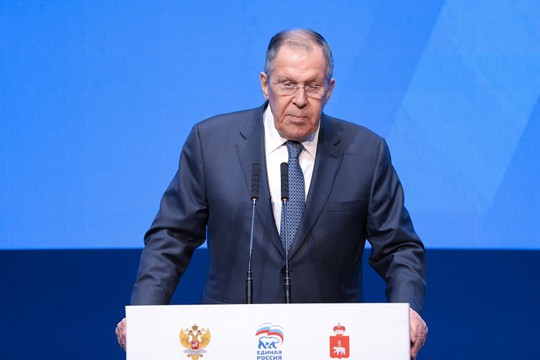
Photo: MFA
Foreign Minister Sergey Lavrov’s remarks at the plenary session of the Second International Public Political Hearings in support of the Russian President’s initiative to build a contour of equal and indivisible security and cooperation across Eurasia
Perm, May 22, 2026
Governor Manokhin,
Colleagues,
It gives me great pleasure to welcome you all to today’s hearings, held in support of President Vladimir Putin’s initiative to forge a new security architecture on the Eurasian continent. Let me once again express my genuine satisfaction that this forum is being convened for the second year running on the hospitable soil of Perm. This will be a regular event. Governor Dmitry Makhonin of the Perm Territory has made it clear that he has no intention of letting this forum be taken away from Perm. We extend our thanks to our hosts for the warmth and hospitality shown to all participants.
I would also like to offer my highest praise for the leading role played by United Russia in organising these hearings. Beyond advancing the declared agenda on Eurasian security, United Russia’s efforts are helping to unlock the potential of parliamentary, party, academic and public diplomacy – forms of engagement that are absolutely essential in supporting the work of official state diplomacy. The Russian Ministry of Foreign Affairs will, of course, continue to provide every possible support to United Russia’s endeavours in this sphere, as well as to the initiatives of other parliamentary parties. We regard this as a key asset in our work.
Today, unlike 10 or 15 years ago, virtually no one seriously disputes that the defining long-term trend in international relations is the emergence of a multipolar world order. We disagree with those ideological opponents who argue that multipolarity – or, to use a synonym, polycentrism – inevitably spells confrontation, inexorably leads to conflicts, and ultimately causes global chaos. I do not know what motivates those who make such predictions. Perhaps it is a desire to freeze what they see as the ”golden moment of unipolarity,” to prolong it indefinitely, and to go on living at the expense of others.
That said, an objective analysis of events shows that the current phase of global development, while unquestionably fraught with man-made risks and dangers, also offers all countries immense opportunities for equitable cooperation and for resolving the key issues of our time. One cannot ignore the fact that multipolarity is taking shape organically, through the natural release of the development potential of states and their associations.
The present expansion of the conflict space in international politics is primarily due (and everyone knows this) to the attempts of Western “globalist elites” to prevent the loss of the dominant positions they occupied in a previous historical era. That position allowed them to extract disproportionate benefits and advantages, invariably at the expense and to the detriment of the rest of humanity. So, it was in the age of slavery and colonialism. So, it continued during the neocolonial period, after most African and other formerly dependent countries had gained political independence but remained economically, financially and logistically dependent.
It is no wonder that our African friends are now raising their voices in favour of revisiting the legacy of that era. They have actively backed the proposal to mark December 14 each year as a day of struggle against all manifestations of colonialism. This is Africa’s second awakening. The UN General Assembly has endorsed this initiative, which gives us additional grounds for advancing the principles of restoring justice in international affairs.
Today, the destructive actions of our Western colleagues pose a clear threat to international peace and security. Here in Eurasia – and this continent is our focus – the West has designated as its competitors and adversaries not only Russia, China, Iran, Belarus and North Korea, but also all other states that seek to pursue an independent domestic and foreign policy. All Western initiatives are designed to work against these states. The aggressive use of brute force, as we have all witnessed in the US-Israeli aggression against Iran, has nothing to do with ensuring regional stability or preventing the proliferation of weapons of mass destruction, despite what those who unleashed the war in the Middle East and the Persian Gulf periodically try to claim.
We are categorically opposed to any repeat of armed aggression. We call for an immediate end to military intervention in the affairs of the Islamic Republic of Iran and Lebanon, and to the unjustified use of military force against civilian infrastructure in Iran and neighbouring countries, including nuclear facilities operating under IAEA safeguards. None of this, of course, has any legal or moral justification. It is clear that a resumption of conflict in the Persian Gulf, a subject that has re-entered debate in recent days, would have profoundly negative consequences for the Middle East and the world as a whole, including the global economy and trade.
We welcome all mediation efforts aimed at advancing a political and diplomatic settlement of the situation around Iran. We stand for the establishment of direct, honest dialogue between the key players. We are putting forward proposals for a compromise solution to the problem of Iran’s enriched uranium stockpiles (proposals that President Vladimir Putin has set out repeatedly and that are well known).
We call for the resumption of dialogue on establishing a collective security system in the Persian Gulf, with the participation of all interested regional states and bona fide external players, including Russia, China and other permanent members of the UN Security Council. This concept is consistent with the idea of a quadrilateral format of interaction involving Pakistan, Egypt, Saudi Arabia and Türkiye – an initiative aimed at long-term post-conflict normalisation.
The future of the region, and its security, depend on the ability of the countries there to overcome externally provoked confrontation. A direct constructive dialogue between the Arab monarchies and Iran is necessary to jointly guarantee predictability and stability in the Middle East. More broadly, a dialogue is needed between the Sunni and Shia strands of the Islamic world – something that King Abdullah II of Jordan attempted some 20 years ago when he convened a Sunni-Shia unity summit. Sadly, that momentum faded without producing results, but the urgency of the problem remains. In this sense – in the sense of the unity of the Muslim world – comprehensive security can only be indivisible.
Other problems in the Middle East also demand immediate solutions, all of them are exacerbated by unilateral actions and by a lack of trust among the parties involved, both in each other and in international mediators. I would mention the chronic, unresolved nature of the Palestinian-Israeli conflict, Israel’s aggressive actions in the Gaza Strip and the West Bank, and the unresolved status of the holy sites and of Jerusalem itself.
Let me also point out that, strange and regrettable as it may be, Israel’s actions now contradict not only the well-known UN resolutions on a two-state solution to the Palestinian-Israeli conflict. They even contradict the idea of the “Board of Peace” established by US President Donald Trump. That idea, which the UN Security Council endorsed with some reservations in the autumn of 2025 and which made no mention of a Palestinian state or the West Bank, is currently making little headway in practical terms.
We are convinced that the Middle East will continue to simmer until the world’s most complex and long-standing conflict – the Arab-Israeli conflict – is resolved. And it must be resolved in all its dimensions, including, of course, its most painful aspect: the Palestinian question.
This also includes the difficult transitions in Syria, the explosive situation in Yemen, and the chronic domestic political crisis in Iraq. Neighbouring Libya – though not part of Eurasia – is suffering from similarly dire problems, stemming from the fact that our Western colleagues made such a mess during the Arab Spring that no one can predict when things will return to anything like a normal state of affairs.
The key to resolving all these conflicts, however, must lie in eradicating their root causes. That applies fully to every hotbed of tension in the Eurasian space, including the deep crisis in the western part of the continent. That crisis was caused by the years-long aggressive expansion of NATO and by the rapidly militarising European Union eastwards, towards Russia’s borders, with the declared goal of inflicting a “strategic defeat” on Russia. That has been stated publicly and repeatedly. Now, since 2022, the illegally installed neo-Nazi Kiev regime – installed by the West – is being actively used for that purpose, as a geopolitical and, increasingly clearly, a military foothold against our country.
Four years after this confrontation entered its hot phase, the West’s far-reaching original intentions cannot be denied. Just as 200 years ago, and 100 years ago, the West cannot accept the very existence of Russia as an independent entity that represents a civilisational alternative to the West. An alternative that has borrowed heavily from Western civilisation but has also enriched it. To try to present this alternative as the main evil in Eurasia, indeed in the world as a whole, is utterly unscrupulous and has no future.
Historical experience and common-sense demand not only that we eliminate threats to Russia’s security, as we discuss the Ukraine crisis, but also that we put an end to the Kiev regime’s destruction of everything connected to our civilisation, our Fatherland: the Russian language, education, culture, media, and canonical Orthodoxy. Without that, no lasting settlement is possible, and no prevention of a recurrence of the crisis.
I have said repeatedly that the conflict in Ukraine, provoked by NATO and EU countries, has led to a complete and final collapse – or perhaps simply laid bare the collapse – of the Euro-Atlantic security model. That model was long built in western Eurasia under the watchful eye of North America. That includes the OSCE, the North Atlantic Alliance, and the European Union – and the EU that has lost its purely European dimension and become entirely subordinate to the rules laid down inside NATO.
There has been ongoing speculation recently that the European Union will have to rely less on the United States, which currently has other concerns. One of the options being discussed and publicly declared in this context is the transformation of the EU into a conventional military bloc.
Under the current circumstances, the Euro-Atlantic concept of stability and security is being eroded. Similarly, the concept of “European security” has been discredited. Through the efforts of the Brussels bureaucracy and revanchists in other capitals, this very term is now being interpreted as security against threats allegedly coming from Russia and Belarus. This is the essence of the confrontational idea of the European Political Community devised by French President Macron. The community recently held its latest meeting in Yerevan. This initiative explicitly articulates the goal of isolating Russia and Belarus – neither of which has ever been invited by anyone to join any European community.
The North Atlantic Alliance has transformed into a continent-wide destabilising factor by proclaiming the expansion of its area of responsibility to all of Eurasia – to our entire continent, the fate of which we are discussing today.
In the southeast and northeast of the continent, in Southeast and Northeast Asia, the military infrastructure of the United States and its NATO allies is spreading at an accelerated pace. The indivisibility and inseparability of security between the Euro-Atlantic region and the so-called Indo-Pacific region are being declared. A course is being pursued to undermine the ASEAN-centric security architecture in the Asia-Pacific region, which for decades had ensured inclusivity and stability there.
Instead, closed mini-blocs such as the AUKUS military-political partnership (Australia, the United States and the United Kingdom) are being imposed, which raises serious questions regarding thdir compliance with the non-proliferation regime. A nuclear component is also being introduced into the sharply intensified military exercises conducted within the framework of the “troika” (the United States, the Republic of Korea and Japan), adding serious irritants to the situation on the Korean Peninsula.
Regardless of New Delhi’s position in favour of preserving the economic and transport agenda of the QUAD grouping (the United States, Japan, Australia and India), attempts continue to give this quartet a military dimension. Concurrently, the SQUAD (the United States, Australia, Japan and the Philippines) has been established, as well as an Indo-Pacific quartet involving South Korea, Japan, New Zealand and Australia. All of these structures are closed blocs that are aimed not at developing broad partnerships but at containing those countries that pursue an independent and sovereign policy.
Under the cover of propaganda about alleged threats for the West coming from the South China Sea, the East China Sea and the Taiwan Strait, the idea of creating a new military alliance – a group similar to NATO – is being seriously promoted. They have even come up with a similar name: the Indo-Pacific Treaty Organisation. All of this is escalating external pressure on China and the DPRK – our closest partners in the region – as well as on Russia’s legitimate interests along its eastern borders.
At the same time, NATO countries are not neglecting other parts of the Eurasian continent either: the South Caucasus, Central Asia and South Asia. They are attempting to penetrate everywhere and exert influence over political and economic processes. Under the guise of assistance programmes, they are imposing their own projects on regional states in the most sensitive areas of their cooperation with Russia – namely, border protection, customs and the digitalization of trade. All of this, of course, comes with demands to join the illegitimate unilateral anti-Russia sanctions.
Worrying trends are also growing in the Far North, where NATO is rolling out its programmes for the militarisation of the Arctic, turning it into a potentially conflict-prone space. To this end, the alliance is making increasing use of the capabilities of Sweden and Finland, which joined NATO under the alledged pretext of a Russian threat. For many decades, we had no problems with these two countries, especially Finland. Today, however, we are watching with astonishment as Helsinki has cast aside all the decency it maintained under the banner of neutrality after World War II. Finland has now emerged as one of the leading Russophobes, with a passion, as if it had only been waiting for this. In doing so, it has effectively reversed the Helsinki Final Act, returning to the path of supporting the Nazi camp – this time with the Kiev regime as the “tip of the spear” in the West’s war against Russia.
The dismantling of the previous system of security and cooperation was not Russia’s choice. Starting as early as 2008, we repeatedly proposed to both NATO and the United States that we formalise our mutual treaty obligations in the security of the European part of the Eurasian continent.
Our most recent attempt to do so was in December 2021 and January 2022, when we circulated relevant draft treaties and held discussions with the Americans and NATO. However, both Brussels and Washington stated directly that legal security guarantees in this region can only be obtained by NATO members. This directly contradicts the decisions of OSCE summits signed at the highest level that clearly provide that the security of one state cannot be ensured at the expense of the security of others, and that no organisation has the right to claim a dominant role in this region. NATO has done exactly the opposite.
When Washington and Brussels took the aforementioned position in 2022, all prospects for a political settlement of the Ukraine crisis were sabotaged. We were told directly: do not interfere in our NATO relations with Ukraine; it is none of your business. It was precisely during this period that the shelling of Donbass by the Ukrainian Armed Forces drastically intensified, and an operation was being plotted (facts to this effect have now been presented) to resolve Ukraine’s problems by force, in gross violation of the Minsk agreements. We know all of this now, and it confirms that the launch of the special military operation was inevitable. As President of Russia Vladimir Putin stated, we were left with no other choice. The West, of course, thereby confirmed that its foreign policy task has been to drag Ukraine into NATO (they still claim that this goal remains), and that the West’s objective has been to use the Kiev regime to eradicate everything Russian.
Thus, I have listed many parts of Eurasia. Explosive trends are accumulating almost everywhere. The situation is aggravated by the absence of unifying institutional frameworks on the continent that would allow for the discussion of security issues, even in a universal format. Africa has the African Union. Latin America has CELAC. But in Eurasia, there is no single continent-wide umbrella and no forum that would stimulate dialogue among the numerous subregional associations there.
We have attempted to provide a conceptual response to the existing challenges. That response came as the initiative put forward by Russian President Vladimir Putin in June 2024 to form a new architecture of equal and indivisible security in Eurasia that would be as open as possible to all states and subregional organisations on the continent. The alternative to collective work is the revival – a new lease of life – of the privileged Euro-Atlantic security model, which our NATO colleagues are currently rendering with the aim of absorbing all of Eurasia into NATO structures.
We must not allow the fragmentation of the security space — something that certain countries, driven by the old colonial concept of divide and conquer, are seeking to achieve. We advocate for the states of Eurasia to take responsibility for their own future, free from destructive and confrontational external influence. Therefore, at the heart of all our efforts remains the advancement, in pragmatic politics and within a pan-Eurasian framework, of the principle of equal and indivisible security, which I have already mentioned and which is a principle proclaimed many times at the highest level within the OSCE, although it has remained on paper. The principle itself remains relevant and recognises the right of every state to choose means of its own security but in a way that does not infringe upon the interests of other states. We advocate for this principle not only to be reformulated and reaffirmed in a Eurasian context or on a Eurasian scale but also for this reaffirmation to be observed sacredly and unconditionally like any obligation of states toward one another.
We are working now on formulating the respective concept in contacts with our allies and partners. Russia and its Belarusian friends propose creating a Eurasian Charter of Diversity and Multipolarity in the 21st Century. In this framework, the document that has already been drafted, we wish to enshrine the conceptual basis for interstate relations in security in all its dimensions – military-political, economic, cultural and humanitarian, which are also highly relevant today. Discussion of the draft is scheduled for the 4th Minsk International Conference on Eurasian Security, to be held in early November 2026 in the capital of Belarus. We will be glad to see participants from all Eurasian states, including, of course, the states represented here today, working on the text of this Charter.
We assign an important role in invigorating the dialogue among the multilateral associations on the continent so that contacts between them help harmonise integration, eliminate duplicates and make the most effective use of available resources in implementing transport and logistics, investment, infrastructure and other projects. It is a way for such cooperation to shape a collective material foundation for the future architecture on the continent. In this context, we are facilitating the development of external contacts between the CIS, the EAEU, the CSTO and partner organisations. The Shanghai Cooperation Organisation is confidently positioning itself as one of the pillars of the Eurasian security architecture in all its dimensions.
Of course, we can see and wish to contribute to strengthening the unifying potential of the Association of Southeast Asian Nations (ASEAN). We value the dialogue formats that have been built around ASEAN over the decades, ensuring an equitable and constructive character of dialogue on all regional issues.
There are subregional mechanisms in the Middle East as well, including the Gulf Cooperation Council (GCC). There are also integration structures in South Asia. I would like to particularly note that we support the efforts of our Kazakhstani friends to transform the Conference on Interaction and Confidence-Building Measures in Asia (CICA) into a full-fledged international organisation. Of course, this should be accompanied by the enshrinement of its Eurasian nature in its constituent documents.
The topic of Eurasian security occupies a central place in our political, expert and academic dialogue with Beijing. The Eurasian vision proposed by President Vladimir Putin is well-aligned with the Global Security Initiative (GSI) put forward by President of China Xi Jinping. This was confirmed in the Joint Declaration on the Establishment of a Multipolar World and a New Type of International Relations, approved in Beijing on May 20.
A significant contribution to the creation of the new architecture is being made by the treaties that entered into force in 2025: Russia’s agreement on security guarantees with Belarus and agreements on comprehensive strategic partnership with the DPRK and Iran.
In conclusion, I would like to say the following. Europe is an integral part of Eurasia. It is regrettable that Europe – as understood by the EU and NATO – is currently governed by elites that have once again raised on their banners the goal of fighting against the Russian civilisation, including by force. This has always ended badly for Europe. It will be no different in the future.
I hope that, as European elites come to their senses and the goals of our special military operation are achieved, it will become possible to begin a serious discussion on the prospects of integrating Western Eurasia – while taking into account its real place in the world – into the continent-wide process of harmonising the foundations of the Eurasian architecture, of course, on the basis of genuine equality and a fair balance of interests.
It is gratifying to see that contacts are already being established with constructively minded representatives from the collective West, including several representatives here, who understand their responsibility for the present and future of their nations. In this regard, I would note the success of the international BRICS-Europe symposium held in November 2025 in Sochi at the initiative of the United Russia party. The event was attended by several members of the European Parliament and national legislative bodies of European countries. A new symposium is being planned. We consider this a very useful initiative and will continue to support it.
Colleagues, we have reached a threshold beyond which the space for idle talk about the need for change ends. The time has come for serious work to coordinate specific and responsible decisions on the problems of Eurasian and global security. This must be done, I want to emphasise once again, on the basis of a fair balance of interests.
I am confident that inter-parliamentary and inter-party cooperation, as well as contacts between academic communities and across civil society, will make a worthy contribution to these efforts.
read more in our Telegram-channel https://t.me/The_International_Affairs