
 РУССКИЙ
 21:54 09.12.2025 •
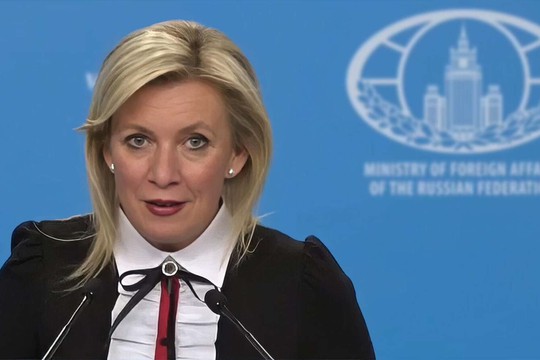
Foreign Ministry Spokeswoman Maria Zakharova
Photo: MFA
Foreign Ministry Spokeswoman Maria Zakharova’s answers to media questions regarding the US’s new National Security Strategy.
Question: On December 4, the Trump administration released its latest, and largely new, National Security Strategy. This time, it appears to move away from the stereotypes and precepts of the previous US strategic documents. In this regard, the primary question is: how will its provisions affect US-Russia relations?
Maria Zakharova: The new version of the US National Security Strategy contains a number of provisions that indicate a substantial reassessment of US foreign policy doctrine, especially when compared with the 2022 version of the document. Of particular note is the revision of Washington’s previous commitment to hegemony: the document explicitly states that American elites made serious miscalculations, having placed “a hugely misguided and destructive bets on globalism”. Of course, time will show to what extent the Trump administration will truly heed this difficult conclusion for the United States itself. Nonetheless, even this acknowledgement of the failure of the globalist model appears significant for now.
As we understand it, this core ideological framework also shapes another key principle of the Strategy – the call to end “the perception, and preventing the reality, of NATO as a perpetually expanding alliance.” In other words, for the first time, the United States is declaring, if not a refusal to expand the alliance, then at least an official questioning of its traditionally aggressive expansionist trajectory.
It is also noteworthy that Russia is mentioned in the document in the context of pan-European security, while there are no direct calls for the systemic containment of our country or for increased economic pressure against it. At the same time, without naming Moscow explicitly, the new version of the Strategy sets out Washington’s plans to achieve “energy dominance” by “curtailing the influence of adversaries.” This wording clearly reflects an intention to continue efforts to force Russia out of global energy markets by all available means.
Question: How does the Foreign Ministry assess the military-political aspect of the new Strategy, and in particular the stated goal of achieving strategic stability in relations with Russia?
Maria Zakharova: Despite the generally pragmatic approach to this issue, we note a number of contradictions. In particular, the document does not contain elements that would allow us to understand the American vision of a “post-New START” framework. We are referring primarily to the definition of parity in the key quantitative limits on nuclear weapons.
We also consider the provisions concerning the US global missile defence system, the Golden Dome, to be insufficiently clear. We continue to await concrete explanations from the American side regarding the relationship between strategic offensive and strategic defensive capabilities.
Despite the firm focus on defending US interests in the Strategy, the document leaves room for seeking areas of common ground with us. At the same time, the possibility of future changes in the US national strategy under subsequent administrations cannot be ruled out.
Question: One cannot help but notice the document’s sharp criticism of Europe’s ruling liberal elites for suppressing “undesirable” political forces. Brussels’ migration policy is even described as a threat of civilsational erasure of Europe. Does this indicate a split within the so-called “collective West?”
Maria Zakharova: As with the topic of globalism, this is more a statement of the deepening contradictions between the United States and the EU, culminating in Brussels’ openly obstructive stance towards Donald Trump’s peacemaking aspirations regarding Ukraine. There is an objective convergence between Russia’s traditional views and the new US administration’s reasonable assessments of the genuinely alarming processes unfolding in the Old World. In this regard, one can only hope that the new American Strategy will have the same sobering effect on Europe’s “war party” as President Vladimir Putin’s recent remarks on the absurdity of European “justifications” for preparing for some sort of “war with Russia.”
It is worth emphasising that certain provisions of the document concerning the Ukrainian crisis lay the groundwork for continuing our joint constructive efforts with the Americans to identify pathways towards a peaceful settlement.
Question: How should one assess the thesis concerning “reviewing” the need for a US military presence in those regions “whose relative significance for American national security has declined in recent years and decades”?
Maria Zakharova: This thesis reflects the “America First” concept, but it should hardly be interpreted as a US withdrawal from its military presence abroad, which in turn aligns with another American idea of the so-called “peace through strength.” For example, the paragraphs of the document on the Asia-Pacific contain ambivalent language regarding China, as well as calls for all major regional partners to grant the Pentagon greater access to their ports and “other facilities.”
Question: The Strategy noticeably shifts the focus of American foreign policy to the Western Hemisphere. This is described as the “Trump Amendment” to the notorious Monroe Doctrine. Does this not sound threatening?
Maria Zakharova: The relevant paragraphs sound more akin to a direct reference to the Roosevelt Amendment, the doctrine of the 26th US President, Theodore Roosevelt, who once proclaimed Washington’s right to intervene in Latin America under the pretext of “stabilising the domestic economic situation” of certain countries in the region. This is particularly concerning given the current tensions deliberately inflamed by the Pentagon around Venezuela. We hope that the White House will manage to avoid further spiralling into a full-scale conflict, which would carry unpredictable consequences for the entire Western Hemisphere.
read more in our Telegram-channel https://t.me/The_International_Affairs

















