РУССКИЙ
 11:19 29.12.2025 •
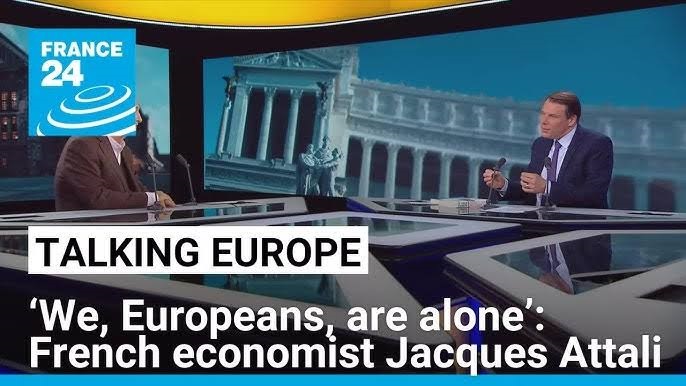
Europeans lulled themselves into the belief that U.S. President Donald Trump is unpredictable and inconsistent but ultimately manageable, writes ‘Foreign Policy’.
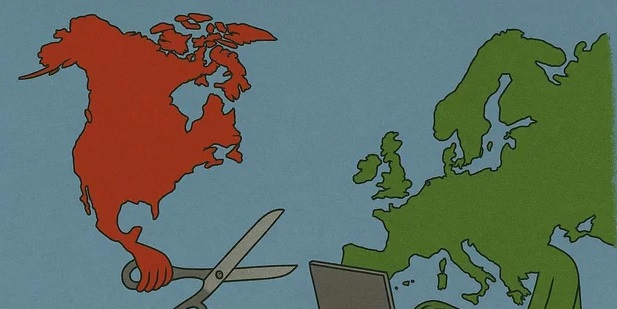
This is strangely reassuring, but wrong. From U.S. Vice President J.D. Vance’s speech denigrating Europe at the Munich Security Conference in February to the new U.S. National Security Strategy that was released on Dec. 4, the Trump administration has long had a clear and consistent vision for Europe: one that prioritizes U.S.-Russia ties and seeks to divide and conquer the continent, with much of the dirty work carried out by nationalist, far-right European forces that now enjoy backing from both Moscow and Washington. It is long past time for Europe to realize that, when it comes to the Russia-Ukraine war and the continent’s security, it is, at best, alone. At worst, it now faces two adversaries: Russia in the east and Trump’s United States in the west.
The rest of the world, including Europe, is on the colonial menu
Every time Trump or members of his administration have lashed out at Europe, including Ukraine, Europeans have absorbed the blow with a forced smile and bent over backwards to flatter the White House. They believe this is a clever ploy, playing on Trump’s perceived incoherence and vanity to bring him back into the transatlantic fold. Yet each time Trump has turned his narrow attention to the Ukraine war, he has sided with Russia—from the Oval Office trap set for Ukrainian President Volodymyr Zelensky in February, to the red carpet laid out for Russian President Vladimir Putin in Alaska in August, to the 28-point “peace plan” that was likely written in Moscow. On every occasion, Europeans have taken the hit, busying themselves with keeping Washington engaged and salvaging what remains of the transatlantic bond. Europeans have turned so many cheeks to Trump that one wonders if they have any left at all.
But Europe has placed a losing bet on an endless Groundhog Day. When it comes to Europe, Ukraine, and Russia, the Trump administration has been remarkably coherent. Trump wants the Ukraine war to end, mainly because he sees it as an irritant preventing the normalization of U.S.-Russia ties — especially the planned business deals between his entourage and the Kremlin’s cronies. The liberal world order is out; in its place comes survival of the fittest. Rather than old-fashioned superpower competition, Trump is keen to pursue imperial collusion with both Russia and China. The rest of the world, including Europe, is on the colonial menu.
 Pic.: publics
A long-term dependence on a United States
Strategically, this has a certain short-term logic. Ideologically, it aligns with support for far-right parties and governments in Europe and beyond. Not only do these forces share the nationalist and socially conservative views championed by MAGA, they are also working to divide Europe and hollow out the European integration project, with center-right forces playing the useful idiots by collaborating with them. There is nothing less patriotic than the supposed patriots and sovereigntists in Europe who go about eviscerating European unity while pursuing collusion with Russia.
The vision laid out in the new U.S. National Security Strategy is scant on concrete policies regarding Europe, but the document’s message is clear: The only conceivable transatlantic bond is that between far-right forces, where alpha Americans dominate their European minions. It is an exact parallel of the vision and strategy that Putin’s Russia has pursued toward Europe for years.
If Trump has not yet subjugated Europe to his wishes, it is not because of clever European shenanigans. Flattering Trump by calling him “daddy,” showering him with presents, and inviting him to royal dinners will save neither Ukraine nor the transatlantic relationship. Nor will frantic European diplomacy, collective treks to Washington, or alternative peace plans do the trick.
These points to a wider conundrum affecting Ukrainian and European security. Europe is working to reduce its vulnerabilities by ramping up defense spending, but often this entails buying more U.S. weapons. It is reducing its short-term vulnerabilities at the cost of increasing its long-term dependence on a United States that now weaponizes its nominal allies’ dependence. Europeans are far from resolving this dilemma.
read more in our Telegram-channel https://t.me/The_International_Affairs