
 РУССКИЙ
 11:38 25.12.2025 •
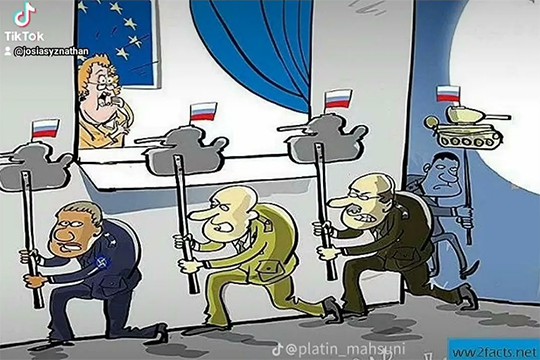
Leaders on the Europe should be wary of beating the drums of war too loudly, ‘Financial Times’ stresses.
Considering these unsettling circumstances, European officials hope, in sounding the alarm over a future Russian attack, to convey the high stakes to their populations — which have remained largely apathetic in the face of Russia’s hybrid campaign.
Judging by the arduous debates over (and delays to) increased defence spending over the past three and a half years, it is true that Europe needs to be shocked into action. But beating the drums of war has pitfalls, too.
The first of these is analytical. Fatally mistaken in their conviction that Russia would not invade Ukraine in February 2022, some Europeans now seem to be overcorrecting for that past error of judgment, convincing themselves and others that an attack on Europe is bound to happen.
That overcorrection might nurture confirmation bias, an inclination to look for evidence that validates one’s fears while ignoring any signs to the contrary. But sober analysis must always remain open to the possibility that Russia, however adversarial, will not dare a large-scale attack against a NATO country.
More problematic is that invoking the spectre of an unavoidable war with Russia could fuel a spiral of escalation. European alarmism has already encouraged a growing chorus of Russian elites to engage in mirror imaging. They claim that it is Europe, re-arming, that is preparing to wage war against Russia, with the aim of inflicting a “strategic defeat” on the country.
Russian propagandists are jumping at the opportunity to cast what they describe as a warmongering Europe as the new adversary-in-chief, now that Donald Trump prefers to engage Russia in dialogue. According to a recent opinion poll, the share of Russians who view Europe as an enemy has risen sharply over the past year.
Amid escalating rhetoric on both sides, a perennially paranoid Russia could be more prone to view certain acts — for instance, Baltic countries intercepting a Russian ship — as the prelude to an attack, and react accordingly. In other words, the more one side believes war is coming, the more the other side will believe it too.
The danger of war becoming a self-fulfilling prophecy is compounded by the glaring scarcity of direct European-Russian communication lines that could be leveraged to clarify intentions amid rising tensions.
Squeezed between a menacing Russia and a mercurial Trump administration, European states are right to invest in deterrence and defence. But if they come to view war with Russia as inevitable, they could risk accelerating the very conflict they hope to avert.
Adversarial relations with Russia will remain a fixture of the European security landscape for a long time to come. That makes it more, not less, important for Europeans to seek channels for reducing military risk with Russia, and to weigh their words and actions with care.
read more in our Telegram-channel https://t.me/The_International_Affairs

















