
 РУССКИЙ
 10:11 27.06.2026 •
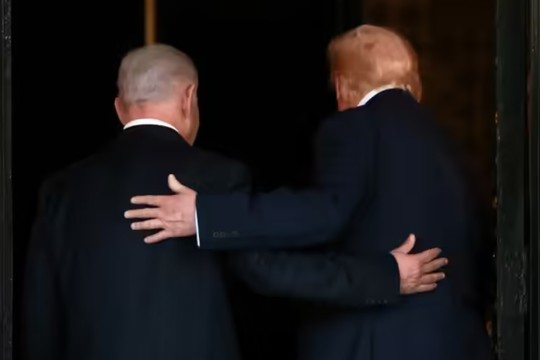
U.S. President Donald Trump and Israeli Prime Minister Benjamin Netanyahu
Photo: India Times
Just four months ago Benjamin Netanyahu witnessed the fulfilment of his decades-old political dream: the start of a joint US-Israeli war on Iran. But what was billed in Israel as the “final” battle against its arch-foe did not go to plan, financial Times writers.
Donald Trump’s interim deal with Iran has been received with fury in Israel, as critics alleged a vast strategic failure overseen by a weak-willed US leader. Washington has fired back, with vice-president JD Vance warning Israel to “wake up and smell the reality” of its situation.
“They over-reached,” said Dan Shapiro, a former senior US official and ambassador to Israel, referring to Trump and Netanyahu. “Both of them were high on their own supply, misjudged what they could achieve . . . and squandered the most favourable strategic position.”
Netanyahu was repeatedly feted at meetings with Trump after the latter’s return to power: the pair met no less than seven times between the US president’s inauguration and the start of the war. But since a fateful February meeting in the run-up to the conflict, they have not appeared together.
As part of its agreement with Iran, Washington has also sought to impose a ceasefire on Israel’s fight with Hizbollah in Lebanon, drawing howls of protest from northern Israeli residents and far-right ministers angry at what both groups have called a “loss of sovereignty”.
Netanyahu has insisted his forces will not withdraw from a self-declared “security zone”, making Lebanon central to tense peace talks between the US and Iran.
The memorandum of understanding concluded between Washington and Tehran was the clearest indication yet that the interests of the US and Israel have radically diverged.
As well as including the Lebanon front, the text made no mention of Iran’s ballistic missile programme or its support for proxy militias in the region despite longstanding Israeli demands that these should be part of the agreement.
A former senior Israeli official said that “the nuclear issue is only dealt with in words”, not firm commitments from Iran to give up its stockpile of highly enriched uranium.
Depending on the progress of talks and its moves to reopen the Strait of Hormuz, Iran is set to gain US waivers to sell oil and access to its frozen assets. And the same regime still rules in Tehran.
“It’s hard to overstate what a strategic disaster this was,” said the former Israeli official. Compared with before the war, “the picture is certainly worse today,” especially since “we’re not in lockstep with the US as before”, they said.
It has been a steep decline in Netanyahu’s fortunes from the end of last year, when the US president called him a wartime “hero” at a Mar-a-Lago meeting and said “you might not have Israel” if anyone else were leading the country.
But perhaps the biggest liability for Netanyahu is his growing distance from Trump, who in recent weeks has reportedly called the Israeli premier “fucking crazy” and told the FT: “I call all the shots. He [Netanyahu] doesn’t call the shots.”
Support for the US president among Israelis — and especially among Netanyahu’s rightwing base — has plummeted. A poll by Israel’s Channel 12 last Thursday indicated a mere 13 per cent of Israelis trust the previously popular Trump to safeguard Israeli interests.
Nadav Shtrauchler, a political strategist who previously worked with the Israeli premier, said: “This [agreement with Iran] is not a small blow to Netanyahu... If the elections were held tomorrow he’d be in big trouble.”
Netanyahu’s Likud party and rightwing allies are trailing the opposition in the polls, with no clear path to securing another parliamentary majority.
With elections set for October at the latest, the veteran prime minister still had time to repair the damage, Shtrauchler said. But he stressed that Netanyahu “can’t end the situation like this” in either Iran or Lebanon, given the gap between the current reality and the lofty promises made by Netanyahu at the start of the Iran campaign.
“The Israeli public didn’t expect for it to end this way,” he said. The Channel 12 poll showed that just 11 per cent of Israelis believed their country had won the war.
Netanyahu continues to reject any talk of failure, arguing in a rare press conference on June 15 that there was a “systematic campaign to diminish the achievements” of the war and expounding on ostensible successes in Iran: missiles destroyed, “innumerable” defence industrial targets struck, and hundreds of billions of dollars in economic damage.
The war had saved Israel from the threat of “nuclear annihilation” and “mass death”, he added, as he claimed Iran was rushing headlong towards a nuclear weapon — a position not supported by Israeli or western intelligence assessments.
Tellingly, many of the successes Netanyahu highlighted — Israeli hostages returned from Gaza, Hizbollah’s vast missile arsenal and senior leadership destroyed and even the targeting of Iran’s nuclear facilities — predate the most recent war. Hamas still controls about 40 per cent of Gaza, and Israel’s conduct in the strip has left it ever more internationally isolated.
At the press conference Netanyahu barely mentioned Trump, downplaying disagreements as something that “happens in the best of families”.
“There are real achievements he can point to,” said Shtrauchler, but he added: “You’re either victorious or you’re explaining. Netanyahu a month ago wouldn’t have wanted this and would have preferred to walk hand-in-hand with Trump into the sunset.”
read more in our Telegram-channel https://t.me/The_International_Affairs

















