
 РУССКИЙ
 10:50 07.03.2026 •
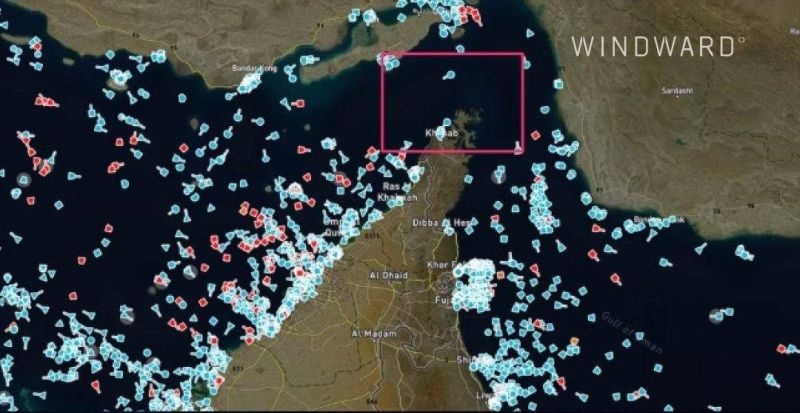 The Strait of Hormuz is practically blocked. Many ships are waiting to pass through
Photo: publics
Brent crude tops $90 after gas producer says it will take ‘weeks to months’ to restore deliveries, ‘Financial Times’ writes.
Qatar’s energy minister Saad al-Kaabi has warned that war in the Middle East could “bring down the economies of the world”, predicting that all Gulf energy exporters would shut down production within days and drive oil to $150 a barrel. He told the FT that even if the war ended immediately it would take Qatar “weeks to months” to return to a normal cycle of deliveries following an Iranian drone strike at its largest liquefied natural gas plant.
Qatar, the world’s second-largest producer of LNG, was forced to declare force majeure this week after the strike at its Ras Laffan plant.
While Qatar only exports a small proportion of its gas to Europe, the energy minister said the continent would feel significant pain as Asian buyers outbid Europeans for whatever gas is available on the market, and as other Gulf countries find themselves unable to meet their contractual obligations.
Kaabi’s comments reflect rising concern in the Gulf about the economic repercussions of the US and Israel’s war with Iran, which has wreaked havoc across the oil-rich region.
Brent crude rose 5.5 per cent to $90.13 a barrel on, the highest level since the start of the conflict. European gas prices gained 5 per cent, but were still below this week’s peak.
“This will bring down the economies of the world,” Kaabi said. “If this war continues for a few weeks, GDP growth around the world will be impacted. Everybody’s energy price is going to go higher. There will be shortages of some products and there will be a chain reaction of factories that cannot supply.”
Qatar’s $30bn development to increase production capacity at its vast North Field gasfield from 77mn to 126mn tonnes a year by 2027 would also be delayed, he added. The first production was to begin in the third quarter of this year.
He forecast that crude prices could soar to $150 a barrel in two to three weeks if tankers and other merchant vessels were unable to pass through the Strait of Hormuz, a key maritime trade route through which a fifth of the world’s oil and gas passes.
He predicted that gas prices would rise to $40 per million British thermal units (€117 per MWh) — almost four times the level they were before the war began.
He added that the impact of the disruption of maritime trade through the strait would reverberate far beyond energy markets and hit multiple industries as the region produces much of the world’s petrochemicals and fertiliser feedstocks.
Traffic through the waterway has slowed to a halt since the US and Israel launched their attack on Iran on Saturday. At least 10 ships have been hit, insurance premiums have soared and shipping owners have been unwilling to risk their vessels and crews.
How will the Iran conflict hit European energy markets?
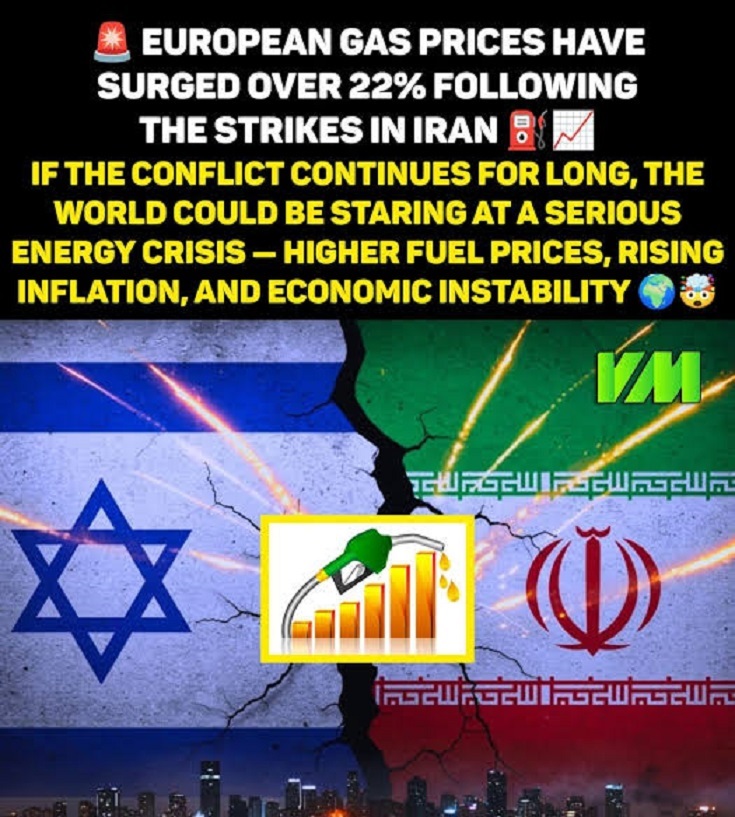
Strikes against Iran by the United States and Israel have reopened the most consequential energy-security issue in the global economy: disruption of Middle Eastern oil and gas flows that transit through the world’s most important energy chokepoint, the Strait of Hormuz. At stake is about 20 million barrels per day of oil and petroleum products – roughly a fifth of global consumption – plus all liquified natural gas (LNG) exports from Qatar and the United Arab Emirates, equivalent to around 20% of global LNG trade. Since the first strikes on 28 February, shipping through the strait has slowed to a near standstill.
The longer-term impact on energy prices will depend on how long hostilities last and their impact on shipping through the Strait of Hormuz. A brief conflict would inject a geopolitical risk premium into oil and gas markets. A prolonged disruption – perhaps over several weeks – would begin to erode inventories, constrain logistics and tighten global oil and gas balances, with much greater effects on prices.
Europe is far less dependent on Gulf oil and LNG than China, India, Japan or South Korea, but it is not insulated. Oil and LNG are global markets: any blockage of the Strait of Hormuz could trigger immediate price spikes that would hit Europe regardless of its limited physical imports.
Europe’s most pronounced vulnerability is LNG. If LNG flows via the Strait of Hormuz are curtailed, global spot availability tightens immediately. Europe would then be forced to compete with Asian buyers for flexible cargoes on the spot market – something seen during the 2021-2023 energy crisis. This would push up European gas prices, especially because Europe started 2026 with much lower gas storage levels than recent years: 46 billion cubic metres (bcm) at the end of February 2026, compared to 60 bcm in 2025 and 77 bcm in 2024.
Storage refill operations could be disrupted, placing pressure on industrial energy costs in Europe. Higher gas prices feed into power prices and industrial margins, especially for gas-intensive sectors. If oil and gas prices spike in tandem, substitution will be harder, potentially triggering renewed coal demand and pressure for demand-side savings.
If they haven’t already, European policymakers should prepare contingency plans in case of a prolonged standoff in the Middle East.
The situation also reinforces a more fundamental point: Europe’s exposure to geopolitical shocks remains rooted in its continued reliance on imported fossil fuels traded on volatile global markets – even if it has shifted dependency from Russia to other suppliers, not least the US.
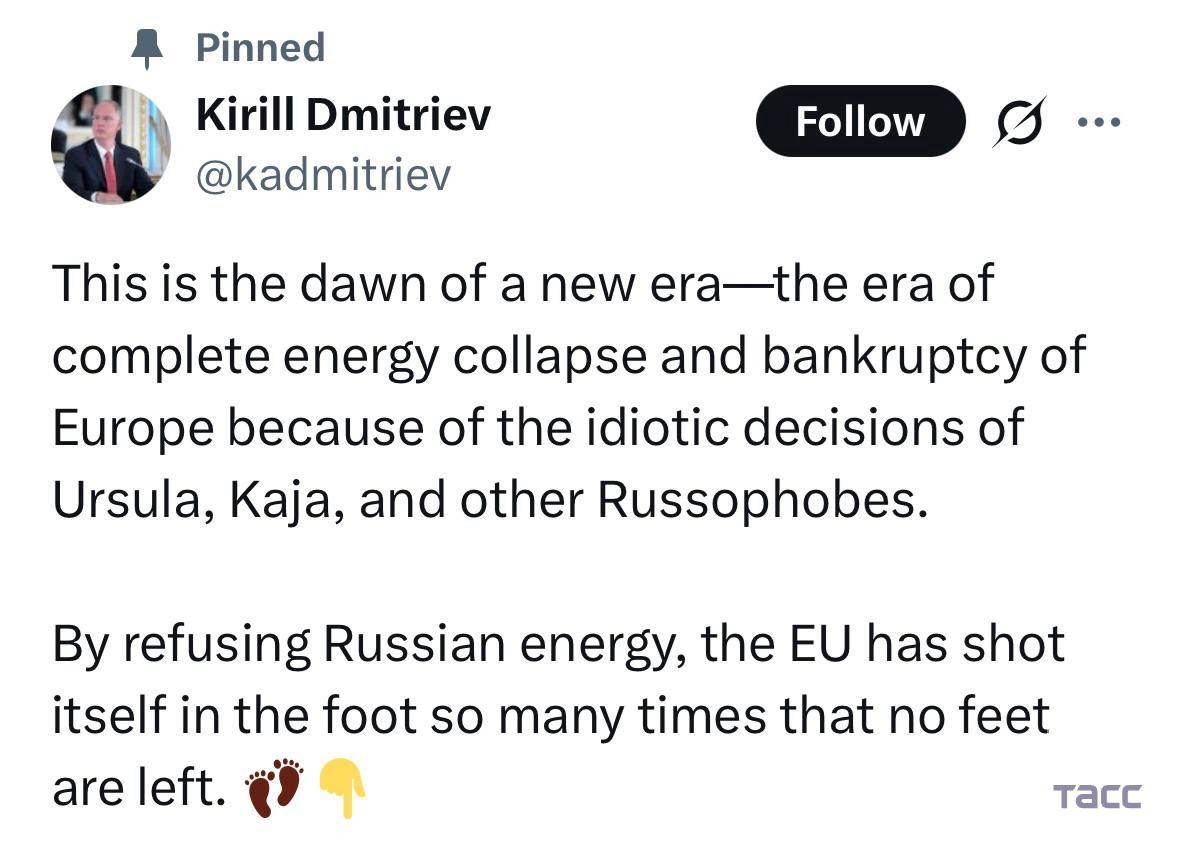
Kirill Dmitriev, a Russian businessman who is the CEO of the Russian Direct Investment Fund (RDIF) and Special Envoy of the President of Russia:
read more in our Telegram-channel https://t.me/The_International_Affairs

















