
 РУССКИЙ
 9:24 14.03.2026 •
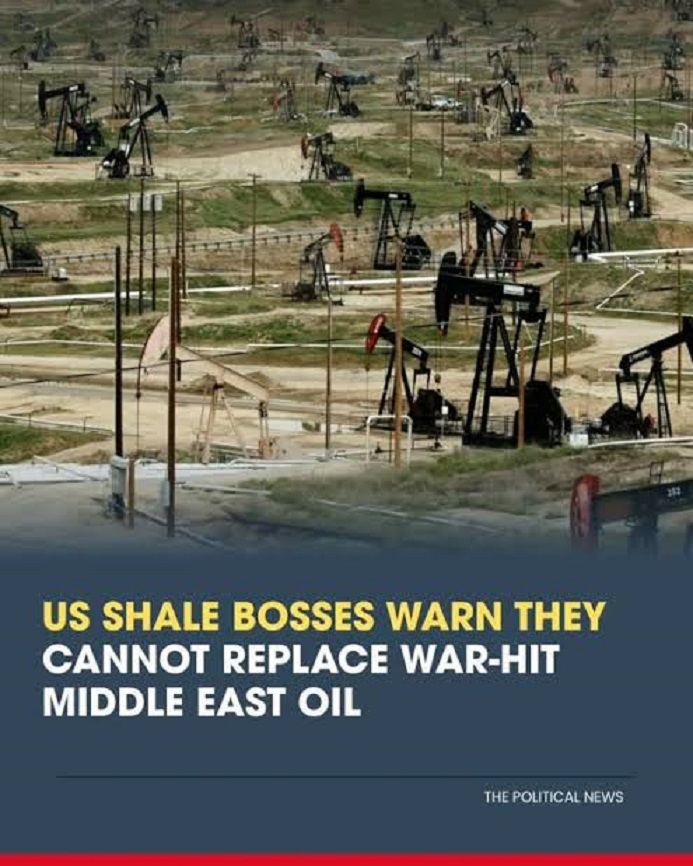
US shale drillers cannot increase production quickly enough to solve an oil supply crisis caused by Donald Trump’s war in Iran, industry bosses have warned, saying a big rise in output would take months to materialize, ‘Financial Times’ writes.
Scott Sheffield, a veteran shale boss, said producers would resist costly new drilling programmes until they were certain oil prices — which hit an 18-month high above $80 a barrel this week amid fears of supply disruptions from the Gulf — would last.
A lack of good drilling prospects would also hold back companies, which have cut spending, idled rigs and laid off workers in the past 12 months during a period of weak oil prices, he said.
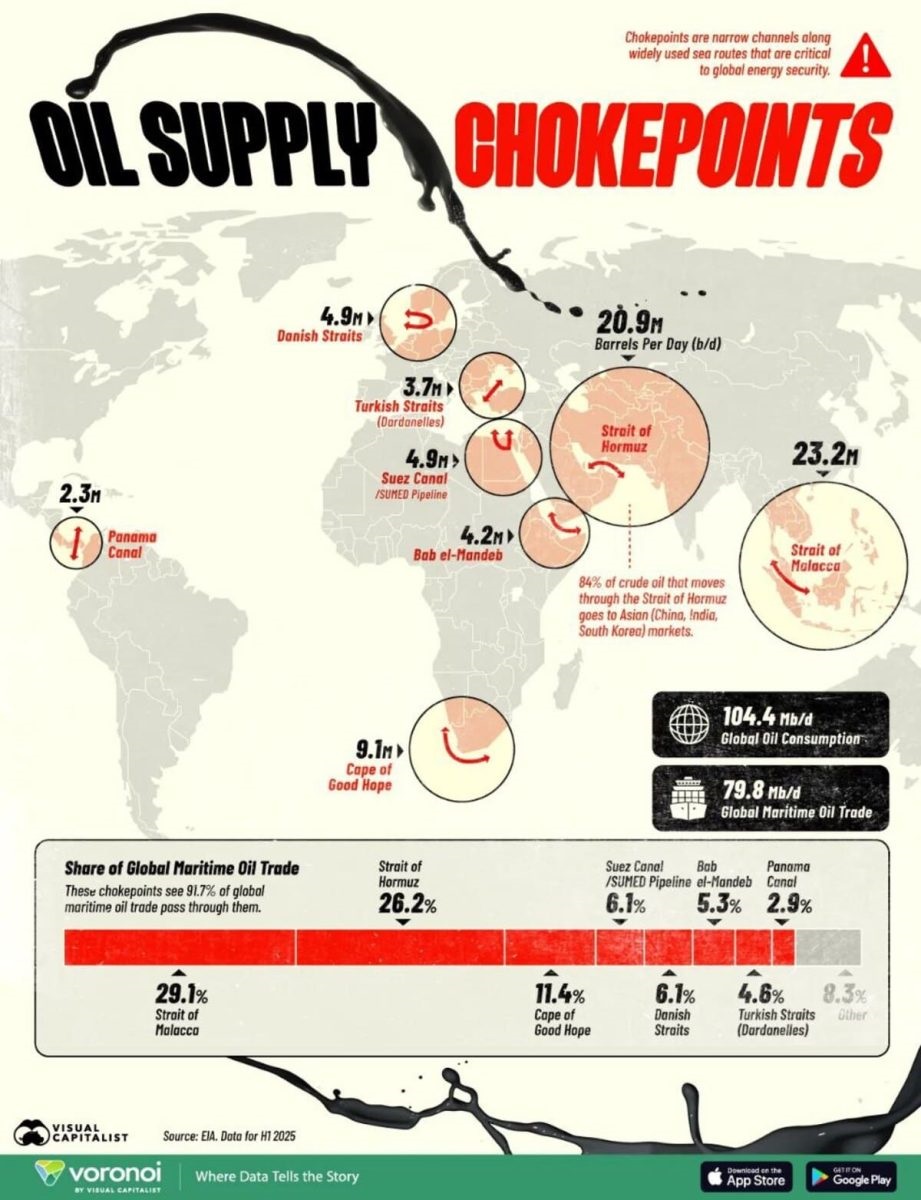
The joint US-Israeli attacks on Iran and assassination of its supreme leader Ayatollah Ali Khamenei on Saturday drew a swift response from Tehran, which has targeted energy infrastructure in Arab neighbours and vowed to shut the Strait of Hormuz, the chokepoint for a fifth of global oil supply.
Some huge oilfields in Iraq and Qatar’s giant gas export facilities have already shut as the war intensifies. Trump said that the US could escort oil tankers out of the Gulf but details of the plan were scant.
Goldman Sachs and consultancy Wood Mackenzie have warned that a sustained supply disruption from the Gulf could send crude prices above $100 per barrel, pushing up fuel prices and inflation and hitting global growth.
The International Energy Agency met to discuss the crisis and circulated a document saying US shale would be the “most significant” source of near-term output to offset any shortfall, mainly from recently drilled wells that had not started producing.
Those wells could add “an additional 400,000 barrels per day” in the second half of the year, it said, with 240,000 barrels per day in May.
But those are small volumes compared with the 20mn b/d exported from the Gulf. The most recent prediction from the US government’s own Energy Information Administration said American output, currently at a record high of about 13.6mn b/d, would fall this year.
Reversing that trend would take much more time, even at higher oil prices, said analysts.
“US shale could respond, but incremental supply would require several months given drilling, completion and infrastructure lead times,” wrote Natasha Kaneva, an analyst at JPMorgan.
WSJ: The Big Winner from the Persian Gulf energy crisis? Russia
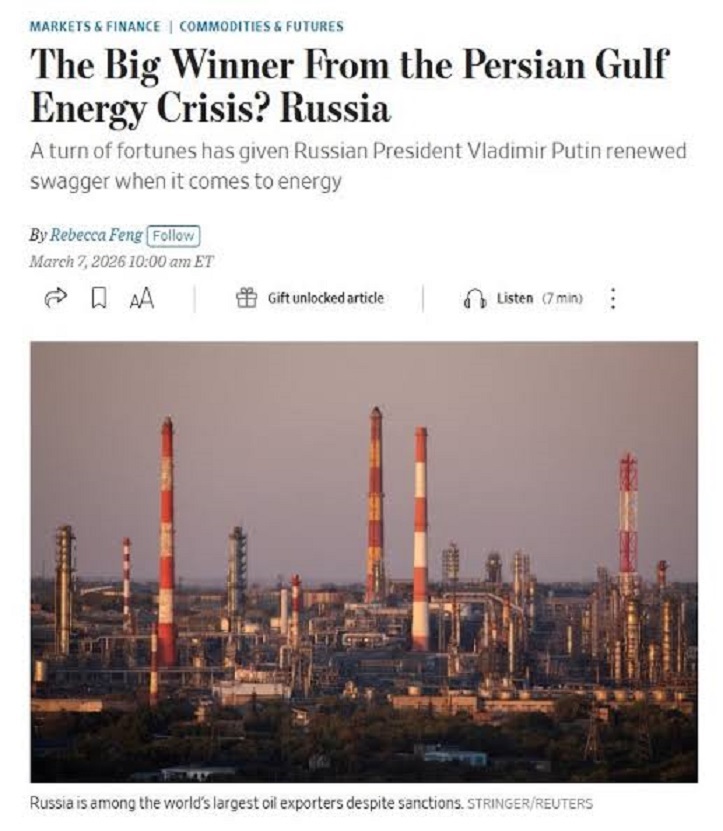
Russian oil that struggled to find buyers last week is now a hot commodity. The U.S. has eased some sanctions, allowing purchases from key buyers of Russian crude. The soaring price of oil and natural gas will lead directly to higher profits for Russian producers, ‘The Wall Street Journal” writes.
Already, the discount that traders demanded to buy Russian oil in India has begun to reverse, with some traders trying to sell oil at prices above global benchmarks.
Russia is among the world’s largest oil exporters. Before it invaded Ukraine in early 2022, the country was the world’s third-largest oil producer behind the U.S. and Saudi Arabia, and among the world’s top three largest exporters, a position it maintained last year despite sanctions.
The conflict in the Gulf has sent oil and gas prices soaring, with global benchmark Brent crude up nearly 30% since the attacks started. Those higher prices would normally benefit producers everywhere. But disruption in the Gulf means Russia’s main competitors there aren’t able to take advantage.
To lessen the disruptions the conflict is causing in the oil market and at gas pumps, the U.S. on Friday loosened the tariffs that it had put in place to pressure Moscow over the war in Ukraine.
Big buyers of Gulf energy in Asia, such as India, Japan and South Korea, are scrambling to secure supply from elsewhere, giving Russia fresh leverage. Europe, which now needs to compete for LNG cargoes with Asia, is seeing natural-gas prices surge.
Oil and LNG tankers are all but prevented from entering and leaving the Persian Gulf, where some 20% of the world’s crude supply passes through each day. QatarEnergy, which produces roughly 20% of the world’s LNG and related products, halted LNG production this week after facilities were hit by Iranian drones and declared force majeure two days later.
The developments in the Gulf have reignited fears in Europe about where it sources energy. Formerly heavily reliant on Russia, Europe has spent the past few years diversifying imports, relying more on the U.S. and the Middle East.
If the Persian Gulf stays shut for a long time, Europeans worry it will force the region to reconsider its hard-line stance against re-establishing an energy relationship with Moscow.
“The current crisis in the Middle East has led to questions in some quarters about whether to go back to Russia or not,” said Fatih Birol, head of the International Energy Agency, a group that represents the world’s main energy-consuming nations. He said that would be a mistake.
read more in our Telegram-channel https://t.me/The_International_Affairs

















