
 РУССКИЙ
 11:46 24.03.2026 •

Countries around the world are facing a cliff-edge as the flow of liquefied natural gas from the Gulf comes to an abrupt end in the next 10 days, when a handful of final tankers from the region reach their destinations, ‘Financial Times’ notes.
Qatar, which produces a fifth of the world’s liquefied natural gas, had to stop exports after Iran blockaded the Strait of Hormuz at the mouth of the Gulf, in the first few days of the conflict.
It has since suffered enormous damage to its giant Ras Laffan LNG plant, which was attacked by Iranian missiles this week, sending gas prices in Asia and Europe soaring.
Countries reliant on imports to power their economies will have to pay sky-high prices to compete for LNG supplies from the US and elsewhere, switch to other fuels or force households and businesses to use less.
Iran war leaves US oil and gas dealmaking ‘in paralysis’
The Iran war has brought US oil and gas dealmaking to a standstill after a strong start to the year as volatile crude prices make it difficult to price transactions, FT writes.
Brent crude surged to $115 a barrel in early trading last week before falling back to settle at $112.19 at Friday’s close following Iran’s attack on a natural gas facility in Qatar.
US oil and gas dealmaking year to date has reached $45bn, its highest in two years, according to Dealogic data, as a result of the merger between two Permian Basin players Devon Energy and Coterra Energy.
But oil and gas talks had slowed or been put on hold as companies waited for markets to calm and crude prices to settle, several bankers and lawyers working on US deals said.
“Everything has just shut down,” said Bryan Loocke, partner at law firm Vinson & Elkins specialising in oil and gas M&A. “I’ve got a couple of deals going, they are longer-term contracts, but everything is in paralysis right now because no one can price anything.”
Gas prices in Europe are skyrocketing
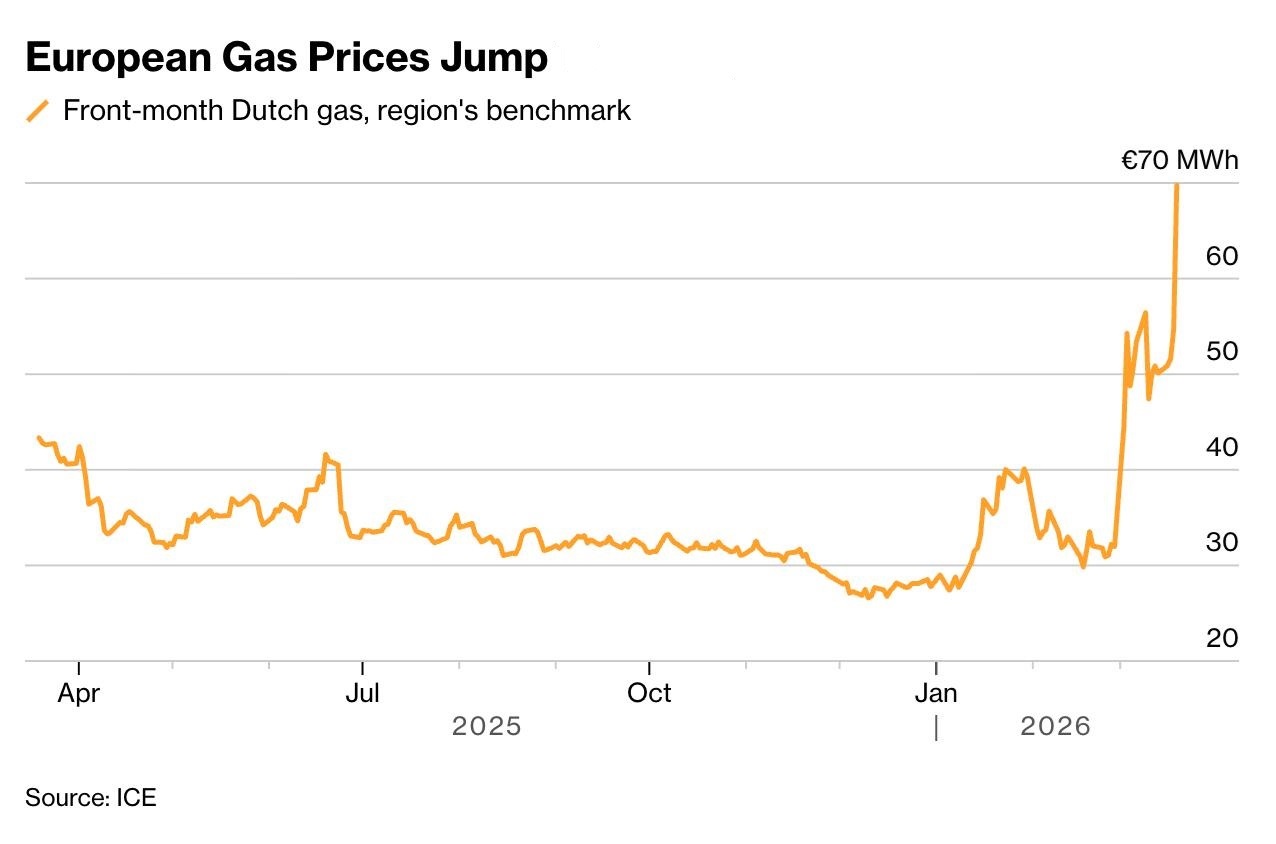
The attacks on the "South Pars" gas field and the energy plants in Qatar are causing the price of gas to skyrocket. And there is even more danger: a US attack on the "South Pars" gas field could trigger a global energy shock, German ‘FOCUS” writes.
The European reference gas price TTF rose by 24.5 percent in the morning to 67.89 euros per megawatt hour. At the top it was even more than 30 percent up. The trigger is the severe damage to central liquid gas plants in Qatar after an Iranian missile attack.
The escalation in the Iran war is directly affecting the energy markets – and consumers.
Chain reaction: Attack is followed by counterattack
Israel had previously deliberately attacked central energy facilities. The huge "South Pars" gas field is one of the largest natural gas reserves in the world and is shared by Iran and Qatar. This field alone accounts for a significant portion of global gas reserves, according to Reuters.
Iran responded by attacking LPG facilities in Qatar US-President Donald Trump threatens Tehran now with a massive bombing of the energy infrastructure, Iran should continue its attacks. At the same time, he is apparently trying to limit the damage: According to dpa, there will only be a US attack if Iran attacks Qatar's gas industry again. Trump warned of a blow "with a strength and power like Iran has never seen before".
New and crucial: energy becomes a war goal
What is new about this escalation is that the focus is no longer just on military goals, but rather on energy supply. Iran attacked liquefied natural gas facilities in the Ras Laffan industrial area in Qatar – one of the most important transshipment points for liquefied natural gas in the world. Oil and gas facilities were also hit in the United Arab Emirates, as well as attacks on ships in the region.
This makes energy supply itself a target – and a strategic means of pressure in conflict. Attacks on energy infrastructure threatened global energy security as well as population and the environment, Qatari Foreign Office spokesman Majid al-Ansari warned.
Why "South Pars" is so critical
The "South Pars" gas field is of central importance for Iran: According to the dpa, around 70 percent of the country's gas supply comes from there. An attack would massively affect the energy supply in Iran itself –and at the same time increase the risk of further escalation, for example through counterattacks on Qatar or other Gulf states.
However, another factor is even more crucial for the global economy: Qatar The country is one of the largest exporters of liquefied petroleum gas in the world, large parts of which are shipped via Ras Laffan. If this infrastructure is damaged or fails for a longer period of time, the global market will suddenly lack a significant part of the supply.
What this means specifically for Germany's economy and stock market
The economic consequences are already visible: According to dpa, the price of oil has temporarily risen to around 112 dollars per barrel – about 60 percent more than before the escalation began. The strong price jump for gas further increases the pressure.
Rising Oil prices have an immediate effect on petrol and diesel, a little later, the higher gas prices hit heating costs and electricity. At the same time, energy-intensive industries are coming under pressure, which ultimately also increases prices for many everyday products.
The first consequences are also emerging in other areas: around a third of the helium available worldwide, which is indispensable for chip production, comes from Qatar. If an important supplier fails, this can slow down production worldwide.
Experts also warn of long-term consequences for the energy markets. Even if the war ends, supply and prices could continue to suffer from the damage for months or years – for example due to complex repairs.

read more in our Telegram-channel https://t.me/The_International_Affairs

















