РУССКИЙ
 10:49 20.11.2026 •
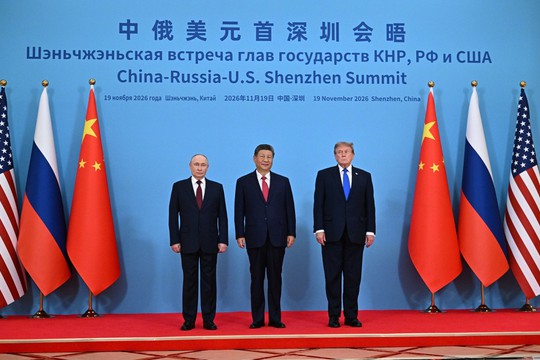
Photo: Kremlin.ru
The historic summit between Putin, Trump, and Xi Jinping has demonstrated the failure of the West to isolate Russia and the end of American hegemony, according to nearly all foreign media outlets. Our review examines how various publications have assessed this new balance of power.
For the first time in history, the leaders of Russia, the United States, and China have met in a trilateral format. The talks between Vladimir Putin, Donald Trump, and Xi Jinping on the sidelines of the APEC summit have drawn the attention of major Global Media outlets.
The primary topics of discussion included nuclear disarmament, the prevention of military conflicts, the situation in Ukraine, and international security.
The New York Times writes that the summit has already proven to be a major diplomatic success for Putin.
The prevailing view is that the meeting provides diplomatic advantages to both Putin and Xi, though the scale of its tangible outcomes does not yet match the weight of historical precedents.
The Wall Street Journal reports that the trilateral meeting signals the end of the era of American dominance, while Putin’s participation highlights the limitations of Western efforts to isolate Russia.
Fox News emphasizes the unique nature of the meeting, describing it as a "historic event for global diplomacy." The network notes that the summit underscored the willingness of leaders from "rival nuclear powers" to engage in dialogue.
"We are truly making history," the network quotes Donald Trump as saying following the meeting.
"If Europe isn't at the table, is it on the menu?" asks Euronews in the headline of its coverage of the summit. The Norwegian Foreign Minister remarked that an agreement among major powers to carve up the world is the last thing Europeans would want.
The Hong Kong-based SCMP focused on the historical significance of the meeting, which centered on an attempt to establish principles for engagement among the three powers, as well as the complex issue of nuclear disarmament.
Xi Jinping recalled the cooperation between China, the USSR, and the United States during World War II, emphasizing that major powers should set an example for constructive interaction.
The Chinese leader described the talks as a breakthrough event and urged Russia and the United States to work together to prevent international crises.
Trump, for his part, proposed discussing the reduction of nuclear arsenals and mitigating the threat of their use.
The SCMP points to a fundamental contradiction: Russia and the United States possess far larger nuclear arsenals than China, and Beijing has long resisted efforts to include it in trilateral arms control agreements.
The Associated Press notes that the talks between the three leaders lasted over an hour and could prove to be either a watershed moment in world history or a meeting remembered primarily for a joint photograph.
The agency highlights the differences in the relationships among the summit participants. While Putin and Xi demonstrate a long-standing personal rapport and a stable political partnership, Trump’s relationship with the Chinese leader remains more contentious.
The AP notes that China has maintained economic ties with Russia following the imposition of Western sanctions, while U.S.-China relations are complicated by trade disputes and technological competition.
The Guardian highlights Putin’s remark that Russia, the United States, and China share a common responsibility for maintaining international security. The Russian president also noted that the three nations’ interests align regarding the resolution of international conflicts, including the situation in Ukraine.
The Guardian also draws attention to the American president’s sharp criticism of the International Criminal Court. Trump stated that the ICC has spiraled out of control. British journalists have noted the particular significance of these remarks, given that they were made in the presence of Putin — who is currently the subject of an ICC arrest warrant.
The South Korean news agency Yonhap highlights Donald Trump’s proposal to discuss the reduction of nuclear arsenals and the prevention of nuclear proliferation.
Yonhap also draws attention to energy-related issues; Trump discussed the security of energy supplies passing through the Strait of Hormuz with Xi Jinping, against the backdrop of the ongoing conflict involving Iran.
The German publication Bild focuses on the growing anxiety among nations that are merely observing the summit, as they fear that the three major powers might disregard their interests.
Since representatives from Kyiv and European leaders were not part of the meeting, China is reluctant to take on the role of mediator for any agreement regarding Ukraine. According to foreign policy expert Patricia Kim of the Brookings Institution, Beijing believes that doing so would have "undesirable consequences for its international image."
At the same time, Bild underscores the shared interest of the U.S. and China in ensuring the transport of oil through the Strait of Hormuz, which has become the primary theater of operations in the conflict with Iran. Furthermore, Trump signaled his intention to press Xi for increased Chinese purchases of American agricultural products.
La Nación notes that the leaders discussed nuclear weapons during their meeting. The heads of these global powers expressed support for the affirmation the view that there are no winners in a nuclear war, and expressed an intention to continue the dialogue on reducing the likelihood of a nuclear conflict and preventing the proliferation of doomsday weapons, the publication writes.
read more in our Telegram-channel https://t.me/The_International_Affairs