
 РУССКИЙ
 11:24 18.01.2026 •
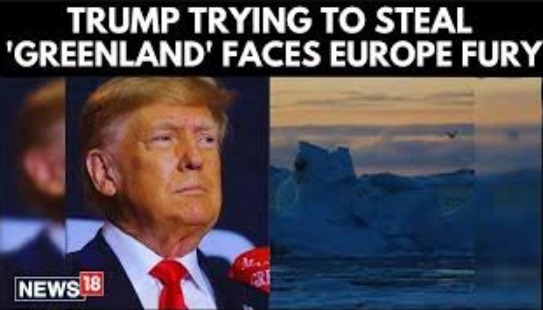
President Trump announced in a social media post on Saturday morning his latest strategy to get control of Greenland: He is slapping new tariffs on a bloc of European nations until they come to the negotiating table to sell Greenland, ‘The New York Times’ reports.
Greenland is a territory of Denmark, which will be hit with a 10 percent tariff on all goods sent to the United States beginning on Feb. 1, Mr. Trump wrote in a social media post. Norway, Sweden, France, Germany, Britain, the Netherlands and Finland, fellow NATO members that have expressed solidarity with Denmark in its refusal to yield to Mr. Trump’s demands, will also be subject to the 10 percent tariff. If those nations do not relent, he added, the rate will increase to 25 percent on June 1, “until such time as a Deal is reached for the Complete and Total purchase of Greenland.”
The post and the threat of new tariffs carried with it were a marked escalation in Mr. Trump’s pressure campaign. Earlier this week, a delegation from Denmark and Greenland came to Washington to meet with officials from the Trump administration including Vice President JD Vance and Secretary of State Marco Rubio. Little was achieved.
Also this week, several European countries including France sent troops to Greenland to take part in military exercises alongside Danish forces.
The unease in European capitals — caught between stupor, denial, and the fear
January 2026 marks a breaking point. What was perceived in 2019 as a real estate whim (quickly labeled “absurd” in Copenhagen) has become, under the second Trump administration, a coercive demand. President Trump’s recent interview — reiterating his desire to obtain full ownership, dismissing the idea of a simple security agreement, and suggesting that sacrificing NATO could be an acceptable “choice” to secure Greenland — transforms the Arctic into a test of European sovereignty, writes European ‘The Jacques Delors Institute’.
The unease in European capitals — caught between stupor, denial, and the fear of American disengagement in Ukraine — could lead to de facto vassalization.
This paper explores three response scenarios, from inaction to preemptive deterrence, and examines their political and military costs for the European Union and the Alliance.
The cold hard fact: Washington threatens an ally with annexation and accepts the Price
Since early January 2026, the Trump administration has hardened its rhetoric, moving it out of the “transactional” register and into the realm of sovereignty, and therefore coercion. The White House explicitly asserts that “all options” are on the table and that the use of force is “always an option” available to the Commander-in-Chief.
While Trump does not do everything he says, he telegraphs everything he does. Trump is certainly interested in Greenland’s subsoil resources (which are nonetheless costly to exploit). But that is not what he is emphasizing. Listening to him, now repeatedly, his motivation seems more territorial–that of a real estate tycoon looking to expand his holdings.
It is also clear that the “Arctic security” argument functions as a rationalization. The United States already possesses structural military leverage in Greenland: Pituffik (formerly Thule) notably hosts the Upgraded Early Warning Radar (ex-BMEWS), operated by the US Space Force, a key element of advanced missile/attack warning. Furthermore, the bilateral legal framework (the 1951 defense agreement) and its update (Igaliku, 2004) already offer possibilities for posture adaptation without a transfer of sovereignty.
In other words: if the objective were merely “more defense,” the cooperative path already exists. This is precisely what makes the claim for ownership politically explosive in Copenhagen, in Nuuk, and among certain Republicans.
Three plausible scenarios. Faced with this unprecedented pressure, which explicitly does not rule out the military dimension, three scenarios emerge, each carrying major stakes.
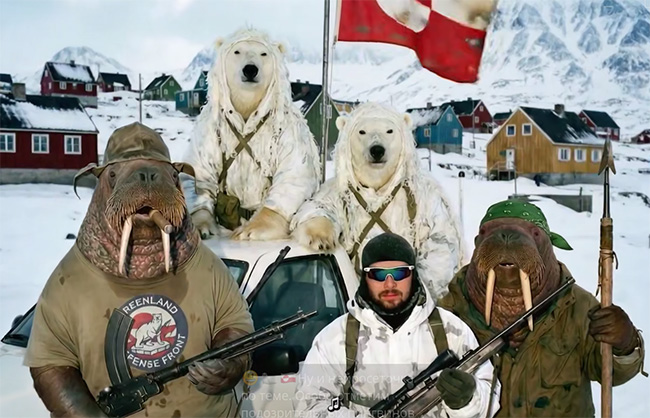 Greenland is ready to fight
Photo: TV-screen
Scenario 1
Europe stalls, Trump meets no obstacles: an “Arctic Munich”
This is the scenario of denial. Paralyzed by the fear of seeing Washington cut off the lifeline to Kyiv, Europeans (France and Germany in the lead) choose verbal de-escalation and inaction on the ground. Denmark, isolated, is subjected to unbearable bilateral pressure. The United States proceeds with an administrative and security takeover of Greenland — a de facto annexation (via ultimatum, extorted “agreement,” or show of force).
The consequence goes beyond Greenland: Europe is vassalized.
The notion of “strategic autonomy” collapses. The constructs of “European defense” (capacity for action, the “Strategic Compass,” and other declarations) appear retrospectively as mere illusions, incapable of resulting in a reaction even in the face of territorial dispossession. Retaliation may occur: closures of American bases in Europe, or a hardening of European policies against American tech actors. But pulling Europe out of the rut after having been the target of a territorial annexation without being capable of defending itself will be highly uncertain. As President Macron highlighted, we would be entering “another world.”
As for NATO, if an ally can threaten the territorial integrity of another without a structured reaction, the Alliance becomes mere window dressing.
Scenario 2
A preventive, discreet, multilateral defensive reinforcement: a “Line of Deterrence”.
Considering that weakness invites aggression, a coalition of the willing (France, the UK, Scandinavian countries, Germany) decides to back Denmark before any American action. A symbolic but credible force is deployed preventively to Greenland: a few frigates, some aerial assets, and light units positioned on critical infrastructure.
The idea is not to confront the United States militarily, but to make any move to action politically prohibitive. A European deployment, even limited, changes the nature of the narrative: forcing Trump to give the unthinkable order to fire on allies provides arguments to reluctant Republican officials and to Congress, in a context where War Powers-type resolutions are already being discussed to restrict the use of force.
This is the most rational option if the goal is to deter without provoking: preventing a “frictionless” takeover.
This framing tracks with the joint communiqué of January 6 (France, Germany, Italy, Poland, Spain, the UK, Denmark): Arctic security as a shared priority, sovereignty, and inviolable borders. But it makes the signal operational.
This scenario risks presidential anger from America, potentially leading to retaliation (trade, digital, Ukraine).This is the price of credibility: any deterrence implies a risk of political escalation.
 Greenland is ready to fight
Photo: TV-screen
Scenario 3
Effective confrontation, tactical humiliation, maximal political cost for Washington: a “Suez Moment”.
Following the preventive deployment, Trump decides to force his way through regardless. American forces, superior in numbers and technology, encircle and neutralize the European arrangements, even without a shot fired (blockade, cyber, informational saturation, “gray zone” incidents, maritime encirclement), and force a “friendly evacuation.”
Europe loses militarily, but the United States pays an exorbitant political cost. The image of America annexing a NATO ally destroys its reputation and triggers a domestic crisis (Congress, public opinion, institutional Republicans). NATO as we know it ceases to exist. This electroshock accelerates the integration of European defense, decoupled from the USA by absolute necessity.
And Ukraine? The “Greenland for Ukraine” blackmail is strategically toxic: ceding European territory under pressure from an ally destroys the political basis of any future guarantee.
Conclusion: Greenland is a reality check
We would be remiss not to recall a few basic truths. Threatening or using force against the territorial integrity of a State violates the cardinal principle of Article 2(4) of the United Nations Charter. The very logic of the North Atlantic Treaty rests on the idea that collective security cannot survive internal predation; Article 5 is designed to respond to aggression, not to organize it from within.
If Europe is not ready to physically defend the territory of one of its members against an annexation, even if committed by an ally, it renounces its status as a power to accept that of a protectorate.
Between the risk of a major crisis with Washington and the certainty of vassalization, the choice of preventive resistance is imperative. It is the only choice that keeps Europe in the game.
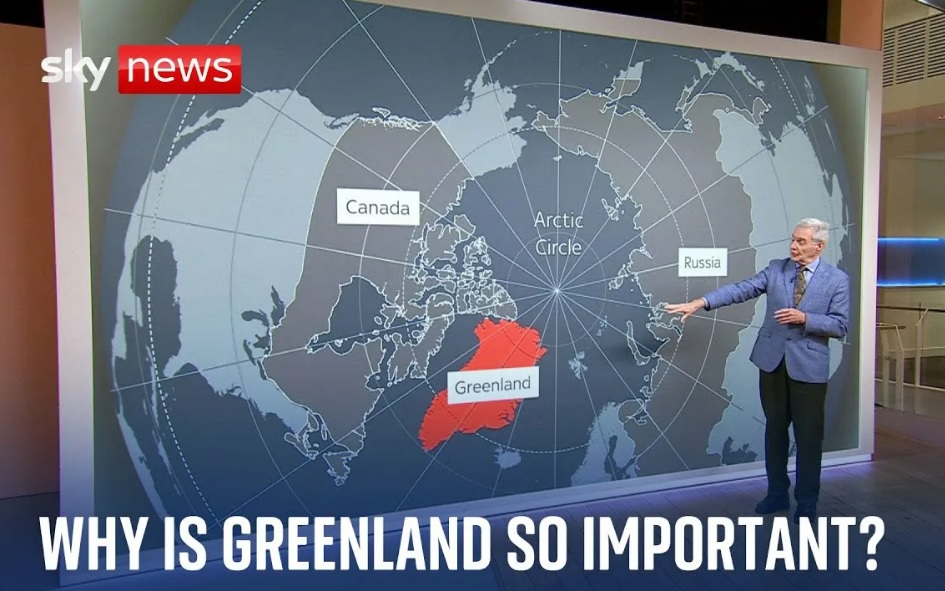
The reason why Greenland has become an issue between the United States, Denmark and Icelanders is global warming. That has led to a stand-off between the US and Denmark, and local Icelanders, writes Stephen Bryen, a former Deputy Under Secretary of Defense
Two things could happen in future, assuming warming trends continue.
The first is that sea passage through the frozen Arctic would open a much faster sea trade route to the Pacific. If the passage becomes viable, it changes Greenland from a backwater land mass into one of strategic importance. The US knows quite a lot about Russia’s arctic operations, and its nuclear powered icebreakers. There are around seven to eight in service, including several new Project 22220 (Arktika-class) vessels like Arktika, Sibir, Ural, and Yakutiya, plus older ships like Yamal and 50 Let Pobedy, with more under construction to expand Arctic dominance.
Comparatively, the U.S. Coast Guard operates three polar icebreakers: the heavy-duty USCGC Polar Star (1976) for Antarctic resupply and the medium USCGC Healy (2000) for Arctic research, supplemented by the newly acquired commercial vessel USCGC Storis (converted in 2025) to boost capability. The U.S. is actively recapitalizing its aging fleet through the Polar Security Cutter (PSC) program, with construction underway for new heavy icebreakers (PSCs) and medium Arctic Security Cutters (ASCs) to meet growing demands in the Arctic and Antarctic. None of the US icebreakers are nuclear.
The second big change is that much of the frozen land in Greenland – it is 80% ice – will become open for settlement and geological exploitation assuming climate change continues. Greenland is thought to have massive deposits of rare earth minerals, and Washington sees those deposits as critical to US national security. In the interim, the US is dangerously dependent on Chinese largesse, as China controls most rare earth production.
The US has been trying to pressure Denmark into selling Greenland. Denmark, and the local Greenland population, oppose selling to the United States. Greenland is 89% Inuit or Inuit-Danish. Most are descendants of Thule Inuit who migrated from North America, today’s Alaska and western Canada, around the years 1000 to 1200. While originally a Shamanistic culture, today’s Inuit in Greenland are predominantly Evangelical Lutheran.
What the Greenland population wants? – Strong local resistance to foreign mining
Most of the local population prefer autonomy from all outside powers, but otherwise they accept a relationship with Denmark and, to a lesser degree, NATO protection. Most also have opposed mineral extraction.
The most impactful issue is potential mineral exploitation. The bottom line is that the locals in Greenland oppose such mining operations, not only for alleged environmental risks, but because large mining operations will bring in many foreigners to work the mines and transport the minerals. Greenland maintains strict laws making it difficult for foreigners to work there. The system is managed by the Danes and applicants must go through the Danish Immigration Service. The system is heavily biased to Nordic applicants, although the Danes respond mostly to pushback from the local Greenlanders.
One of the largest rare earths projects, Kvanefjeld, located near the town of Narsaq (in the southwest of Greenland), was effectively shut down in 2021.
U.S. presence
The primary U.S. military presence in Greenland is the Pituffik Space Base, formerly known as Thule Air Base. The base is crucial for missile warning, missile defense, and space surveillance, operating under a defense agreement with Denmark. It’s the DoD’s northernmost installation and hosts radar systems for tracking ballistic missiles and satellites. The Trump administration argues that this base is crucial for the planned Golden Dome ballistic missile defense system.
Reports say that the US is planning to offer up to $700 billion to buy Greenland. Greenland is a large landmass, 836,000 square miles, but only a fraction of the territory is inhabited by 56,000 Greenlanders. When the US bought Alaska from Russia in 1867, it paid $7.2 million, equivalent to $157 million today, far below the reported price for Greenland.
The resistance to change and intervention is a fact of life for any deal on Greenland. American interests can’t be met under the current restrictions and present-day local ideology, especially if the most urgent US interest is Greenland’s minerals. Even an outright purchase would face conflict and resistance.
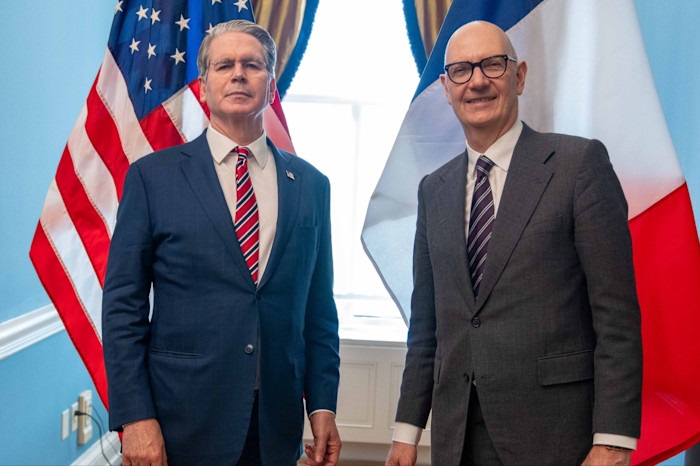 US Treasury secretary Scott Bessent, left, with French finance minister Roland Lescure
Photo: ‘Financial Times’
France’s finance minister has warned his US counterpart Scott Bessent that any move to seize Greenland would amount to a “crossed line”, endangering Europe’s economic relationship with Washington.
Roland Lescure told the FT that he delivered a similar message to the US Treasury secretary in Washington, underlining deep European unease over President Donald Trump’s claims on the Arctic territory, part of the kingdom of Denmark.
“Greenland is a sovereign part of a sovereign country that is part of the EU. That shouldn’t be messed around [with],” said Lescure.
“When we disagree, it’s always better to stay engaged, and that’s what we are doing. The dialogue has to keep on going as long as lines that shouldn’t be crossed are not crossed,” he said, noting the US and France had been close allies for 250 years.
Asked whether the EU should retaliate with economic sanctions if Trump were to invade Greenland, Lescure said: “I’m not going there. I mean, obviously, if that happened we would be in a totally new world for sure, and we would have to adapt accordingly.”
For Lescure, Trump’s designs on Greenland are just the latest example of how tricky it has become to deal with the US because of what he called the “paradox” of how it was behaving — sometimes as an ally and sometimes as an unpredictable adversary.
 Pic.: publics
read more in our Telegram-channel https://t.me/The_International_Affairs

















