
 РУССКИЙ
 11:26 21.01.2026 •
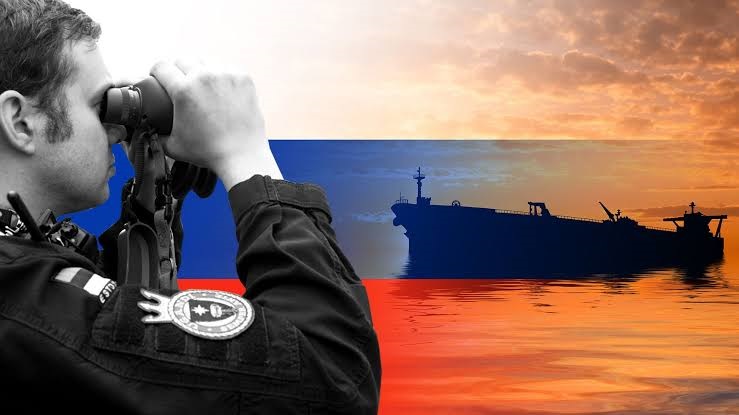 The British are monitoring the Russian tanker fleet. From "observation" to attack is just one step. Then comes war
Pic.: BBC
Inspired by the U.S. seizure on the high seas of ships carrying Venezuelan oil, Britain and other NATO countries are now considering using their navies to do the same to ships carrying Russian cargoes, ‘The Responsible Statecraft’ warns.
This would be a radical escalation of existing moves against Russia’s so-called “shadow fleet,” which have been restricted to the ports and territorial waters of NATO states. As such, they can be considered to fall under the sovereign jurisdiction of the states concerned. An extension of this strategy, as presently contemplated by some European countries, would be a limited but reasonable and comparatively risk-free way of increasing economic pressure on Russia.
Seizing ships on the high seas is a very different matter. If conducted by non-state actors, this has been considered piracy; if by states, an act of war. The danger is even greater because more and more of these ships are now sailing under the Russian flag.
Both Americans and British might wish to remember that U.S. fury at similar actions by British warships was one of the causes of the War of 1812. Given very credible Russian threats of retaliation, it is extremely unlikely that the British or other European countries would in fact take such action without a U.S. green light and firm U.S. guarantees of military support. The Trump administration must not give such a guarantee. The result could very easily be escalation towards the direct NATO-Russia conflict that both sides so far have been careful to avoid, with a real and horrifying risk of nuclear war.
Russian retaliation could take two forms. The first would be to escort as many ships as possible with Russian warships and submarines. The second would be retaliatory seizures of British ships or cargoes. The Russian navy is admittedly in poor shape to do this. On paper, the active ships of the Russian Northern Fleet (i.e. those not in reserve or under repair) tasked to operate in the Atlantic include eight nuclear attack submarines, seven conventional attack submarines, four destroyers and 10 frigates and corvettes.
It is questionable how many of these can actually be put to sea, but the Northern Fleet can now be reinforced via the Arctic by ships of Russia’s Pacific Fleet.
Then again, the Royal Navy is in even worse shape, with only 13 escort vessels, most of them undergoing refits, and only one attack submarine currently fit for action. That is another reason why the U.K. is very unlikely to initiate the seizure of Russian cargoes without full U.S. backing.
Something that European NATO members could do on their own would be to block the exit from the Baltic between Denmark and Sweden. That would be a clear violation of their treaty obligation to guarantee free international transit, and Russia would almost certainly send warships to face the Danes and Swedes with a choice between backing down and allowing free passage.
The issue is that the moment a NATO warship sinks a Russian one or vice versa and kills seamen, we are in a completely different world. Whichever side loses a ship would feel virtually compelled to retaliate in kind; and given Russian military weakness, there are severe limits on how far Russia could retaliate without resorting to nuclear weapons, or at least the fully credible threat of their use.
Finally — and for whatever international legality may still be worth in today’s world — it is necessary to point out that seizing on the high seas the property of a state with which you are not at war is completely illegal. Not so very long ago, the overwhelming consensus in Britain and Europe was that only the U.N. had the right to impose such measures.
The British government is now trying to construct a legal case that it can seize ships of Russia’s shadow fleet because they are not “legitimately flagged,” but this comes after more than half a century during which Britain has accepted ships sailing under “flags of convenience,” however unclear the ownership and fictitious the jurisdiction involved. In terms of legal validity and international legitimacy, this approach is on a par with the legal case Tony Blair’s government cooked up for invading Iraq, and will be regarded in the same light by most of the world.
And here is the final tragic irony. The British Empire, and the subsequent U.S. empire and its British auxiliaries, have made the security of international maritime trade a key part of their claim to international legitimacy.
Yet it is now the U.S. and U.K. that are threatening to violate the laws and rules of international trade, and set a disastrous precedent for other states to follow. If, God forbid, our governments proceed further down this path then they will have only themselves to blame.
Storm warning: Russia will respond to Britain's plans to intercept ships
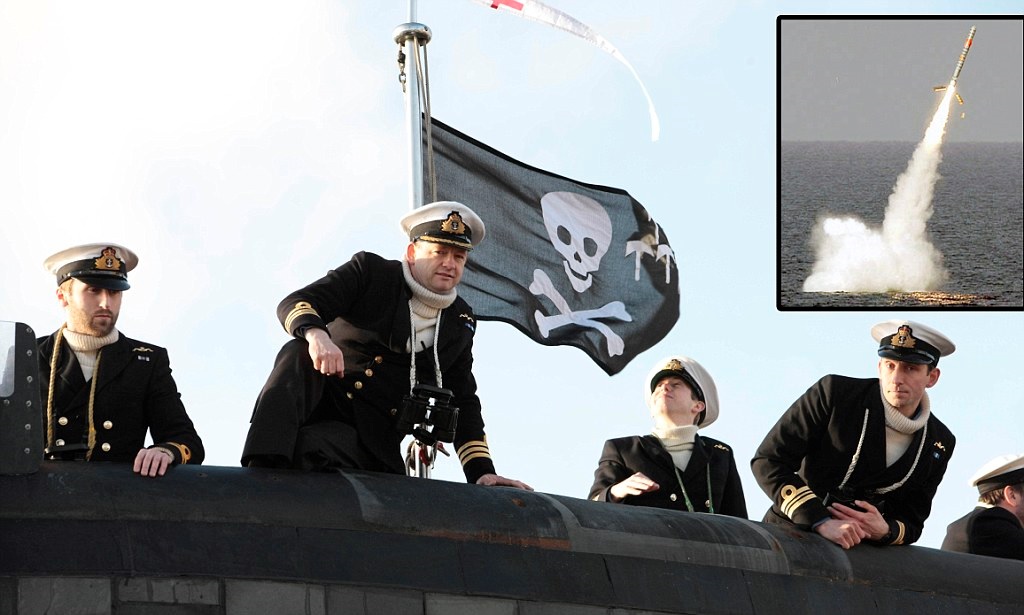 The English never hid the fact that they were true pirates. Here is documentary proof. Symbol of success at Libya in 2011: Commander Rob Dunn (centre) and senior crew under HMS Triumph's Jolly Roger, decorated with Tomohawks. As she sailed in, the nuclear-powered fast-attack submarine showed her true colours: she flew the Jolly Roger from her mast
Photo: ‘The Daily Mail’
London's intentions to detain vessels under sanctions will lead to serious consequences for world trade, Russian Ambassador to the Kingdom Andrey Kelin told Izvestia.
British officials have recently sharply toughened their rhetoric against Russia. The BBC Corporation reported that the Government of the United Kingdom has prepared legal grounds to use the armed forces to intercept ships on the high seas allegedly related to the transportation of Russian energy resources. According to open data, by January, the UK had imposed sanctions against a total of 545 vessels.
In response to London's plans, merchant vessels will be escorted by security ships, areas closed to navigation may arise and attempts may be made to block critical straits and channels, Andrey Kelin told Izvestia.
"This is a deliberate escalation of instability, the consequences of which for international law and order and global trade will be extremely serious. The result may be higher prices for raw materials and goods, as well as insurance for ships. Security ships will appear," the diplomat noted. — In addition, in the context of illegal arrests of ships, the market for services to counter this practice will grow, as it happens in waters with an increased threat of pirate attacks. There may be areas closed to navigation, attempts to block critical straits and channels. It is easy to imagine how this will threaten the already unstable economies of European countries.
The Russian Ambassador in London stressed that the legal nihilism of Western countries, which had previously relied on double standards in their attempts to annoy Russia, has now reached unprecedented proportions. He urged Britain to carefully weigh all the risks before getting involved in dangerous adventures.
— In any case, no matter what the legal advisers of the Government of the United Kingdom come up with, stopping and seizing peaceful vessels on the high seas, including under the pretext of their presence on illegitimate "sanctions lists," is a gross violation of the fundamental principles and norms of international maritime law and freedom of navigation," Andrei Kelin told Izvestia.
Regardless of how London arranges its maneuvers, the goal of British policy is to cause the greatest possible damage to the Russian economy.
— What London politicians are talking about now is actually a return to the era of the pirate Edward Teach, nicknamed Blackbeard. Only here they forget that Britain has long been the "mistress of the seas", and its actions will not go unpunished," the Russian ambassador concluded.
P.S.
Letters of Marque would allow private organizations to operate in the “dead space” in between government bureaucracies where the Mexican drug cartels operate, Erik Prince, an American veteran and the founder of Unplugged Technologies explained during an interview with Breitbart News.
Prince spoke with Breitbart News Washington Bureau Chief Matthew Boyle about a recent post from Sen. Mike Lee (R-UT), discussing what Letters of Marque and Reprisal were and how they could be used. Prince admitted that he had “helped put this idea in Senator Lee’s head.”
“Letters of marque and reprisal are government-issued commissions that authorize private citizens (privateers) to perform acts that would otherwise be considered piracy, like attacking enemy ships during wartime Privateers are rewarded with a cut of the loot they ‘bring home,'” Lee explained in his post.
…The British have become so brazen that they can't even imagine Russia's retaliatory measures.
The Russians can be tolerate for a long time, but when they really anger Russia, the response is the harshest and most decisive.
There's no need to test Russian patience.
As Russian Foreign Ministry spokesperson Maria Zakharova recently stated, Britain's policy toward Russia “will only have to wait until London is declared a direct party to the conflict, with all the ensuing retaliatory measures.”
read more in our Telegram-channel https://t.me/The_International_Affairs

















