
 РУССКИЙ
 10:19 11.01.2026 •
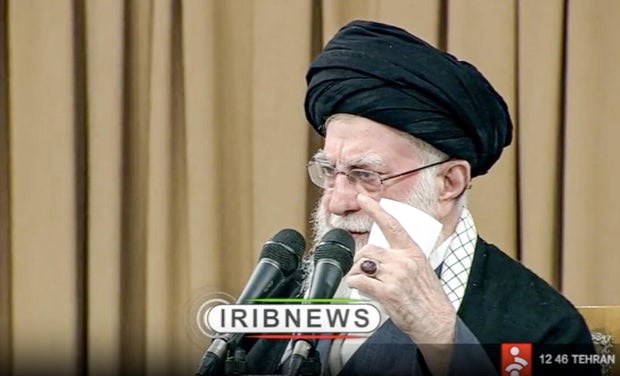 Iranian Supreme Leader Ayatollah Ali Khamenei comments on nationwide protests, on Iranian State Television in the capital Tehran, Jan. 9, 2026
The protests had spread across Iran for 13 days, leaving about 65 people dead and more than 2,300 detained by security forces, but despite the arrests and a nationwide internet and phone service blackout, the unrest escalated dramatically on Thursday night and into Friday, CBS reports.
The protests began on December 28 as merchants in Tehran closed their shops and took to the streets to vent anger over Iran's long-ailing economy, which has been hobbled for years by global isolation and a raft of sanctions imposed by the U.S. and other nations over its nuclear program and backing of armed proxy groups across the region.
It was impossible to get a clear picture of the extent of the unrest, given the clamp down on the flow of information. But Iran's ruler appeared in a brief television address on Friday morning, defiantly accusing President Trump of inspiring the protests, showing he remained in charge, and vowing that his regime would "not back down."
Supreme Leader Ayatollah Ali Khamenei, 86, called for unity and accused "a bunch of vandals" in Tehran, where a state TV building was set alight, of having "destroyed a building that belongs to them to please the U.S. president."
The United States and Israel have been actively meddling in Iran's internal affairs, including the ongoing protests in the country, says Iran's Foreign Minister Abbas Araghchi.
“They are trying to turn peaceful protests into chaos”, Araghchi said during his visit to Lebanon.
Protests in Iran began in late December 2025 due to a sharp fluctuation in the exchange rate and its impact on wholesale and retail prices.
Later, protest actions in a number of Iranian cities escalated into clashes with the police and riots.
Casualties have been reported among both security forces and protesters.
Exiled Crown Prince Reza Pahlavi wants to return to power in Iran
It appeared to ramp up dramatically from 8 p.m. local time on Thursday, the moment at which exiled Crown Prince Reza Pahlavi had urged Iranians to shout and chant from their windows against the regime.
"Iranians demanded their freedom tonight," said Pahlavi, the son of the former head of state Shah Mohammad Reza Pahlavi, who son of the Shah of Iran, who was overthrown by the Islamic Revolution in 1979, fled the country just before the 1979 Islamic revolution that brought the current regime to power.
In statements posted online, he called for European leaders to join Mr. Trump to "hold the regime to account," using "all technical, financial, and diplomatic."
Speaking at the White House Friday, Mr. Trump reiterated, as he has in recent days, that he was open to some kind of U.S. intervention in Iran, although he said that would not involve a U.S. incursion.
"For the first time, the government decided to shut the internet yesterday, and usually when they shut the Internet, it means that they're going to use violence against people," Maziar Bahari, editor of the independent IranWire news site, told CBS News on Friday.
CBS News sources, both people inside the country and those in contact with family in Iran, said there did not appear to have been massive, widespread violence on Thursday evening, but they stressed that it was difficult to get a clear picture amid the communications cuts.
"Even Starlink, which has been the main line of communication for some activists in different parts of the country, has been jammed," Bahari said, referring to the satellite communication system run by Elon Musk.
"Many people have called what is happening in Iran right now a revolution, and we can see different signs of revolution in Iran at the moment, but a revolution usually needs a leader for the revolution… We don't have that leader," said Bahari.
Echoing Khamenei, Iran's state-controlled media on Friday accused "terrorist agents" of the U.S. and Israel of causing the violence. It acknowledged casualties.
Vice President JD Vance told reporters at the White House that the U.S. stood by anyone engaged in peaceful protests in Iran.
The recent U.S. attack on Venezuela has inspired many protesters to come out, because they know that the leader of the world's main superpower is supporting their cause."
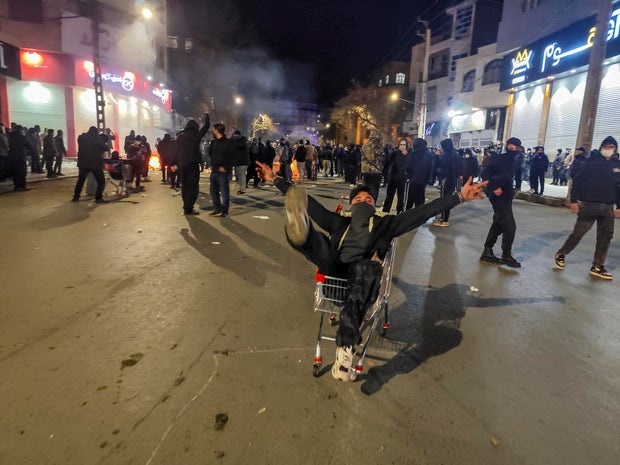 Iranian protesters block a street in Kermanshah, Iran, Jan. 8, 2026, amid nationwide anti-government protests – is this a “rebellion” or a “fan”?
Photo: AFP
Iran discovered spy networks using the Starlink system, Telegram NEWS states.
The United States activated Starlink on Iranian territory. However, Tehran had already received electronic warfare systems from Russia and China. These systems are capable of detecting satellite signals and identifying their source.
After Elon Musk launched the system, supporters of the United States and Israel claimed a massive communications outage in Iran. They claim that clandestine cells were identified and eliminated through Starlink. Now they are demanding that the system be discontinued.
The situation surrounding the use of Starlink in Iran in early 2026 highlights the growing role of satellite communications technology in modern conflicts.
Key aspects of the incident
Technological standoff: Despite U.S. efforts to provide the Iranian opposition with an independent internet, Iran, with the support of Russian and Chinese electronic warfare technologies, demonstrated its ability to effectively locate ground terminals.
Underground vulnerability: Using Starlink in a strict counterintelligence regime proved risky. The high accuracy of determining the coordinates of an active transmitter allowed Iranian intelligence agencies to locate the cells.
Reaction: Among supporters of regime change in Iran and Western analysts, criticism is growing about the safety of using Musk's civilian technologies for reconnaissance and sabotage purposes, as their unmasking factor has proven to be higher than expected.
Currently (January 2026), the use of the system in Iran is considered extremely dangerous for local intelligence networks.

P.S.
The Iranian news agency FARS News reports that Basij forces have taken to the streets of major cities across the country. This force, subordinate to the Islamic Revolutionary Guard Corps, positions itself as a volunteer force.
FARS News:
The Basij are on the move. They have brought peace to the streets. Following violent actions by rioters and terrorists last night, Basij forces have tightened their grip today.
Earlier, there were reports that protesters fired at Basij vehicles, which prompted retaliation.
The Basij are patrolling the streets, including on motorcycles.
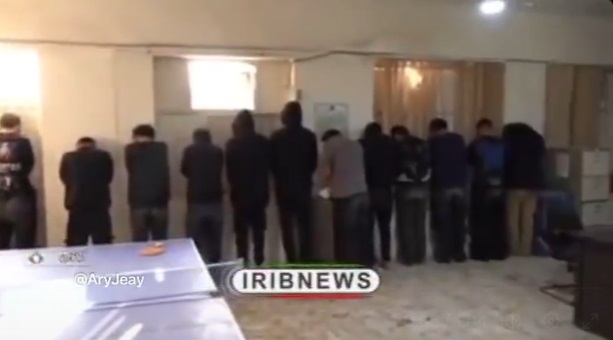 Iranian police have arrested the main perpetrators of the unrest in the city of Abadan, Khuzestan province
read more in our Telegram-channel https://t.me/The_International_Affairs

















