
 РУССКИЙ
 10:33 09.03.2026 •
Which side runs out of munitions first could determine the outcome of the war, Bloomberg stresses.
Just three days into the conflict, the Iran war has become attritional. Waves of drone attacks by the Islamic Republic are putting pressure on the defenses of the US and its partners from Bahrain to the United Arab Emirates, depleting weapons stockpiles. The outcome of the fight may depend on which side runs out of munitions first.
Shahed-136 one-way attack drones, small, rudimentary cruise missiles, continued to pound targets across the Middle East. The drones have in recent days hit US bases, oil infrastructure and civilian buildings, since the US and Israel air strikes on Iran — a barrage of cruise missiles, drones and precision-guided bombs — began on Saturday.
US-made Patriot air-defense missiles have been largely successful in stopping the Iranian Shaheds and other ballistic missiles, with interception rates over 90%, according to the UAE. But using $4 million missiles to destroy $20,000 drones illustrates a problem that has haunted Western military planners since early in the Ukraine war: The cheap weapons can chew up resources meant for much more complex threats.
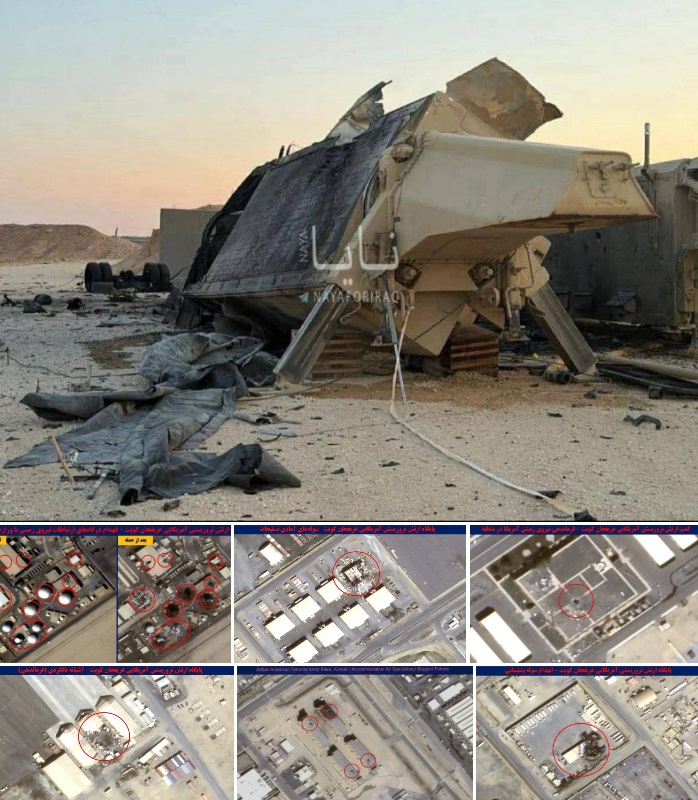 Destroyed American bases in the Persian Gulf region
Photo: publics
The result is that both Iran and the US may run low on weapons in a matter of days or weeks. Whoever can last longer will gain a serious advantage.
Iran’s regional proxies were severely weakened by the war in Gaza and its missile capabilities damaged by the earlier Israel-US attacks in a 12-day war in June. Since then the emphasis for Iran has been to escalate its warnings about the consequences and costs of a Trump strike, knowing that his supporters are broadly opposed to drawn-out, messy wars. Iran’s Supreme Leader Ali Khamenei — who died in Saturday’s air strikes — warned that a US attack would lead to wider conflagration embroiling the whole region.
“Attrition strategy makes operational sense from Iran’s perspective,” said Kelly Grieco, a senior fellow at the Stimson Center think-tank. “They are calculating the defenders will exhaust their interceptors and the political will of Gulf states will crack and put pressure on the US and Israel to cease operations before they run out of missiles and drones.”
Iran was estimated to have about 2,000 ballistic missiles after last year’s conflict with Israel. It’s likely to have a much larger number of Shaheds, which has been able to produce at a rate of several hundred per day, according to analysis by Becca Wasser, defense lead at Bloomberg Economics.
Tehran has fired more than 1,200 projectiles since the start of this year’s conflict, with many — perhaps most — of them being Shaheds. That suggests they could be saving more damaging ballistic missiles for sustained attacks, Wasser added.
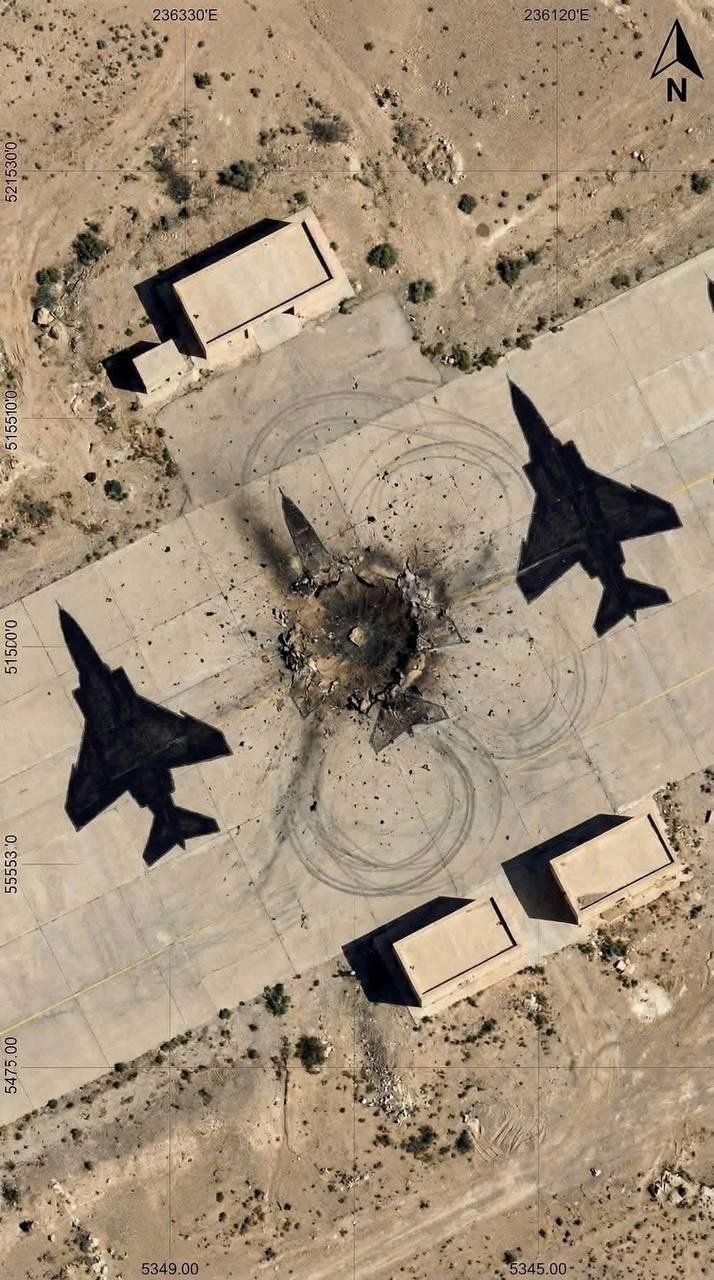 The Americans and Israelis often strike at false targets. Here's a "military airfield" in Iran, with the shapes of military aircraft painted on it. And they were hit...
Photo: publics
read more in our Telegram-channel https://t.me/The_International_Affairs

















