РУССКИЙ
 10:38 14.02.2026 •
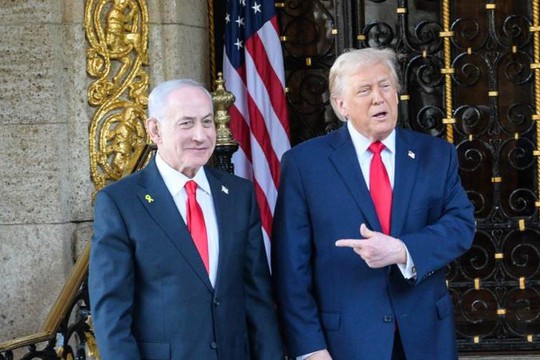
Israeli Prime Minister Benjamin Netanyahu with US President Donald Trump
Photo: Global Look Press
Israel intends to tighten the terms of the deal with Tehran so that it is not limited only to the nuclear program, ‘Isvestia’ notes.
Israeli Prime Minister Benjamin Netanyahu urgently arrived at the White House on February 11 for a meeting with US President Donald Trump in order to influence the course of the US-Iranian nuclear talks. The visit, postponed to an earlier date, was an attempt by Israel to prevent the conclusion of a "soft" deal with Tehran, which would be limited only to the nuclear dossier. Netanyahu insists that the agreements include strict limits on the number of ballistic missiles in Iran, a complete cessation of uranium enrichment, the export of its accumulated reserves outside the country and the immediate curtailment of support for allied armed groups.
Tehran does not seek to build nuclear weapons
Israeli Prime Minister Benjamin Netanyahu's urgent visit to Washington and his talks with US President Donald Trump were an attempt to adjust the American approach to dialogue with Iran on the nuclear program. The contacts took place against the background of ongoing consultations between Washington and Tehran, which began in Oman, as well as the strengthening of the US military presence in the Middle East. In Israel, this is perceived as contradictory signals from the American administration.
The US-Iran talks in Muscat were held on February 6 for the first time after a months-long break due to the escalation of the Iran-Israel conflict in June 2025. Prior to that, the parties had held five rounds of consultations. Donald Trump said that the talks in Oman had gone well and would continue. At the same time, the American leader allowed the possibility of sending a second aircraft carrier with a strike group to the Middle East to put pressure on Tehran.
Israel was trying to undermine the US-Iranian dialogue
Following the talks at the White House, Trump said he expects to continue dialogue with Iran, noting that the meeting with Netanyahu did not lead to the development of final agreements on further actions against Tehran.
According to Israeli television Channel 12, the discussions focused on working out an agreed course in case the negotiations between the United States and Iran fail. In Washington, according to the TV channel, there remains skepticism about the possibility of concluding a deal even focused solely on the nuclear program without touching on missile issues.
Ali Larijani, Secretary of Iran's Supreme National Security Council, said on February 11 that Israel was trying to undermine the US-Iranian dialogue and was looking for reasons to escalate.
As CNN reported, citing sources in Israel, during talks with the American president, Netanyahu planned to discuss possible options for forceful pressure on Iran in case of failure of diplomatic efforts. According to the channel's interlocutors, Israel is preparing for "unforeseen circumstances" if the US-Iranian negotiations do not lead to a result. According to this logic, the Israeli Prime Minister's visit was seen as an attempt to coordinate approaches with Washington in advance.
Possible attack on Iran
According to The Washington Post, Israel insists that any future agreements with Tehran include not only restrictions on the nuclear program, but also the cessation of uranium enrichment, the export of already accumulated reserves outside the country, the abandonment of the development of ballistic missiles and the curtailment of support for allied armed groups in the Middle East.
Military training continues in parallel with diplomatic contacts. According to media reports, the United States and Israel are working to strengthen missile defense in the region. The United States has deployed additional THAAD systems, including in Jordan, and has also redistributed existing complexes, taking into account possible threats from Iran. These steps are seen as an element of deterrence and preparation for a possible response from Tehran in the event of an escalation.
At the same time, both Washington and Tehran officially confirm their intention to continue negotiations on the Iranian nuclear program.
Grossi: Iran has right to enrich uranium as NPT member
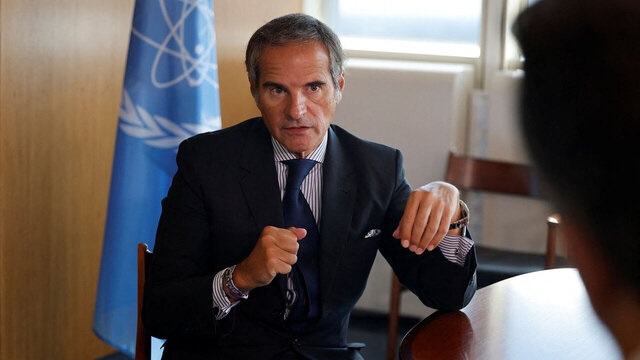 IAEA Director General Rafael Grossi
Photo: IRNA
Rafael Grossi, Director General of the International Atomic Energy Agency (IAEA), stated in an interview with the Financial Times that Iran, as a signatory to the Nuclear Non-Proliferation Treaty (NPT), has the right to enrich uranium.
Grossi’s remarks come amid heightened tensions following Israeli and US strikes on Iranian nuclear facilities. According to Iranian officials, three safeguarded nuclear sites were targeted during the attacks. Tehran has criticized the IAEA chief for not explicitly condemning the strikes and instead focusing on restoring inspection access.
Foreign Ministry spokesperson Esmaeil Baghaei has reiterated that Iran remains committed to the NPT and its safeguards agreement, while conducting engagement with the IAEA within the framework of domestic law.
read more in our Telegram-channel https://t.me/The_International_Affairs