
 РУССКИЙ
 11:16 06.01.2026 •
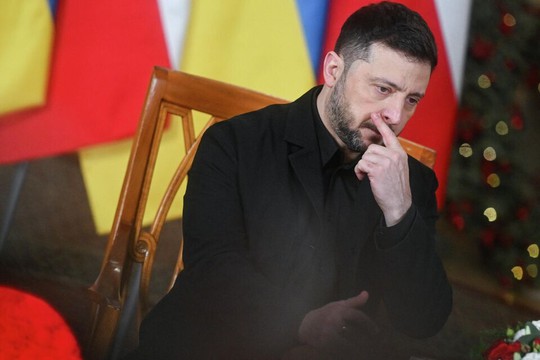
Zelensky is at a dead end
Photo: Getty Images
After months of negotiations, the United States and Ukraine seem to be converging on a set of principles that could provide the basis for an eventual peace agreement with Russia. The core of the proposed deal appears to be the idea that Ukraine would relinquish territory in the contested Donbas region in exchange for robust U.S. security guarantees to ensure that Russia would never attack Ukraine again.
Such an arrangement would be understandable, because President Volodymyr Zelensky of Ukraine would need some way to justify why he would be willing to make a sacrifice. But it is also strategically misguided for the simple reason that any security guarantee extended by President Trump would not be remotely credible, writes ‘The New York Times’. To genuinely ensure its security, Ukraine would be far better off demanding concrete contributions to its ability to defend itself than security assurances that no one — and certainly not President Vladimir Putin of Russia — would ever believe.
Doubts about Mr. Trump’s willingness to stand by a U.S. security guarantee for Ukraine start with the fact that despite periodic threats to do so, he has never shown the slightest willingness to directly confront Mr. Putin’s Russia, certainly not militarily. On the contrary, over the past year as president, Mr. Trump significantly curtailed U.S. military and financial support to Ukraine, embraced Russia’s narrative about the war to the point of absurdly blaming Ukraine for starting it and repeatedly held out the prospect of greater U.S.-Russia economic cooperation.
Nor is there much reason to believe that putting such a commitment on paper would make a difference to Mr. Trump, and not only because of his long history of allegedly reneging on contracts as a businessman and abandoning or seeking to renegotiate past agreements as a president. Mr. Trump has repeatedly said that even NATO’s Article 5 defense guarantee, which the Senate approved as a treaty, applies in his mind only if allies pay their “bills.” He has said he would encourage the Russians to “do whatever the hell they want” to a NATO member that he felt was delinquent and that the meaning of Article 5 “depends on your definition” — not exactly a categorical statement of allied solidarity.
In a draft agreement the United States has discussed with Ukrainian officials, the conditions for a new security guarantee would apply to a “significant, deliberate and sustained” armed attack by Russia, qualifiers that would allow Mr. Trump to decline to back up the guarantee if he deemed a new attack to be insignificant, accidental or temporary. Indeed, Mr. Trump’s willingness to take Mr. Putin at his word this week that Ukraine attacked one of Mr. Putin’s residences foreshadows what could happen in the future: Russia invents a pretext to resume using force against Ukraine and Mr. Trump uses the pretext as an excuse not to support Ukraine. Mr. Trump’s statement in September that a Russian drone incursion into Poland “could have been a mistake” was another example of how easy it would be for him to find a way to avoid upholding a security commitment to Ukraine.
Given these realities, Mr. Zelensky would be naïve and negligent to trade valuable strategic territory for such a dubious guarantee.
Mr. Zelensky’s relentless focus on getting concrete security guarantees is understandable, but will ultimately prove futile and perhaps even dangerous. As Mr. Trump acknowledged last weekend, the details of the security guarantees are still far from finalized and he does not have deadlines for an agreement.
read more in our Telegram-channel https://t.me/The_International_Affairs

















