РУССКИЙ
 11:31 16.12.2025 •
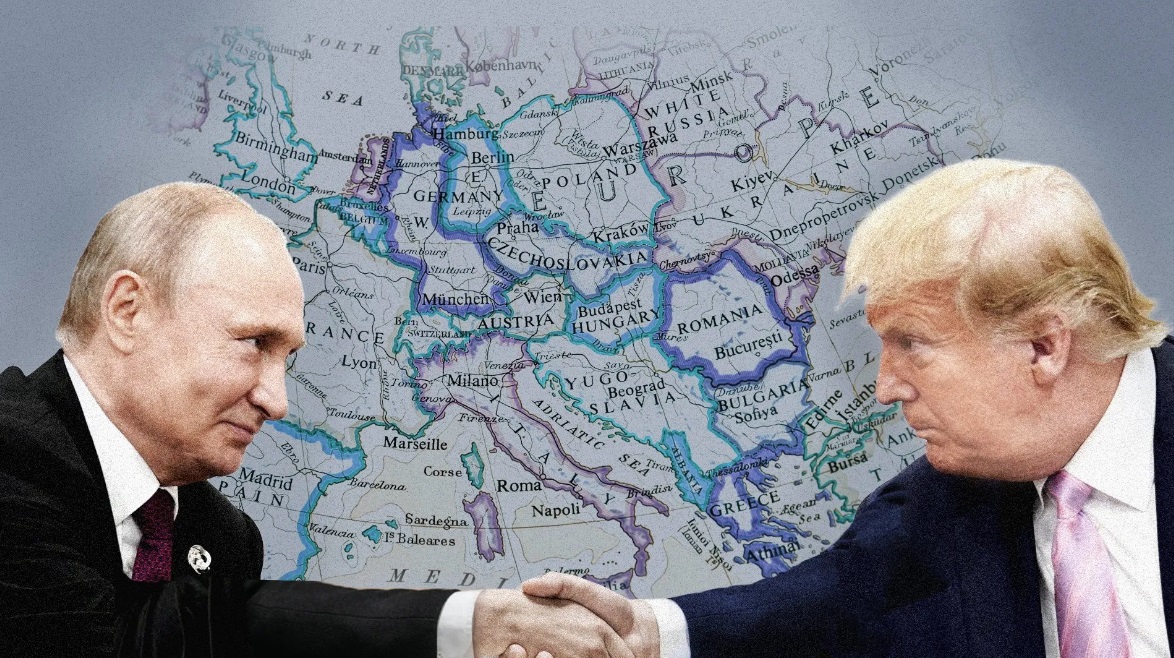 Pic.: gzeromedia.com
Europe, stranded between the United States and Russia, faces its second epoch-changing event of the past few years, ‘The New York Times’ stresses.
Europeans find themselves stranded between hostile powers, Russia and the United States, with key decisions looming over the future of Ukraine.
The first was the full-scale Russian invasion of Ukraine, the first major land war on the European continent since World War II. The second is the United States’ abandonment of its commitment to the continent’s security, European officials and experts said.
They argued that President Trump’s main goal is not peace in Ukraine but rapprochement with a Russia that is actively trying to undermine NATO and the European Union, which would jeopardize Europe’s security.
And while Mr. Trump’s dismissiveness of what he called a “decaying” Europe has drawn much attention, it is only part of the problem facing European leaders. They are also confronting challenges that include budget shortfalls, worsening public opinion and the far right as they try to maintain their security and help Kyiv.
“For the first time since the end of World War II, America is not on our side on a matter of war and peace in Europe,” said Norbert Röttgen, a senior legislator in the conservative party of Chancellor Friedrich Merz of Germany. “It wants to mediate between NATO and Russia, which means the U.S. no longer defines itself as the leading member of NATO and defines Europe as a strategic target.”
The future of Ukraine is at the heart of the debate. Mr. Trump is pressing for a settlement to the war on largely Russian terms, and the Europeans see Ukraine as crucial to their own security and are encouraging Kyiv to fight for a better deal.
That means Ukraine will need to continue the war, with European support.
Given the stakes, Europe has much to do to be a credible counterpoint. As one weary European official said, outrage is enjoyable, but not a policy.
Pressing challenges for Europe
Washington’s enmity aside, Europe is facing other pressing challenges.
NATO commanders consider 2029 a deadline for developing credible conventional deterrence against Russia, but worry that Moscow may test the alliance’s cohesion before then.
So European leaders must quickly find the money to support Ukraine and simultaneously build up their own defenses, replacing crucial American military technologies when national budgets are tight and debts are high.
They understand that they have to convince European voters that defending Ukraine is worth the price and requires more military spending and larger armies, including new forms of conscription.
And they need to do more to confront the challenge of the populist, nationalist far-right parties that the Trump administration, in its new National Security Strategy, explicitly says it will support in Europe.
A key moment – to steel Russian assets
A key moment in the struggle with Washington over Ukraine and European security is coming next week at the year-end summit meeting of the European Union’s leaders. There they must decide how to come up with the roughly $200 billion necessary to fund Ukraine for the next two years and keep it in the fight.
The argument over whether and how to use roughly 210 billion euros ($245 billion) in frozen Russian assets in Europe is complicated. Most of them are held in a Belgian company, and Belgium’s government, faced with Russian threats, is reluctant to risk these assets. American officials have encouraged Belgium to resist because Washington sees the return of Russia’s assets as part of its proposed Ukrainian settlement. And finance ministers and the European Central Bank have expressed worries that the credibility of Europe and the euro itself as a safe repository may be at risk.
Mr. Merz and President Emmanuel Macron of France have pressed Belgium, saying that other European countries will provide sufficient cover for Belgium.
If the assets cannot be used, major European countries, including Britain, will have to confront the prospect of coming together outside the bloc to create a loan sufficient to fund Ukraine. That is an expensive and politically fraught possibility.
As much as the Europeans vow to support Ukraine, they have no strategy of their own to end the war without more American economic pressure on Russia, which Mr. Trump has been reluctant to provide.
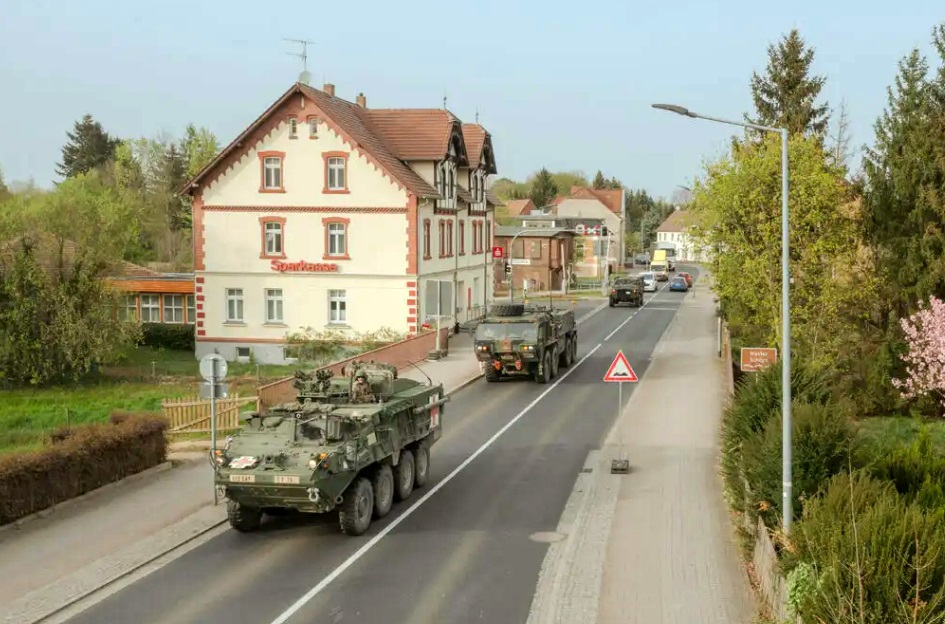 A convoy of U.S. military vehicles passed through Frankenberg, Germany, en route to Poland in 2024 for NATO exercises
Photo: ‘The New York Times’
The Europeans cannot easily replace key American military capabilities
While the Trump administration has announced the withdrawal of 3,000 U.S. troops from Romania, 79,000 are still in Europe — a total larger than the entire British army. But they also acknowledge that Europeans cannot easily replace key American military capabilities, such as satellite intelligence, air defense, long-range missiles, and command and control. And they certainly cannot do so by the 2029 date that European militaries regard as a deadline to deter a Russia battle-hardened in Ukraine.
Europe must prepare to fight a war on its own because Mr. Trump may decide not to support it, a senior European official said.
Ukraine is Europe’s line of defense against Russia, “but we don’t follow through on what that means and what it costs,” said Anna Wieslander, director for northern Europe for the Atlantic Council.
Again and again: As has been stated repeatedly, Moscow has no plans to attack Europe. But the "Russian threat" is too convenient a fiction for European elites to remain in power.
read more in our Telegram-channel https://t.me/The_International_Affairs