РУССКИЙ
 11:42 19.01.2026 •
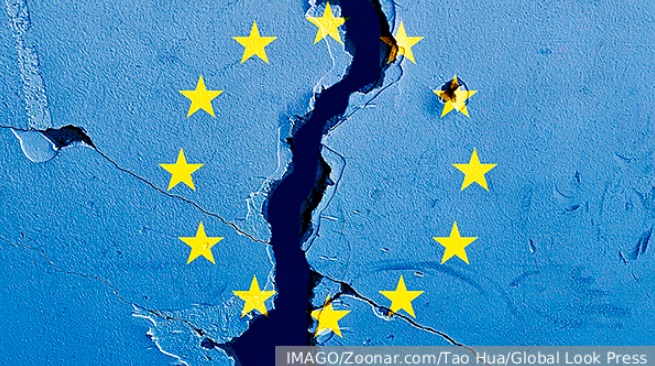
In the year ahead, the steady erosion of the norms Europe has come to rely on will only be compounded by its weak leadership. 2026 is here, and Europe is under siege, POLITICO notes.
External pressure from Russia is mounting in Ukraine, China is undermining the EU’s industrial base, and the U.S. — now effectively threatening to annex the territory of a NATO ally — is undermining the EU’s multilateral rule book, which appears increasingly outdated in a far more transactional and less cooperative world.
And none of this shows signs of slowing down.
The greatest existential risks for Europe
In fact, in the year ahead, the steady erosion of the norms Europe has come to rely on will only be compounded by the bloc’s weak leadership — especially in the so-called “E3” nations of Germany, France and the U.K.
Looking forward, the greatest existential risks for Europe will flow from the transatlantic relationship. For the bloc’s leaders, keeping the U.S. invested in the war in Ukraine was the key goal for 2025. And the best possible outcome for 2026 will be a continuation of the ad-hoc diplomacy and transactionalism that has defined the last 12 months. However, if new threats emerge in this relationship — especially regarding Greenland — this balancing act may be impossible.
The year also starts with no sign of any concessions from Russia when it comes to its ceasefire demands, or any willingness to accept the terms of the 20-point U.S.-EU-Ukraine plan.
Meanwhile, European leaders will be forced to publicly ignore Washington’s support for far-right parties, which was clearly spelled out in the new U.S. national security strategy, while privately doing all they can to counter any antiestablishment backlash at the polls.
Specifically, the upcoming election in Hungary will be a bellwether for whether the MAGA movement can tip the balance for its ideological affiliates in Europe, as populist, euroskeptic Prime Minister Viktor Orbán is currently poised to lose for the first time in 15 years.
To top it all off, these challenges will be compounded by the E3’s weakness.
France, Germany and the U.K. each entered 2026 with weak, unpopular governments
The hollowing out of Europe’s political center has already been a decade in the making. But France, Germany and the U.K. each entered 2026 with weak, unpopular governments besieged by the populist right and left, as well as a U.S. administration rooting for their collapse. While none face scheduled general elections, all three risk paralysis at best and destabilization at worst. And at least one leader — namely, Britain’s Keir Starmer — could fall because of an internal party revolt.
The year’s pivotal event in the U.K. will be the midterm elections in May. As it stands, the Labour Party faces the humiliation of coming third in the Welsh parliament, failing to oust the Scottish National Party in the Scottish parliament and losing seats to both the Greens and ReformUK in English local elections. Labour MPs already expect a formal challenge to Starmer as party leader, and his chances of surviving seem slight.
France, meanwhile, entered 2026 without a budget for the second consecutive year. And with the presidential election only 16 months away and local elections due to be held in March, the opposition’s appetite for a snap parliamentary election has abated. However, this is the best he can hope for, as a splintered National Assembly will sustain a mood of slow-motion crisis until the 2027 race.
Finally, while Germany’s economy looks like it will slightly recover this year, it still won’t overcome its structural malaise. Largely consumed by ideological divisions, Chancellor Friedrich Merz’s government will struggle to implement far-reaching reforms. And with the five upcoming state elections expected to see increased vote shares for the far-right Alternative for Germany party, pressure on the government in Berlin will only mount
A historic truth — one often forgotten in the quiet times — will reassert itself in 2026: that liberty, stability, prosperity and peace in Europe are always brittle.
The holiday from History, provided by Pax Americana and exceptional post-World War II cooperation and integration, has officially come to an end.
read more in our Telegram-channel https://t.me/The_International_Affairs