
 РУССКИЙ
 10:39 09.03.2026 •
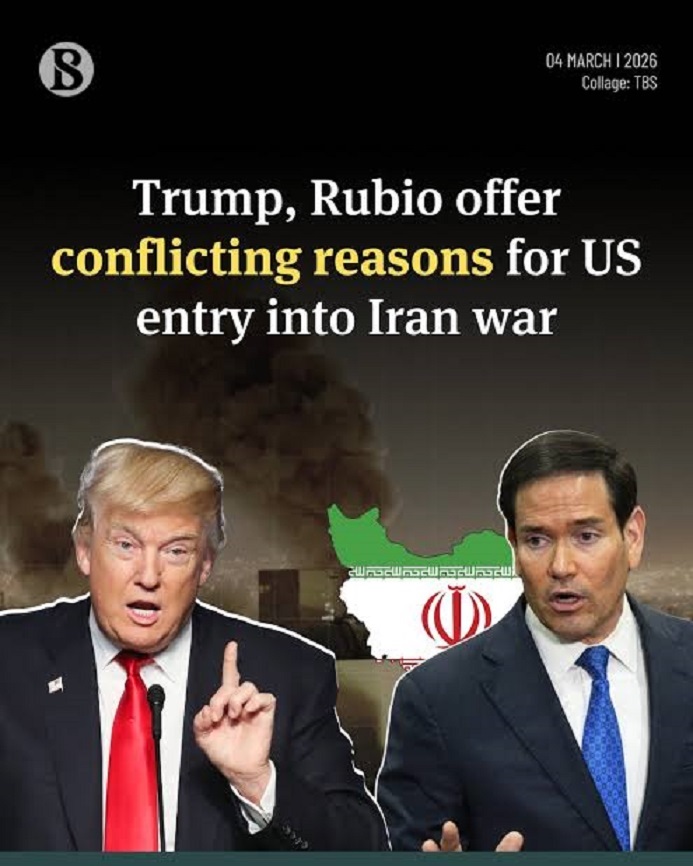
The State Department is adding resources to evacuate stranded Americans in the Middle East, and the Pentagon is scrambling to increase the number of U.S. troops gathering intelligence for operations — the latest indications that the Trump administration was not fully prepared for the broader war it is now facing.
U.S. Central Command is asking the Pentagon to send more military intelligence officers to its headquarters in Tampa, Florida, to support operations against Iran for at least 100 days but likely through September, according to a notification obtained by POLITICO.
It’s the first known call for additional intelligence personnel for the Iran war by the administration, and a sign the Pentagon is already allocating funding for operations that may stretch long beyond President Donald Trump’s initial four-week timeline for the conflict.
The rush to add people and resources to support efforts that are often organized well in advance of U.S. military action highlights how the Trump team had not fully anticipated the wide fallout of the war it launched alongside Israel.
“What we’ve seen is a completely ad hoc operation where it appeared that nobody actually understood or believed that military action was imminent,” said Gerald Feierstein, a former senior U.S. diplomat who dealt with the Middle East. “It seems like they woke up on Saturday morning and decided that they were going to start a war.”
American and Israeli officials have not yet articulated a clear end goal for the operation
The U.S. executed a massive and multi-pronged operation with Israel that targeted Iranian security infrastructure and killed off the country’s supreme leader and other top officials. But American and Israeli officials have not yet articulated a clear end goal for the operation. Trump and his aides also have struggled to offer solid reasons why the strikes had to happen now.
Iran has retaliated by firing on U.S. and other targets across the Middle East. At least six U.S. troops died at port in Kuwait, raising questions about whether their facility had been fortified well enough against the apparent drone strike. Some U.S. diplomatic facilities have also been struck, and concerns are rising that the U.S. and its Middle East allies could run low on munitions.
Several of the people interviewed for this article were granted anonymity because the issue is sensitive and in some cases they were not authorized to speak publicly.
The Pentagon is also trying to ship more air defenses to the region, especially smaller, less expensive counter-drone systems that the department has been developing over the last several years, a U.S. official said.
The strike that killed the American troops is of particular concern for war planners because it came from a relatively cheap Shahed drone that can often fly below existing radars. The U.S. is, at least right now, using missiles that cost as much as several million dollars to defeat the drones, which cost a fraction of that. Iran has thousands of such drones in its stockpiles, and dozens of them have already punched their way through existing air defenses.
A first major alert to Americans
It also was before the State Department issued its first major alert to Americans, urging them to “depart now” from 14 countries in the region. By that point, it was hard to get a ticket out because airspace closures had led to numerous canceled flights.
“It’s been a complete dereliction of duty,” said Jeffrey Feltman, a former U.S. ambassador to Lebanon who oversaw the evacuation of thousands of American citizens from that country in 2006. “Iran is a menace without question, but there was no imminent threat to us, and yet [Trump has] left thousands, perhaps hundreds of thousands of Americans in harm’s way without planning how to get them out.”
The Trump administration has, in general, cut back the number of people involved in its national security policymaking process and reduced the meetings that would normally loop in many departments and agencies. Aside from Rubio and a handful of his top aides, much of the State Department has been left in the dark about many key decisions. Rubio also serves as national security adviser, meaning he spends much of his time at the White House.
CNN poll: 59% of Americans disapprove of Iran strikes and most think a long-term conflict is likely
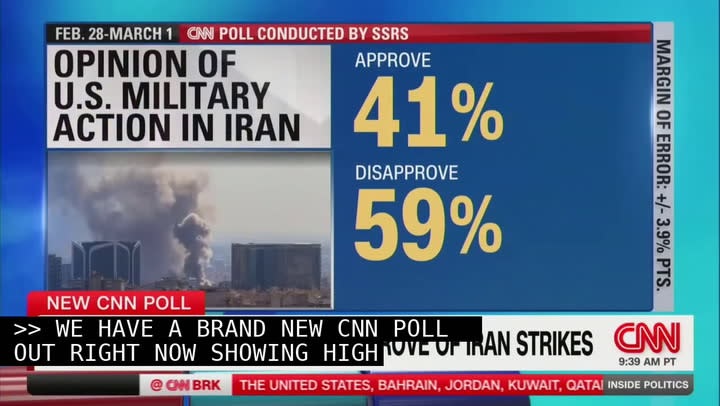
Nearly 6 in 10 Americans disapprove of the US decision to take military action in Iran, as most say a long-term military conflict between the two nations is likely, according to a new CNN poll conducted by SSRS.
The poll, fielded shortly after US and Israeli attacks launched the war with Iran, finds majorities express doubts about President Donald Trump’s handling of the situation. Most say they lack trust in Trump to make the right decisions about US use of force in Iran, with 60% saying they do not think he has a clear plan for handling the situation and 62% saying he should get congressional approval for any further military action.
Just over a quarter (27%) feel that the US made enough of an effort at diplomacy with Iran before using military force, with 39% saying the US did not try hard enough at diplomacy first and 33% unsure.
The poll was conducted Saturday and Sunday, after news reports that Ayatollah Ali Khamenei, Iran’s supreme leader, had died in the attacks and largely before reports emerged of the deaths of six US troops.
Overall, 59% of Americans disapprove of the initial decision to strike Iran, with 41% approving. Strong disapproval (31%) roughly doubles strong approval (16%). A marginally higher share (44%) say they favor the US trying to overthrow the Iranian government, with 56% opposed to that.
Just 12%, though, would favor sending US ground troops into Iran, while 60% would oppose it and 28% are unsure.
Most, 54%, say Iran will become more of a threat to the US as a result of this military action, with just 28% saying the strikes will make Iran less of a threat. Even among those who approve of the military action overall, roughly 40% are unconvinced it will lessen the threat from Iran.
The poll’s findings closely track views last summer in a CNN poll conducted after the US launched airstrikes in Iran aimed at reducing the country’s nuclear capabilities. Shifts in overall opinion since then are small, but generally all tilt away from supporting military action against Iran.
read more in our Telegram-channel https://t.me/The_International_Affairs

















