РУССКИЙ
 12:04 27.02.2026 •
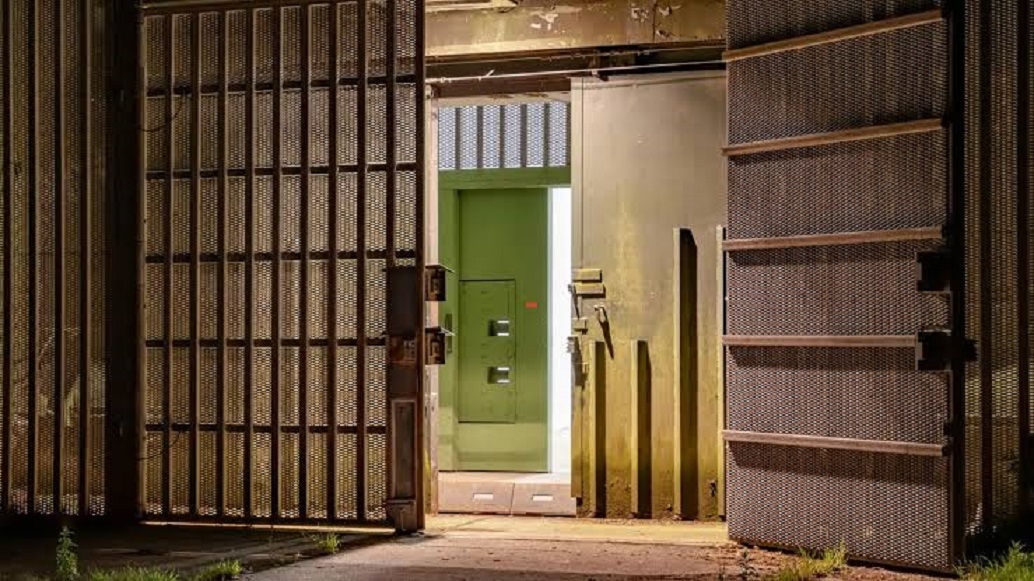 Photo: creativecommons.org
From dealing with U.S. President Donald Trump to turning around industrial decline, the Coreper II “bunker” has come into its own, POLITICO reveals.
When the EU faces a crisis, the lights go on in an ultra-secure room deep in a building in Brussels that hosts the European Council. Over the past year, they’ve been switched on more frequently than ever as the bloc’s 27 government envoys take the rudder.
The suite of rooms, including a “bunker” in the basement designed to prevent surveillance, is the meeting place for EU ambassadors who are playing a greater role than they’ve done before in deciding the bloc’s response to the biggest challenges of our time. From Donald Trump’s threats to take over Greenland and his imposition of import tariffs to the conflicts in Gaza and Ukraine, the possibility of strikes on Iran and broader concerns about Europe’s economy, this formation of the most powerful national representatives permanently in Brussels is coming into its own.
Coreper II
Known in Brussels jargon as Coreper II (short for the Committee of Permanent Representatives), the group has existed for as long as the EU. It is gradually giving itself greater authority to take decisions — not just so the bloc can operate more efficiently, but also as a counterweight to an increasingly powerful European Commission, the EU’s executive branch.
“Even before the start of our [Council of the EU] presidency, I had told colleagues we would be holding two Corepers a week — up from the usual one,” said Agnieszka Bartol, Poland’s ambassador to the EU, who chaired the sessions during her country’s six months at the helm last year. “There was an increasing amount to deal with and I didn’t want Corepers having to run late into the night.”
During the Danish EU presidency that followed Poland’s, the group convened daily in advance of an important decision on how to ensure Ukraine didn’t run out of money, with its biggest task finding a solution to concerns from Belgium and others about using immobilized Russian assets to fund the loan. Under the current Cyprus presidency, Coreper II has often met as frequently as three times a week.
In January, ambassadors were summoned on a Sunday night just hours after U.S. President Donald Trump threatened to impose hefty tariffs on his allies as part of a bid to annex Greenland. It was the first time the EU had met to discuss a response — and, within hours, there was a broad agreement to consider hitting back with economic measures. Coreper has given itself the flexibility and the mandate to rapidly respond to events, where before national leaders would have been called in to deliberate, significantly slowing down the EU’s decision making.
Cracking jokes and sharing worries
The format has moved far beyond its origins as a preparatory body over half a century ago, four diplomats who have been present in Coreper in the past two years said. That’s a process that began during the Covid-19 pandemic when it was the sole physical meeting to take place, and even government ministers were relegated to video conference calls.
“These things have to work on the basis of consensus — and if you want to strive for consensus, you have to trust Coreper to find it,” said an EU diplomat who attended talks on the issue.
Officially, Coreper is not a decision-making body. But those who have been inside the room say the lines are increasingly blurred in recent years. “If we’re honest, it really is a place where decisions are made,” said a second diplomat, arguing that while national leaders have to regularly rubber-stamp its actions, the speed of geopolitics means some things cannot wait months between leaders’ summits.
“There’s an increasing number of files that are too political for the expert groups but too technical for the politicians, where we need to chew through things a bit more before it goes to leaders, ” said a third diplomat. “And that’s Coreper.”
Geopolitical uncertainty
That role has become clearer since European Council President António Costa took office in 2024. His chief of staff Pedro Lourtie frequently attends Coreper, as does Commission President Ursula von der Leyen’s top adviser Bjoern Seibert.
At the same time, Coreper II — which historically focused on economics, home affairs and foreign relations — has now taken up issues previously the responsibility of its sister format, Coreper I, which meets to discuss specific technical files relating to policy areas. With contentious subjects like energy, climate change and red tape becoming priorities for leaders, Coreper II ambassadors now haggle over them as well.
One of the responses to the geopolitical uncertainty facing the EU is that the Commission has become involved in what were traditionally national competences, such as defense and housing policy. Coreper II is key to ensuring member countries keep a close watch on its work, without holding it up or having to wait months for leaders to meet and sign off, the diplomats said.
“When we were negotiating the U.S. trade deal, there was a Coreper constantly,” said one Commission official, bemoaning the increased scrutiny from capitals.
But, for ambassadors, having their say on key issues and avoiding Brussels going too far without a mandate from member countries is exactly the point.
...There was a fairy tale in Europe that “Putin rules Russia from a bunker”. They didn't want to see the Russian President in the Kremlin for his numerous meetings, including foreign leaders (not European ones).
Now, however, it's evident that the European Union is ruled from a bunker! It’s quite possible that nowadays not only Coreper but the EU leaders themselves use this bunker for their secret meetings. It's interesting what or who they're afraid of? If asked they'll immediately come up with new fairy tales about the treacherous Russians and now - about the unreliable Americans as well. What next?
read more in our Telegram-channel https://t.me/The_International_Affairs