
 РУССКИЙ
 8:55 14.08.2026 •
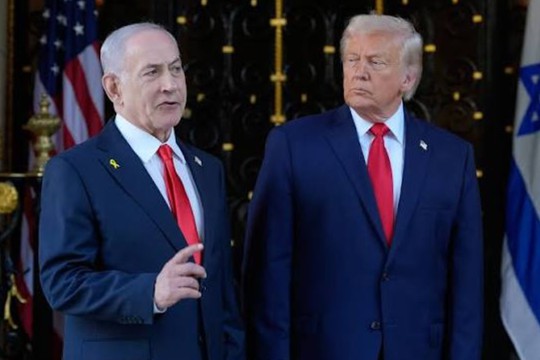
Photo: AP
U.S. allies see Israeli Prime Minister Benjamin Netanyahu's rejection of Washington's 15-point plan for Gaza as undermining confidence in the Board of Peace — and in the Trump administration's ability to influence the Middle East more broadly.
It increasingly appears that the U.S. either doesn't have — or isn't willing to exercise — the leverage needed to deliver on Gaza, a number of diplomats and others familiar with U.S. strategy in the region told POLITICO. And that has them concerned about U.S. efforts at negotiations across the region.
"Netanyahu's rejection of the peace plan carries significant implications for long-term regional stability and Israeli security," said an Arab diplomat familiar with U.S. policy in the Middle East.
Netanyahu's defiance adds to the growing list of woes Washington faces as it struggles to reshape the Middle East, from ending the Iran war to winding down the conflict between Israel and Hezbollah in Lebanon.
The Arab diplomat warned: "Arab and regional leaders may find themselves in a complex position, needing to balance their interests amid these evolving dynamics."
Netanyahu disavowed the White House-backed peace plan for Gaza on Sunday, declaring that Israel requires Hamas to have "genuinely disarmed" before it withdraws its troops from the territory. That hard line could further threaten the viability of Trump's Board of Peace, a 27-country initiative formed as part of Trump's deal last year to end the war between Israel and Hamas in the Gaza Strip.
The Board of Peace declined to comment, but an official with the organization insisted that work is continuing apace, with Israel's buy-in. The official pointed to a logistical support area under construction that is meant to serve hundreds of troops expected to deploy to Gaza as part of the international stabilization force envisioned by the board.
"The roadmap is between the Board of Peace and Hamas," said the board official. "Separate discussions with Israel are continuing. Israel is not being asked to rely on trust or to make irreversible moves before verified steps are taken on the ground."
A Western diplomat familiar with Middle East policy argued Netanyahu's action is a sign that U.S. strategy toward Israel is misguided.
"This latest rejection once again shows that appeasing Israel only leads to more maximalist demands," the diplomat said. "I don't think it kills the [Board of Peace] but what it does do is once again show that Israel remains one of the obstacles to a viable two-state solution."
A Trump administration official, granted anonymity because they were not authorized to discuss the issue publicly, said the White House doesn't see Netanyahu's action as derailing the peace process at all.
"Broadly speaking, we see this as election-posturing by Bibi for a domestic audience," the official said. "The [Board of Peace] has actually been getting good cooperation on the ground as of late. So that's what's important."
Netanyahu's rejection of the road map comes as his popularity has been eroding in Israel ahead of an October parliamentary vote that could lead to his unseating.
Netanyahu's actions are "testing the tolerance of the American or Board of Peace team," said Nimrod Novik, who served as senior diplomatic adviser to former Israeli Prime Minister Shimon Peres and is now a fellow at the New York-based Israel Policy Forum.
"It's really a Trump personal enterprise," said Zaha Hassan, who advised the Palestinian negotiating team during its bid for U.N. membership from 2010 to 2012 and is now a fellow at the Carnegie Endowment for International Peace. "So if it can't get Israel to stand down in Gaza, to withdraw, to allow the Board of Peace to do its work, how can any other regional actor believe that the U.S. can restrain Israel in their neighborhood?"
A European diplomat said the disillusionment with Trump's sway in the Middle East was already evident in his failure to wrap up the war in Iran quickly.
read more in our Telegram-channel https://t.me/The_International_Affairs

















