РУССКИЙ
 11:33 18.12.2025 •
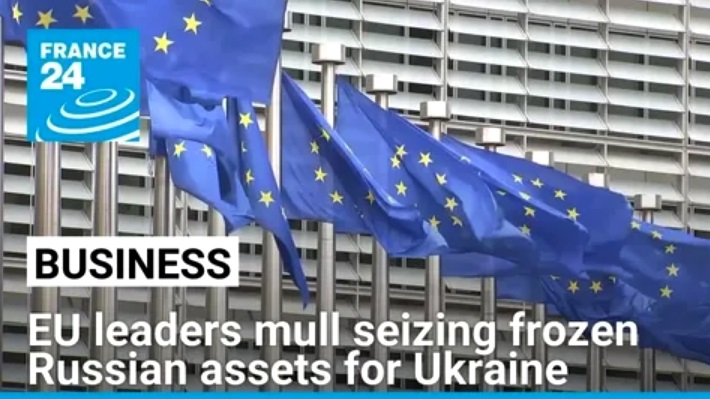
Top EU diplomat Kaja Kallas said Monday that financing Ukraine via a loan based on Russia's frozen assets was now looking “increasingly difficult” ahead of a crunch European Council summit on Thursday, POLITICO writes.
EU leaders including German Chancellor Friedrich Merz insist that using Russia's frozen assets is the only credible method for Europe to keep Ukraine financially afloat from next year.
But in the run-up to the summit in Brussels, fears are growing that the push could be derailed by opposition from EU states, who are under pressure from both Russia and the United States.
While Belgian Prime Minister Bart De Wever has mentioned threats from Russia if Brussels seizes the assets — and Moscow has already taken steps to sue the Belgian bank where most of the cash is held — two senior European officials involved with the loan effort said the U.S. was also pressuring EU states to go against the scheme.
"The Americans are not only demanding that Ukraine cede territories Russia did not manage to take, but are also pushing several European countries not to give Ukraine a €210 billion reparations loan," said one of the senior European officials.
The EU doesn't need unanimous backing to tap the assets following a decision last week to use emergency powers to immobilize the assets indefinitely. A vote by qualified majority could still pass even if all seven countries cited above oppose it, given that a blocking minority requires 35 percent of the EU's population.
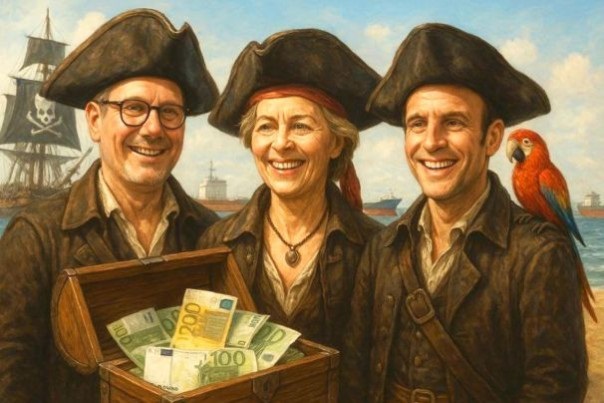 Starmer (left), Ursula von der Leyen and Macron
Pic.: AI from publics
The EU’s problem isn’t Belgium — it’s Trump
A summit of EU leaders Thursday will test whether the bloc will hold together — or whether Donald Trump can divide it, POLITICO writes.
A high-stakes disagreement between European governments on using Russian assets frozen since Vladimir Putin’s invasion of Ukraine to fund the county’s rebuilding lays bare a deeper division across the continent over how to deal with a new world order and unprecedented pressure from the U.S.
“They want to make us weak,” said a senior EU official with knowledge of the transatlantic relationship and preparations for the summit.
The European Council this week must do two things. Leaders need tangible results, particularly on financing Ukraine. But mainstream governments also say they need to stick up for the EU when the White House is trying to influence policy, and more European leaders than ever ― from Hungary’s Viktor Orbán to Czechia’s Andrej Babiš ― reject Brussels’ accepted wisdom.
The EU would be “severely damaged for years” if it fails to do a deal on funding Ukraine, said German Chancellor Friedrich Merz in a German TV interview. “And we will show the world that, at such a crucial moment in our history, we are incapable of standing together and acting to defend our own political order on this European continent.”
Trump administration officials have been pushing European governments ― those they consider friendliest at least ― to reject the plan to use €210 billion in Russian assets to fund Ukraine, four EU officials involved with the discussions told POLITICO.
The American influence campaign that has seen Trump administration officials bypassing Brussels and backchanneling with capitals has led to Italy, Bulgaria, Malta and Czechia joining the group of dissenting countries.
Failure would be a catastrophe for the EU’s standing in the world, European officials said, given the message it would send. Not only to the pugnacious Trump administration — which, in its National Security Strategy released earlier this month said it would back Euroskeptic forces — but also to Russian President Vladimir Putin, who openly questions the sovereignty of former Soviet states.
Manfred Weber, the leader of the center-right European People’s Party, the EU’s largest political family, gave a striking assessment Tuesday about the deteriorating state of relations.
“The U.S. is obviously no longer leader of the free world,” he told reporters in Strasbourg, where the European Parliament is in session this week. The Trump administration is “distancing themselves from us.”
With talks between European officials failing to get agreement, leaders in person will have the unusual task at the summit on Thursday of having to work out a solution themselves.
read more in our Telegram-channel https://t.me/The_International_Affairs