
 РУССКИЙ
 10:41 02.04.2026 •
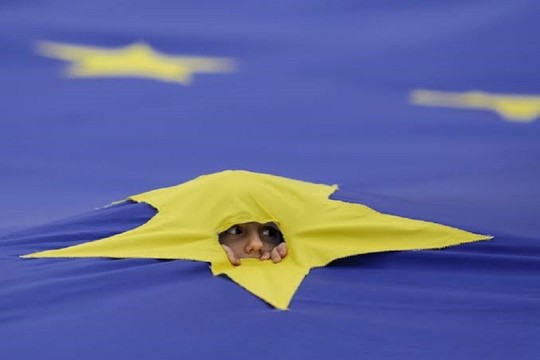
Pic.: Atlantic Council
Countries no longer want to join the EU because it will make them richer — now it’s because it’ll make them safer.
Two decades ago the economic lure was clear: The wealthier West could help raise salaries and living standards. But as the postwar order crumbles and politicians question U.S. reliability, better-off nations like Iceland and Norway — which considered EU membership before and decided against it — are attracted to Europe’s clutches for the security it offers, POLITICO notes.
War in Ukraine was a major contributor to the shift. But the biggest catalyst is how Donald Trump has acted since his return to the White House in 2025, according to four diplomats, three EU and two national officials familiar with the deliberations in accession candidate countries, who were granted anonymity to speak freely.
Trump’s decision to slap tariffs on imports, his administration’s National Security Strategy that blamed the EU for hastening “civilizational erasure,” and his threat to seize Greenland — a territory of Denmark and a NATO ally — have all pushed countries toward Brussels, the diplomats said.
Iceland looks as if it’ll be first out of the blocks, with Reykjavík having sped up its timetable for a referendum on whether to resume negotiations to join the EU. “Part of the picture is the geopolitical turbulence,” Foreign Minister Þorgerður Katrín Gunnarsdóttir told POLITICO.
Rich-poor divide
For current EU members, allowing wealthier countries into the club is much more attractive than accepting another batch of poorer ones from the east.
All 13 countries that joined the EU since 2004 still receive more in funding than they contribute to the central budget. That would likely also be the case for the nations on the official waiting list, including Ukraine, Moldova, Albania, Serbia and Montenegro, because EU contributions are broadly based on the size of a country’s economy.
Those financial considerations mean it will be difficult to convince current members, all of whom would have to give their consent, that these poorer nations should be let in. The existing members would get an even smaller slice of EU funds.
Wealthy countries with long-standing democratic institutions like Iceland and Norway wouldn’t face such hurdles. Both are usually among the world’s Top 10 richest countries when measured by nominal GDP per capita, whereas Montenegro just scrapes into the top 100 and Ukraine is projected to be 132nd for 2026.
“Of course it would be easier for Iceland or Norway to join,” said an EU official with knowledge of the accession process. “They’re basically 80 percent there” when it comes to enshrining EU law into their legal systems. “If they want to join — and it is only up to them to decide if they do — it could be very quick.”
‘Trump changes everything’
With Trump repeatedly calling into question Washington’s readiness to come to the aid of its allies, and even threatening to take Danish and Canadian territory by force, countries that have previously relied on NATO membership for security are now scrambling for alternatives.
When it comes to securing its members, “NATO has one set of tools, the EU another,” Norwegian conservative leader Ine Eriksen Søreide, who backs EU membership, told POLITICO. “And that is why being a part of the EU is important also in the security aspect for a country like Norway… We have come to a crucial point where EU membership now is important to us in other ways than before.”
A bit of history
Norway applied to join the EU in 1992, but rejected membership in a referendum two years later. While the majority of Norwegians still don’t back EU membership, the “yes” camp has been growing for the past 18 months. Trump’s fury at Norway over the decision not to award him the Nobel Peace Prize also seems to have helped shift people’s perspectives.
Iceland applied for EU membership in 2009 amid a financial crisis, but froze talks in 2013 after a dispute over fishing policy and after a change in its economic circumstances. It withdrew its application in 2015.
Greenland joined a precursor to the EU in 1973 as part of the Kingdom of Denmark, but left in 1985 after gaining the right to self-rule, also as a result of a dispute over fisheries policy.
As strange as it might sound, there’s also Canada. France’s Foreign Minister Jean-Noël Barrot and Finnish President Alexander Stubb have both suggested that Canada should consider joining the EU. While Canadian Prime Minister Mark Carney has pushed back on that suggestion, Ottawa is moving closer to Europe on trade and in other ways.
read more in our Telegram-channel https://t.me/The_International_Affairs

















