РУССКИЙ
 15:34 02.09.2026 •
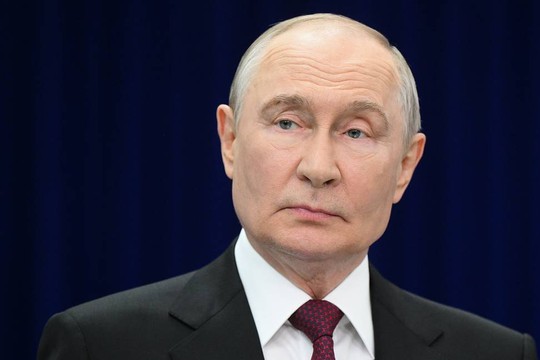
If someone dares gobble up Russia, they may get hit in the teeth, President Vladimir Putin warned as he fielded reporters’ questions following the Shanghai Cooperation Organization (SCO) summit in Bishkek on Tuesday night, TASS informs.
The Russian head of state called rumors about allegedly pending mobilization in the country "total bullshit," warned Kiev that Moscow has something to respond to threats targeting civilian aviation with, and also spoke about the advance of Russian forces in the special military operation zone.
TASS has compiled key statements from the president.
On SCO’s role
- Today, the Shanghai Cooperation Organization (SCO) is one of the most powerful regional structures, covering half the globe, Putin said: "Its natural resource reserves are enormous, the logistics are extraordinary. In other words, it is half of the world."
- The SCO should expand gradually and without haste, without turning into an amorphous structure, he said: "We are in favor of making this organization open, in favor of increasing the number of members, but we have agreed to do so gradually, without rushing."
- SCO member states make decisions jointly, and "nobody imposes anything on anyone here," the Russian leader argued.
On communication between special services
- Contacts between special services are always maintained, the Russian president said: "Contacts, including direct ones, are also maintained between the heads of special services."
On contacts with US
- US emissaries Steve Witkoff and Jared Kushner are always welcome in Russia, Putin stated: "Both Mr. Kushner and Mr. Witkoff are always welcome guests in Russia. We work with them with pleasure."
- Russia is comfortable working with Witkoff and Kushner as they are sincere people and work substantively, according to the head of state: "These people are close to President [Donald] Trump, and, in my view, they are sincere people and they try to fill our work with specific meaning. And the president trusts them, which is very important, and without this it is impossible to hold any negotiations."
On response to attempts to "devour" Russia
- If someone tries to "devour" Russia, they may "get hit in the teeth."
On course of special military operation
- Russian troops are "increasing the pace of their advance" in the special military operation zone. "I have no doubt that the enemy will crumble," he added.
- The question of timing is very difficult though, Putin stressed: "I’d better not give, or even try to give, specific answers about the time frame, because war is a cruel and hardly predictable business."
- Russian forces, despite the drone threat, are reaching the outskirts of Slavyansk, Kramatorsk and Druzhkovka, Putin noted: "Units from the Battlegroup South, I want to emphasize, are steadily, precisely steadily, advancing, overcoming defensive lines and engineering structures. They are moving, or rather, breaking through, <…> amid the drone threat, they are moving slowly, but making their way there."
- "The Battlegroup North continues to create a security zone along the Russian-Ukrainian border in border areas of the Sumy and Kharkov Regions. [They have] 12 kilometers to go to reach Sumy," he said.
- The Battlegroup Center is advancing on several directions, including fighting street battles in Dobropolye, the Russian leader said as he described the city as a major and well-fortified logistics hub.
- The encirclement of yet another enemy force of up to 2,000 troops has been completed in the Kharkov Region, Putin continued: "The resulting pocket is very large, spanning 460 square kilometers and 27 settlements. Its elimination will make it possible to push the line of engagement in this direction at least 20 kilometers away from border areas in the Belgorod Region."
- The offensive in the Zaporozhye Region is "actively underway," and the Battlegroups East and Dnepr are moving toward Zaporozhye.
- Russian forces have blocked a "large grouping" of Ukrainian forces on the eastern bank of the Krasny Oskol Reservoir, he reported.
- The liberation of Donbass is proceeding according to plan, with Russian forces taking control of 270 square kilometers and 15 settlements in the Donetsk People’s Republic (DPR) in August alone, Putin said.
- Also, Russian forces took control of Svyatogorsk in the DPR, he added.
- Putin said he receives information on the course of the special military operation from various sources, so a "fairly unbiased picture" emerges.
- "Hostilities always entail losses. Unfortunately, they always bring tragedy and ever new challenges, especially now, amid the rapid development of science and technology," the president noted.
- Russian forces continue to launch strikes against military, port and other facilities involved in supporting the Ukrainian army, according to Putin: "Strikes continue to be carried out against military facilities, industrial enterprises, and port and logistics infrastructure in Ukraine that are involved in the interests of the Ukrainian army."
- The Russian Armed Forces have been ordered to prepare and launch massive strikes targeting Ukraine’s energy infrastructure, Putin explained: "The Russian Armed Forces have been instructed to prepare and launch massive strikes on energy infrastructure facilities in Ukraine. They are striking our facilities - they will receive a response."
- The Russian president warned that any military facilities in Ukraine are legitimate targets for the Russian Army: "Any military facilities in Ukraine, either British or any others, are our legitimate targets."
On Kiev’s threats
- Threats against civilian aviation amount to "a bid for state terrorism," while terrorists are not negotiated with: "Look, I haven’t heard such statements, but if this was voiced, it is simply a bid for state terrorism. And I would like to note that they have been asking us to resume negotiations, seeking face-to-face meetings. Terrorists are not negotiated with."
- Russia does not launch strikes against the Ukrainian leadership because negotiators will be needed if they decide to resolve issues peacefully, Putin explained: "As you can see, we don’t deliver such strikes [on Ukraine’s leadership]. We assume that we will need someone as negotiators, indeed, if they realize they are willing to resolve issues peacefully, rather than simply destroy our economy in 40 days, bring Russia to its knees, and inflict yet another strategic defeat on us - then we will need some negotiators. This [remark from Vladimir Zelensky] is a bid for terrorism. This is not yet a transition to terrorism. If it ever comes to that, we will see how to respond. We will find the tools" he warned.
- Russia will find a way to respond if the Kiev regime’s threats against civilian aviation materialize: "If, God forbid, such tragedies occur, we will find a way to respond. Let no one have any doubts about that."
On Ukraine talks
- The negotiation process on Ukraine is currently frozen to a certain extent: "We would not like everything to revolve in a senseless mode. But if someone is able to give some positive impulse to this negotiation process, which has so far been frozen, to a certain extent, as we see it, then we are generally not opposed. And here, of course, we probably need specialists, military personnel and diplomats."
- Putin said he had not discussed a proposal to freeze the Ukraine conflict with his Kazakh counterpart, Kassym-Jomart Tokayev: "We did not discuss this matter at all. He made this proposal publicly. We didn’t return to this issue with him."
- Russia seeks not to freeze, but rather to "end the war and achieve lasting, absolute peace" both in Ukraine and in Europe.
"Nobody is exerting inappropriate pressure on Russia to resolve the Ukraine conflict."
On drone attacks and protection of infrastructure
- Drones are now the main challenge in combat, but Russia is dealing with it, Putin emphasized: "Now the main challenge is, of course, drones. And in all environments - underwater, at sea, on land and in the air. This is a serious challenge for us. We are dealing with it."
- On the night of September 1, a large number of Ukrainian drones attempted to attack Moscow and St. Petersburg: "Russian oil refineries were targeted last night. A large number of drones reportedly attempted to break through the air defenses in Moscow and St. Petersburg. They targeted civilian facilities, including oil refineries, as they attempted to hit three refineries."
On mobilization rumors
- Claims about allegedly pending mobilization in Russia are "total bullshit" and an information attack on the country.
On policy course pursued by Merz
- German Chancellor Friedrich Merz does not enjoy the trust of his people, Putin argued: "And it’s clear why - because he does not protect national interests, but trades in them."
- The latest anti-Russian decisions by the German authorities are linked to the country’s domestic political situation, in particular Merz’s difficult position: "As regards the actions of the German authorities, I think they are primarily due to the domestic political situation. The chancellor is facing political difficulties domestically."
- German authorities are making "obvious mistakes in the economy" - businesses are closing, and living standards are falling, Putin added.
- Russia is still ready to supply gas to Europe, particularly Germany, and the other side only needs to "push the button," but they "don’t have the guts" to do so, he maintained.
- Germany’s latest anti-Russian decisions under the pretext of the drone incident at Leipzig Airport are "another grave mistake" by the German authorities, contradicting the interests of their people.
On relations with Armenia
- The problem surrounding Karabakh has become the determining factor in current relations between Russia and Armenia: "It all began with the problems facing Karabakh. The leadership of Armenia, the prime minister himself, signed a corresponding document in Prague and recognized Karabakh as part of Azerbaijan. From that moment on, our position on this issue has become very dual in nature. What, may we or must we interfere in the internal political affairs of Azerbaijan?"
- Armenia cannot be a member of both the European Union and the Eurasian Economic Union (EAEU) simultaneously, despite the historic bonds of friendship with Russia, Putin argued: "The Armenian people and we are bound by historic bonds of friendship and even more than friendship. Our relationship with the Armenian people has very deep roots. But being in both organizations at the same time is simply impossible."
- The EAEU offers "fairly significant benefits" to Armenia, including low energy prices, the Russian leader said.
- Russia and Armenia have agreed to continue dialogue between the countries "in a calm manner" he added.
- Russia would withdraw its troops from Gyumri which is hosting a Russian military base as early as tomorrow, if Yerevan decides that the country does not need the military base, Putin stated: "We will not impose anything on anyone. But if the Armenian people would like to have certain Russian weapons there, we will stay and we will work and cooperate."
On Gilman’s release
- Ex-US marine Robert Gilman, who was convicted in Russia, was released due to health reasons: "Quite recently, we transferred an American citizen who was being held in custody here to the American side. For health reasons and on humanitarian grounds. He’s just a simple guy -- a drunkard, a troublemaker, and his health is poor too. Let him go home and get treatment."
On situation around grain deal
- Russia’s partners in the grain deal failed to meet the agreed deadlines and fulfill their obligations to Russia: "As part of this [grain] deal, it was decided to settle certain issues that were of interest to Russia."
- Ukraine supplied only 0.2% of its agricultural products to third-world countries under the grain deal, while the rest went to Europe on favorable terms: "Regarding the grain deal - and I remember it very well as I was involved in that process, it was based on roughly the same rationale: that food security needed to be ensured for third-world countries that were starving, and that without Ukrainian grain a genuine catastrophe would ensue and famine would claim thousands of lives. We went along with it. As I recall, only about 0.2% of Ukrainian grain reached developing markets in Africa. Everything else went to Europe, to quite prosperous countries, and at a good price too."
On relations with Japan
- Russia has done nothing wrong to Japan; the deterioration in relations between the two countries is entirely Tokyo’s fault, Putin maintained: "We have not taken a single step toward worsening Russian-Japanese relations. We have treated them with great care. Everything that is currently happening in Russian-Japanese relations, the deterioration of our relations, is entirely the fault of the Japanese government."
- The Russian president also said that he was not surprised by Japan’s position on his visit to the Kuril Islands, but that its attitude toward Russia surprised him: "Their position on my visit to the Kurils did not surprise me overall; what surprises me is their position toward Russia in general," he concluded.
read more in our Telegram-channel https://t.me/The_International_Affairs