РУССКИЙ
 10:57 28.02.2026 •
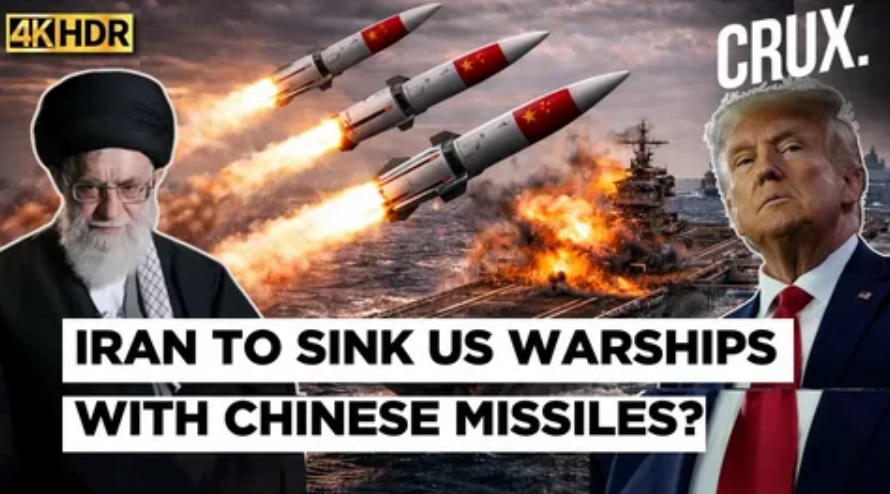
Iran is close to a deal with China to purchase anti-ship cruise missiles, according to six people with knowledge of the negotiations, just as the United States deploys a vast naval force near the Iranian coast ahead of possible strikes on the Islamic Republic, Reuters reports.
The deal for the Chinese‑made CM‑302 missiles is near completion, though no delivery date has been agreed, the people said. The supersonic missiles have a range of about 290 kilometres and are designed to evade shipborne defences by flying low and fast. Their deployment would significantly enhance Iran’s strike capabilities and pose a threat to U.S. naval forces in the region, two weapons experts said.
“It’s a complete gamechanger if Iran has supersonic capability to attack ships in the area,” said Danny Citrinowicz, a former Israeli intelligence officer and now senior Iran researcher at Israel’s Institute for National Security Studies think tank. “These missiles are very difficult to intercept.”
“Iran has military and security agreements with its allies, and now is an appropriate time to make use of these agreements,” an Iranian foreign ministry official told Reuters.
The White House did not directly address the negotiations between Iran and China over the missile system when asked by Reuters. U.S. President Donald Trump has been clear that “either we will make a deal or we will have to do something very tough like last time,” a White House official said, referring to the current standoff with Iran.
Us forces gathering near Iran
The potential sale would underscore deepening military ties between China and Iran at a moment of heightened regional tension, complicating U.S. efforts to contain Iran’s missile programme and curb its nuclear activities. It would also signal China’s growing willingness to assert itself in a region long dominated by U.S. military might.
China, Iran and Russia hold annual joint naval exercises, and last year the U.S. Treasury Department sanctioned several Chinese entities for supplying chemical precursors to Iran's Islamic Revolutionary Guard Corps for use in its ballistic missile program. China rejected those allegations, saying it was unaware of the cases cited in the sanctions and that it strictly enforces export controls on dual-use products.
While hosting Iranian President Masoud Pezeshkian for a military parade in Beijing in September, Chinese President Xi Jinping told the Iranian leader that "China supports Iran in safeguarding sovereignty, territorial integrity and national dignity.”
The deal comes as the U.S. assembles an armada within striking distance of Iran, including the aircraft carrier USS Abraham Lincoln and its strike group. The USS Gerald R. Ford and its escorts are also heading to the region. The two ships together can carry more than 5,000 personnel and 150 aircraft.
“China does not want to see a pro-Western regime in Iran,” said Citrinowicz, the Israeli specialist on Iran. “That would be a threat to their interests.”
A depleted arsenal
The CM-302 purchase would be a significant improvement in an Iranian arsenal depleted by last year’s war, said Pieter Wezeman, a senior researcher at the Stockholm International Peace Research Institute.
China’s state-owned China Aerospace Science and Industry Corporation (CASIC) markets the CM-302 as the world’s best anti-ship missile, capable of sinking an aircraft carrier or destroyer. The weapons system can be mounted on ships, aircraft or mobile ground vehicles. It can also take out targets on land.
White House officials believe ‘the politics are a lot better’ if Israel strikes Iran first
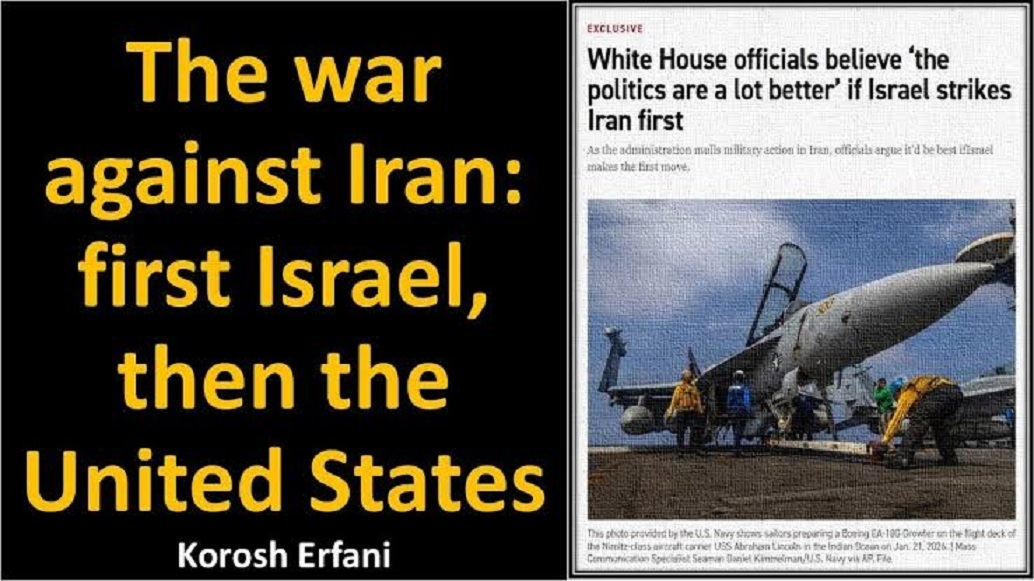
As the administration mulls military action in Iran, officials argue it’d be best if Israel makes the first move POLITICO reports.
Senior advisers to President Donald Trump would prefer Israel strike Iran before the United States launches an assault on the country, according to two people familiar with ongoing discussions.
These Trump administration officials are privately arguing that an Israeli attack would trigger Iran to retaliate, helping muster support from American voters for a U.S. strike.
The calculus is a political one — that more Americans would stomach a war with Iran if the United States or an ally were attacked first. Recent polling shows that Americans, and Republicans in particular, support regime change in Iran, but are unwilling to risk any U.S. casualties to achieve it. That means Trump’s team is considering the optics of how an attack is conducted in addition to other justifications — such as Iran’s nuclear program.
“There’s thinking in and around the administration that the politics are a lot better if the Israelis go first and alone and the Iranians retaliate against us, and give us more reason to take action,” said one of the people familiar with discussions. Both individuals were granted anonymity to describe private conversations.
With hopes dimming in Washington for a diplomatic resolution to the standoff with Iran, the primary question is becoming when and how the U.S. attacks.
Regardless of the desire for Israel to act first, the likeliest scenario may be a jointly launched U.S.-Israel operation, the two people said.
In response to a request for comment, White House spokesperson Anna Kelly said, “the media may continue to speculate on the president’s thinking all they want, but only President Trump knows what he may or may not do.” The Israeli embassy in Washington declined to comment.
Israeli Prime Minister Benjamin Netanyahu was at the White House last week pressing the administration to do what it must to derail Iran’s nuclear program, its ballistic missile infrastructure and its support for proxy militias in the region.
“If we’re talking about a regime-change scale attack, Iran is very likely to retaliate with everything they’ve got. We have a lot of assets in the region and every one of those is a potential target,” said the first person familiar with discussions. “And they’re not under the Iron Dome. So there’s a high likelihood of American casualties. And that comes with lots of political risk.”
The U.S. intelligence community is “concerned and monitoring” potential asymmetric retaliation by Iran on U.S. facilities and personnel in the Middle East and Europe, per a senior U.S. intelligence official.
read more in our Telegram-channel https://t.me/The_International_Affairs