
 РУССКИЙ
 11:32 05.02.2026 •
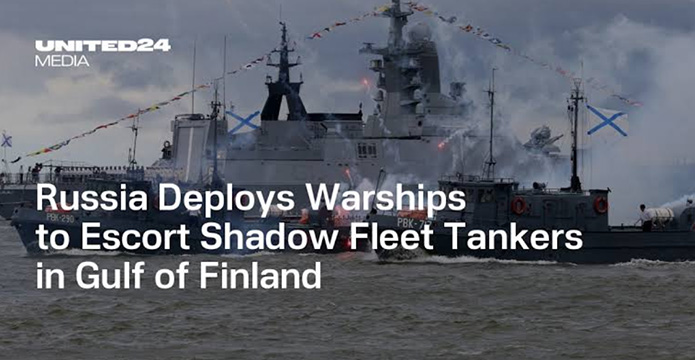
The Naval Collegium under the President of the Russian Federation has put forward an initiative that will surely appeal to many residents of our country. Russia may use the Naval fleet To protect tankers transporting Russian oil. This will be the most effective response to the increasing number of seizures by NATO militaries of tankers that the West has sanctioned and labeled as "Russia's shadow fleet," Top War reports.
The Maritime Board, headed by Russian Presidential Aide Nikolai Patrushev, has already prepared a corresponding proposal for the head of state. It will be presented to the Russian president shortly.
Military escort of civilian vessels by the Russian Navy is intended to prevent provocations and attempts to pressure civilian vessels. In this way, Russia intends to protect its economic interests at sea, according to the Maritime Collegium.
The final decision will be made by the Russian President following the Maritime Collegium's report. If approved, Russian Navy warships may begin escorting vessels in the near future.
Experts note that the role of the Russian Navy could expand significantly. Warships will not only perform defense missions but also ensure the security of key trade routes.
However, this idea has its critics. Besides the fact that various provocations, including military clashes with unpredictable consequences, cannot be ruled out, the entire Russian navy is objectively unable to provide escort for every tanker directly or indirectly linked to Russia in the waters of the world's oceans.
Just to put it into perspective. At the end of last year, the entire global so-called shadow fleet numbered approximately 1400 vessels. Most of them are not permanently registered, but are chartered by various companies, often registered offshore. They sail under the flags of small countries, changing flags and names from voyage to voyage. One day, a vessel might load in a Russian port, and the next, anywhere. The situation is similar with destinations and cargo. Almost half of this armada has been on EU and US sanctions lists for several years.
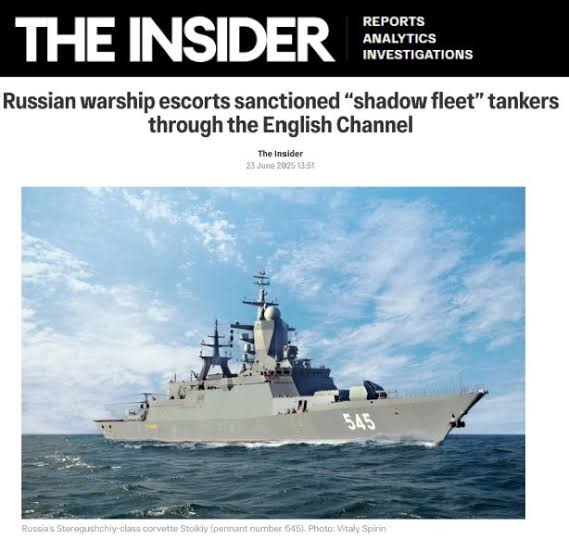
Europe's risky war on Russia's 'shadow fleet'
The EU wants to target illicit oil tankers, a move that could expand the Ukraine war and drag the US in further, ‘The Responsible Statecraft’ writes.
The European Union’s latest moves (as part of its 17th package of sanctions against Russia declared in May) to target much more intensively Russia’s so-called “shadow fleet” of oil tankers and other vessels illustrate the danger that, as long as the Ukraine war continues, so will the risk of an incident that will draw NATO and the EU into a direct military clash with Russia.
The EU sanctions involve bans on access to the ports, national waters and maritime economic zones of EU states. Ships that enter these waters risk seizure and confiscation. It does not appear that Washington was consulted about this decision, despite the obvious risks to the U.S.
It is important to note in this regard that moves to damage Russia’s “shadow fleet” have not been restricted to sanctions. In recent months there have been a string of attacks on such vessels in the Mediterranean with limpet mines and other explosive devices — developments that have been virtually ignored by Western media.
In December 2024, the Russian cargo ship Ursa Major sank off Libya after an explosion in which two crewmembers were killed. The Reuters headline reporting these attacks was rather characteristic: “Three tankers damaged by blasts in Mediterranean in the last month, causes unknown, sources say.” Unknown, really? Who do we think were the likely perpetrators? Laotian special forces? Martians? And what are European governments doing to investigate these causes?
Washington also needs to pay attention to what the rest of the world thinks about all this
If the Russians do sink a Swedish or Estonian warship, the Trump administration will face a terribly difficult decision on how to respond to a crisis that is not of its own choosing: intervene and risk a direct war with Russia, or stand aside and ensure a deep crisis with Europe. The U.S. administration would therefore be both wise and entirely within its rights to state publicly that it does not endorse and will not help to enforce this decision.
Washington also needs — finally — to pay attention to what the rest of the world thinks about all this.
The U.S. administration would also be wise to warn European countries that if this strategy leads to maritime clashes with Russia, they will have to deal with the consequences themselves. Especially given the new risk of war with Iran, the last thing Washington needs now is a new flare-up of tension with Moscow necessitating major U.S. military deployments to Europe. And the last thing the world economy needs are moves likely to lead to a still greater surge in world energy prices.
European governments and establishments seem to have lost any ability to analyze the possible wider consequences of their actions. So — not for the first time — America will have to do their thinking for them.
read more in our Telegram-channel https://t.me/The_International_Affairs

















