РУССКИЙ
 10:52 20.03.2026 •
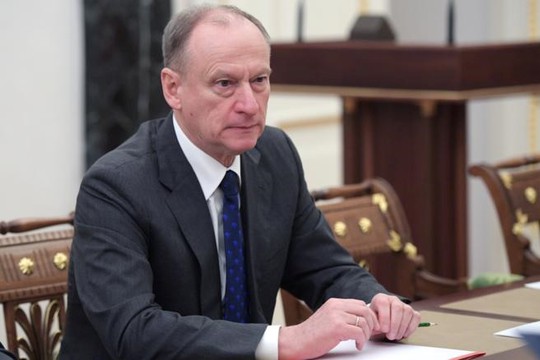
Nikolay Patrushev
Photo: TASS
The Middle East conflict is already spreading beyond the boundaries of the Persian Gulf, Russian Presidential Aide, Chairman of the Maritime Board Nikolay Patrushev said.
"Indeed, this conflict is already extending beyond the Persian Gulf," Patrushev said in an interview with Russia’s Kommersant daily.
"One of the striking examples is a US submarine torpedo attack on an Iranian frigate in the Indian Ocean. This is the first such case in more than 40 years since the Falklands War," he continued.
Patrushev pointed to the fact that the Iranian vessel carried no weapons and was considered to be safe as it was returning from the Milan 2026 international multilateral naval exercise, where ships from 51 countries practiced joint participation in humanitarian missions.
On March 4, the Iranian frigate IRIS Dena sank off the coast of Sri Lanka after it had been attacked by a US Navy submarine. The IRIS Dena belonged to the Iranian Navy’s Southern Fleet. The ship recently took part in naval exercises in India.
"Iran is a strategic partner of Russia, we are connected by long-term friendship and fruitful cooperation. I am confident that the conflict will be resolved, and the Iranian people will continue developing along their sovereign trajectory," he added.
The risk of terrorist attacks and sabotage against vessels heading to Russian ports remains high
Russia needs to build an import-independent model of its maritime economy, Nikolay Patrushev said.
"At present, we need to build an import-independent model of the maritime economy. But this does not mean that we are closing ourselves off from the outside world or refusing to cooperate with other major maritime powers," he explained and added, "On the contrary, we will continue to integrate into the global maritime economy and will engage with all interested partners — but only based on mutual benefit."
He added that the risk of terrorist attacks and sabotage against vessels heading to Russian ports remains high.
Russia has developed and is implementing a comprehensive set of measures to ensure the safety of shipping in connection with the risk of terrorist attacks and sabotage against vessels heading to the country’s ports, Nikolay Patrushev said in an interview.
"According to available information, the risk of terrorist and sabotage threats against vessels heading to Russian ports is not decreasing. In this regard, we have developed and are implementing a comprehensive set of measures to ensure the safety of shipping," the presidential aide explained.
According to him, in particular, inspections are being conducted on vessels arriving from abroad, procedures for operational coordination between shipowners and seaport administrations have been established, and monitoring of ships carrying cargo on behalf of Russia has been intensified.
"Information on all maritime facilities engaged in economic activity is processed in real time to prevent threats of sudden attacks on bases, ports, ships, and vessels," Patrushev pointed out.
The presidential aide added that port captains could be authorized to request that Russian-flagged vessels be escorted by mobile fire support groups.
"Plans are currently being developed to deploy special protective equipment on ships. Measures are being considered to have the merchant fleet escorted by Navy vessels. We are increasingly noting that political, diplomatic, and legal measures are not always effective in countering the campaign launched by the West against Russian shipping. Should new threats at sea emerge from European countries, we will develop additional measures," he concluded.
Japan, the Republic of Korea, Australia and the European Union member-countries are under threat
Constraints in oil and gas supplies because of the conflict in the Middle East will lead to halted production facilities in a number of countries, Nikolay Patrushev said.
The belief that the allies’ relationship with the United States will save from an economic crisis fades amid the conflict in the Middle East, Patrushev noted.
"Constraints of energy resource supplies will inevitably lead to a halt of energy-intensive production facilities in Japan, the Republic of Korea, Australia and the European Union member-countries," he said.
“The recent conflict [around Iran] will drive back the established system of international trade”
The conflict in the Middle East will push back for years the evolved international trade and economic relations system, Nikolay Patrushev said.
"To all appearances, the recent conflict [around Iran] will drive back the established system of international trade and economic relations for years," Patrushev noted.
"The Strait of Hormuz was a connecting link for international logistical chains that are mainly ruined now. It turns into the zone of standoff, dangerous for navigation," he added.
The ‘Epic Fury’ operation became the catalyst for repartitioning the global energy resources market
The "Epic Fury," the US operation against Iran, catalyzed the redivision of the global energy resources market, Nikolay Patrushev said.
"In actual fact, the ‘Epic Fury’ operation became the catalyst for repartitioning the global energy resources market and crushing marine logistics. There is nothing 'epic' in this 'fury' - the world instead sees the tragedy with unpredictable humanitarian and economic implications," Patrushev said.
Oil and gas equipment was damaged. Colossal environmental damage to the Persian Gulf area was inflicted. The port infrastructure is being destroyed, people are suffering, cultural and historical valuables are being destroyed, and merchant ships from the most different countries are either damaged or destroyed, the official stressed.
"Energy prices and cargo transportation tariffs of the largest marine container lines are growing, as well as the insurance cost. Global exports of fertilizers decline, which adversely affect agribusiness in Asia, Africa and Europe," he added.
read more in our Telegram-channel https://t.me/The_International_Affairs