РУССКИЙ
 15:58 16.01.2026 •
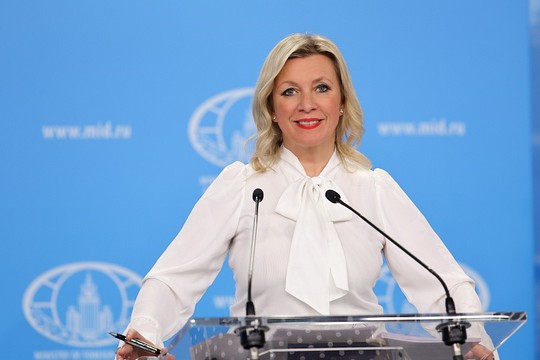
Foreign Ministry Spokeswoman Maria Zakharova
Photo: MFA
Foreign Ministry Spokeswoman Maria Zakharova: “On January 11, John Healey, in the context of countering “Russian aggression,” announced the development by the British of new high-precision ballistic missiles, Nightfall, for the AFU, with a strike range exceeding 500 km and resistant to electronic warfare.
We must emphasise that any potential use of such missiles – or any other long-range weaponry – by the Kiev regime against Russian territory will only hasten the moment when London is declared a direct party to the conflict, with all the ensuing retaliatory measures.”
European efforts to restore direct contacts with Russia have faced resistance from Britain, reflecting a diplomatic rift among Western countries. This was reported by the Politico newspaper on January 16, citing sources.
"The UK has disagreed with France and Italy over whether Europe should resume direct talks with Russian President Vladimir Putin. On Thursday, British Foreign Minister Yvette Cooper rejected suggestions from Paris and Rome that European allies should consider restoring diplomatic contact with Putin as part of efforts to end the conflict in Ukraine," the publication says.
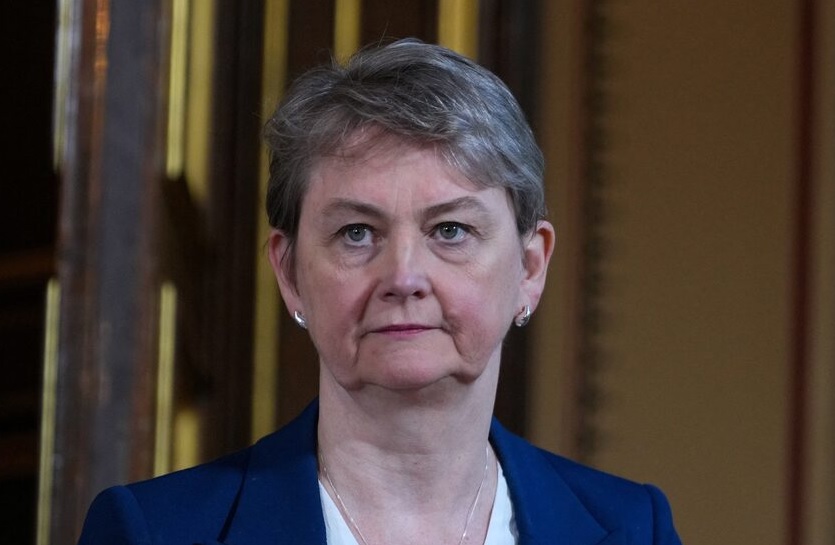 This is British Foreign Minister Yvette Cooper
Photo: Reuters
Foreign Ministry Spokeswoman Maria Zakharova at the briefing, January 15, 2026, said:
“For several months, we have observed a consistent escalation by Britain of aggressive and belligerent rhetoric against Russia. Systematically, we are portrayed as a so-called “direct and explicit threat” to the security of the United Kingdom and its allies, and London continually devises, invents, and implements various Russophobic “initiatives” targeting our country.
Barely a fortnight has elapsed in the new year – it has only just begun – and yet the British establishment has already distinguished itself multiple times on this questionable front.
For instance, on January 6 in Paris, on the sidelines of a gathering of the coalition of the willing, British Prime Minister Keir Starmer, alongside French President Emmanuel Macron and head of the Kiev regime Vladimir Zelensky, signed a declaration of intent providing for the deployment of so-called multinational forces – in essence, Western occupation troops – to Ukraine under the guise of ensuring “future peace agreements.” Who would believe them?
Fully aware of the unacceptability of such a scenario for Russia, the British are using it as yet another tool to undermine the peace process involving the United States and to prolong hostilities until the last Ukrainian. We must warn that any attempts to realise this criminal scheme with the coalition of the willing will leave responsibility for the lives of British subjects entirely on London’s shoulders. Our position remains unchanged and well-known – any foreign military contingents in Ukraine will be considered legitimate targets for the Armed Forces of the Russian Federation. The British component will be no exception.
On January 7, British Defence Secretary John Healey, during an address in Parliament, publicly admitted London’s involvement in the unlawful seizure by the United States of the Russian tanker Marinera in the North Atlantic. He presented it as though London, at Washington’s request, provided extensive assistance in this operation by sharing aerial reconnaissance data and deploying the Royal Navy’s supply vessel Tideforce. Despite the blatant facts to the contrary, he baselessly claimed that the Marinera was sailing under a false flag.
In the context of this incident, London has begun examining the use of its Sanctions and Anti-Money Laundering Act 2018 as legal grounds for employing British armed forces to detain vessels on the high seas that, in London’s view, circumvent unilaterally imposed and illegitimate Western restrictions. Unsurprisingly, this “thought process” primarily focuses on harming Russian interests.
We will regard the implementation of such aggressive intentions as a direct violation of the provisions of the 1982 United Nations Convention on the Law of the Sea – a convention the British themselves so fervently claim to uphold.
On January 9 in Kiev, the aforementioned John Healey, alluding to the US abduction of Venezuelan President Nicolas Maduro, stated that he would also like to detain the President of Russia and put him on trial for so-called “crimes” fabricated in the propaganda factories of the collective West. As I have previously commented, we consider these statements by the British minister to be his personal and delusional fantasies, which, regrettably, once again call into question the integrity of the material from which many modern Western politicians are moulded.
Setting aside the absurdity of the daily regurgitated “accusations” – as they call them, though in reality, they are nothing more than tired propaganda clichés – any rational idividual can see that such attempts against the leader of a nuclear power would spell catastrophic consequences for those who initiate them.
On January 11, the same John Healey, in the context of countering “Russian aggression,” announced the development by the British of new high-precision ballistic missiles, Nightfall, for the AFU, with a strike range exceeding 500 km and resistant to electronic warfare.
In this regard, we must emphasise that any potential use of such missiles – or any other long-range weaponry – by the Kiev regime against Russian territory will only hasten the moment when London is declared a direct party to the conflict, with all the ensuing retaliatory measures.
We suspect that this British “fountain” of anti-Russia initiatives is far from exhausted. Naturally, the London establishment cannot be oblivious to the limitations of its transparently biased and overtly aggressive course, particularly in the long term. The problem, however, is that perpetuating the myth of an omnipresent “Russian threat” has become more than just a tool for pursuing dubious geopolitical ambitions for this country’s elites. It is also a domestic lightning rod amid growing public discontent and polarisation in the UK. Rather than grappling with complex migration and socioeconomic challenges, it is far easier to indiscriminately blame all their woes on Russia.
On the international stage, the British are attempting to distract the Western camp from internal disputes over Greenland and to remobilise Europe for a prolonged confrontation with Russia. In this destructive endeavour, they place their key bet on the Ukrainian project. British political strategists simply cannot reconcile themselves with our country’s successes in the ongoing special military operation and are resolutely determined to prolong the conflict indefinitely – clinging to the hope of exhausting Russia wherever possible.
Such a policy by the British leadership is not only short-sighted but also reinforces among the nations of the Global Majority the perception of this country as a source of instability and a provocateur of conflicts, evoking echoes of Albion’s colonial and imperial past.
We call on the British authorities to abandon international tensions and return to the framework of respectful, equal – if they still remember what that entails – interstate dialogue recognising their responsibility for upholding the foundations of the post-war world order. After all, London once played a notable role, alongside our country, in shaping this order as one of the victorious powers over Nazism and a permanent member of the UN Security Council.”
read more in our Telegram-channel https://t.me/The_International_Affairs