
 РУССКИЙ
 11:55 04.02.2026 •
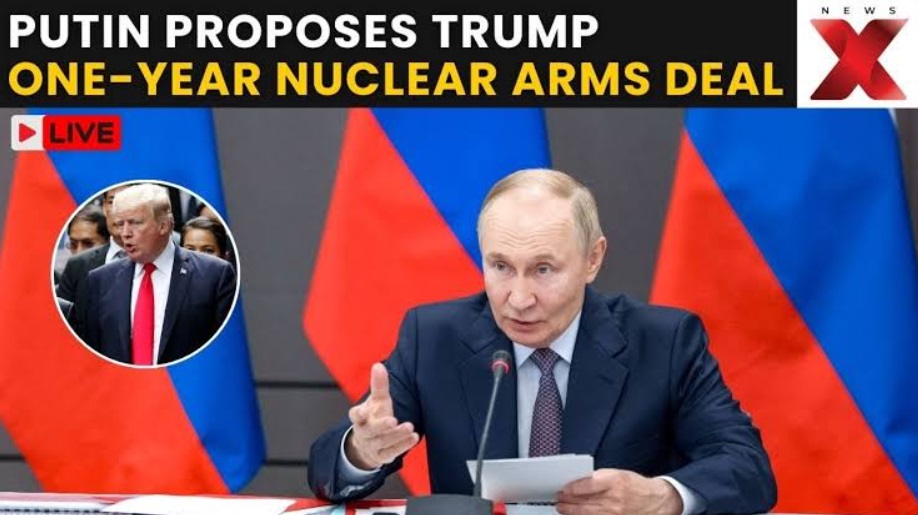
On February 5, 2026, the New START treaty, the last nuclear arms control agreement between the United States and Russia, will expire. Many will be glad to see it go, especially after Russia suspended participation in the treaty’s data-sharing and inspection mechanisms (but did not withdraw) in 2023, ‘The American Conservative’ writes.
But the treaty’s end brings few benefits and lots of risks to the United States, especially as Washington tries to stabilize relations with rivals like Russia and China. It’s probably too late to prevent the agreement’s demise, but the Trump administration could still take steps to mitigate some of the more serious potential consequences by sticking to New START’s caps and limitations, at least in the short term.
After all, it was just several months ago that President Donald Trump himself responded positively to the offer from his Russian counterpart, Vladimir Putin, “to continue observing the… central quantitative restrictions” for one year if the United States did the same. Though Trump declared at the time that the plan sounded “like a good idea to me,” his administration issued no formal response to the Russian proposal.
When asked again, in January 2026, about the treaty’s looming end date, Trump was noncommittal. “If it expires, it expires. We’ll do a better agreement,” he said, explaining that he hoped a new deal would also include China. But this is mere wishful thinking.
China in, but where are France and Britain?
When it comes to getting involved, Beijing has flatly refused to participate in arms control talks with Washington until its own arsenal of nuclear weapons reaches parity with the United States’, something that remains many years away. In reality, a nuclear arms control agreement with Russia is likely a requirement to get China on board eventually, even if this comes only down the road.
So how did Trump go from supporting some kind of extension to ready to let the treaty lapse in a mere four months?
A rather unlikely explanation is that the issue simply slipped through the cracks for an administration trying to end the war in Ukraine, get a trade deal with China, work toward peace in the Middle East, and take on the whole of the Western hemisphere. Given any administration’s limited bandwidth, this is possible, but the importance of the issue calls the theory into question.
More plausibly, Trump’s advisors may have decided that they could not move ahead on strategic stability talks—or any other Russia–U.S. bilateral issues—until the war in Ukraine comes to an end, for fear of the bad political optics of returning to business as usual with Moscow while the conflict is ongoing.
The most worrying potential explanation
Strategic stability with Russia, the country with the largest nuclear arsenal, is simply too essential to the United States and its national security to be tied to the outcome of war in Ukraine, where U.S. stakes are at best very low. Maintaining the current nuclear balance is not a giveaway to Russia. Instead, it is a move with huge security and economic benefits for the United States. In other words, it aligns clearly with Trump’s commitment to put America first.
Perhaps the most worrying potential explanation for the Trump administration’s willingness to let New START lapse is that its nonchalance on the issue is an indication that the president and his advisors already plan to exceed the treaty’s current caps on warheads and launchers or to break through other limits and requirements set by the treaty’s terms.
Though the Trump administration may not release a nuclear posture review this year, the National Defense Strategy does address U.S. nuclear capabilities, declaring an intention to “modernize and adapt our nuclear forces accordingly with focused attention on deterrence and escalation management amidst the changing global nuclear landscape.” This statement is too vague to draw clear conclusions but given growing concerns about the risk of nuclear cooperation between Russia and China, it is certainly possible that the Trump administration is looking to increase its number of deployed warheads or missiles or to take other steps to expand and diversify the U.S. nuclear arsenal. If true, this would be the wrong move for at least three reasons
Three reasons
First, it is unnecessary. What is required for effective nuclear deterrence is a nuclear posture and stockpile that can credibly withstand an adversary’s first strike and threaten to impose unacceptably high costs on that adversary in retaliation. The United States already has rough nuclear parity with Russia and a nuclear triad that assures a U.S. second strike. This remains true in the face of modest changes to Russia’s nuclear posture or that of other adversaries.
Second, any effort to deploy more nuclear warheads or delivery vehicles or expand the U.S. nuclear posture in other ways will be extremely costly. Already efforts to modernize and upgrade U.S. nuclear capabilities have cost billions and are years behind schedule. Given limited U.S. resources and competing demands — both in the national security space and the domestic sphere — such costs do not make sense, especially when a larger nuclear stockpile will do little to make the United States safer.
Finally, a U.S. move to exceed New START’s limits will only encourage Russia to do the same, drive China to invest more to speed its nuclear buildup, increase the risk of miscalculation, and perhaps incite proliferation elsewhere as well, including among U.S. adversaries like Iran. Such proliferation may be inevitable at this point, but Washington should avoid steps that make it more likely where possible.
With less than a week to go, a comprehensive deal with Russia on New START is out of reach. But the Trump administration still could signal its intention to stick to the treaty’s current caps, matching Russia’s year-long offer, at least on an informal basis.
read more in our Telegram-channel https://t.me/The_International_Affairs

















